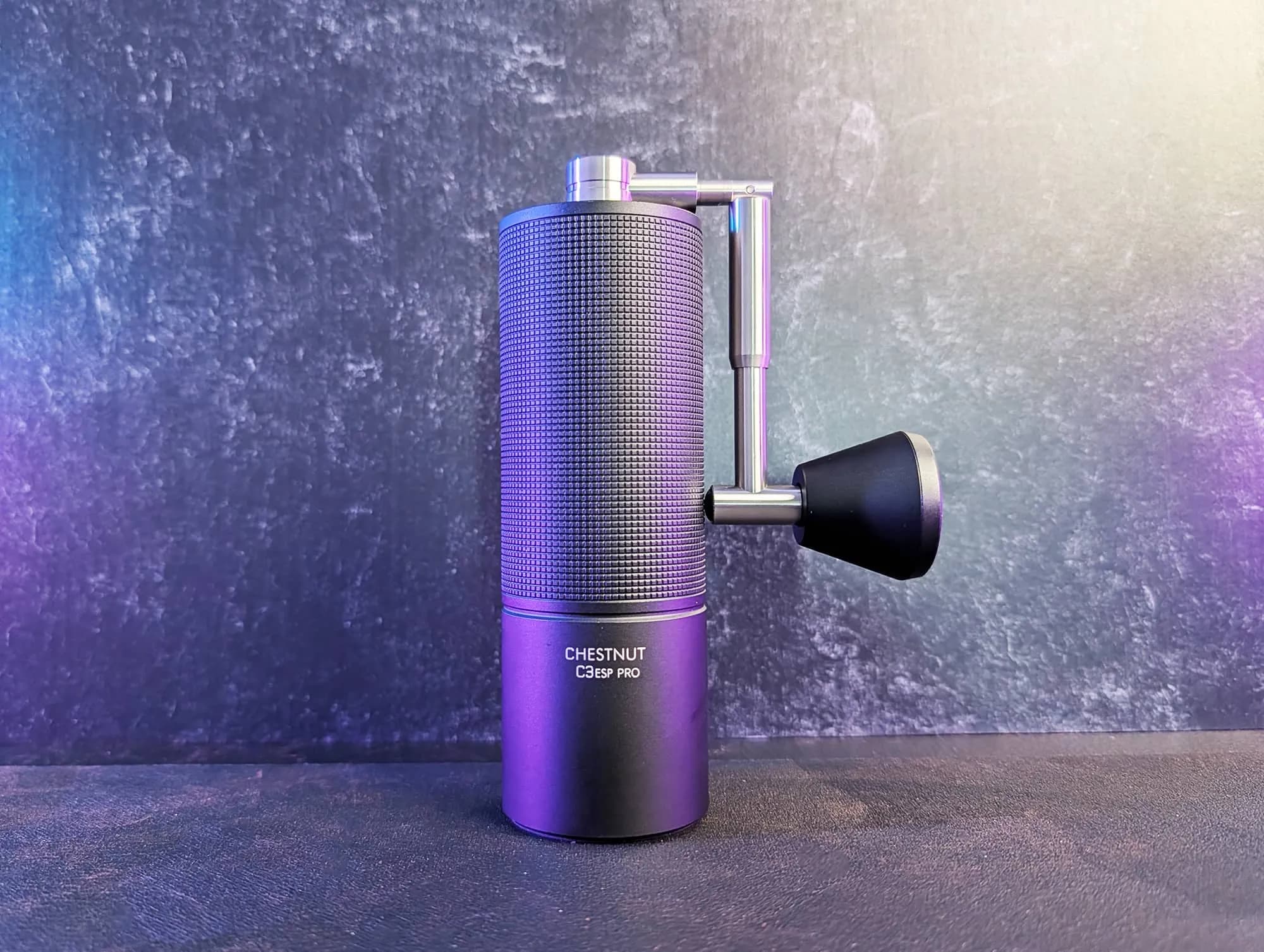
Timemore C3 ESP Pro Review and Grind Chart
The C3 ESP Pro punches above its weight class for a portable hand mill. It's a great deal when factoring performance to cost.
Grind data is captured via DiFluid Omni NIR analysis. I plot the particle distribution across 16+ settings to identify the 'Optimal Zone' for each brew method. Actual results vary based on roast type and freshness, among others; however, it remains a starting point for dialing in.
This site is 100% ad-free and always will be. This particular review was conducted on a factory-new, calibrated unit, and was not sponsored. I purchased this unit for testing purposes. Purchases made through our links may earn a commission, supporting the testing and data acquisition.
C3 ESP Pro Grind Size Chart
A Note on These Settings: The interactive chart below uses a combination of manufacturer and crowdsourced data from CoffeeOS to give you a rough "ballpark" starting point for dialing in. For the true technical breakdown, scroll down to my particle analysis, where I use a DiFluid Omni to measure actual micron distribution, fines percentage, and grind consistency of this unit.
Full Review and Benchmark Test
As the “ESP” in its name would suggest, the Timemore C3 ESP Pro is the member of Timemore’s C3 series specifically geared towards espresso drinkers. What separates it from its siblings in the C3 range is precision: an advertised 0.0233 mm per click between grind settings compared to 0.0833 mm per click for the standard C3s.
Coming in at a shade under $100 on most online retailers, the C3 ESP Pro offers an affordable option for espresso drinkers who either don’t want to shell out for an electric grinder, or want an easy-to-transport companion to a portable espresso machine.
Features
- All-metal body (in black or green)
- Folding handle
- 0.0233 mm per click grind adjustment with 30 clicks per rotation across 3 rotations
- 20g capacity
- Timemore’s S2C burrs (more on the burrs below)
- Carrying pouch & brush
Unboxing
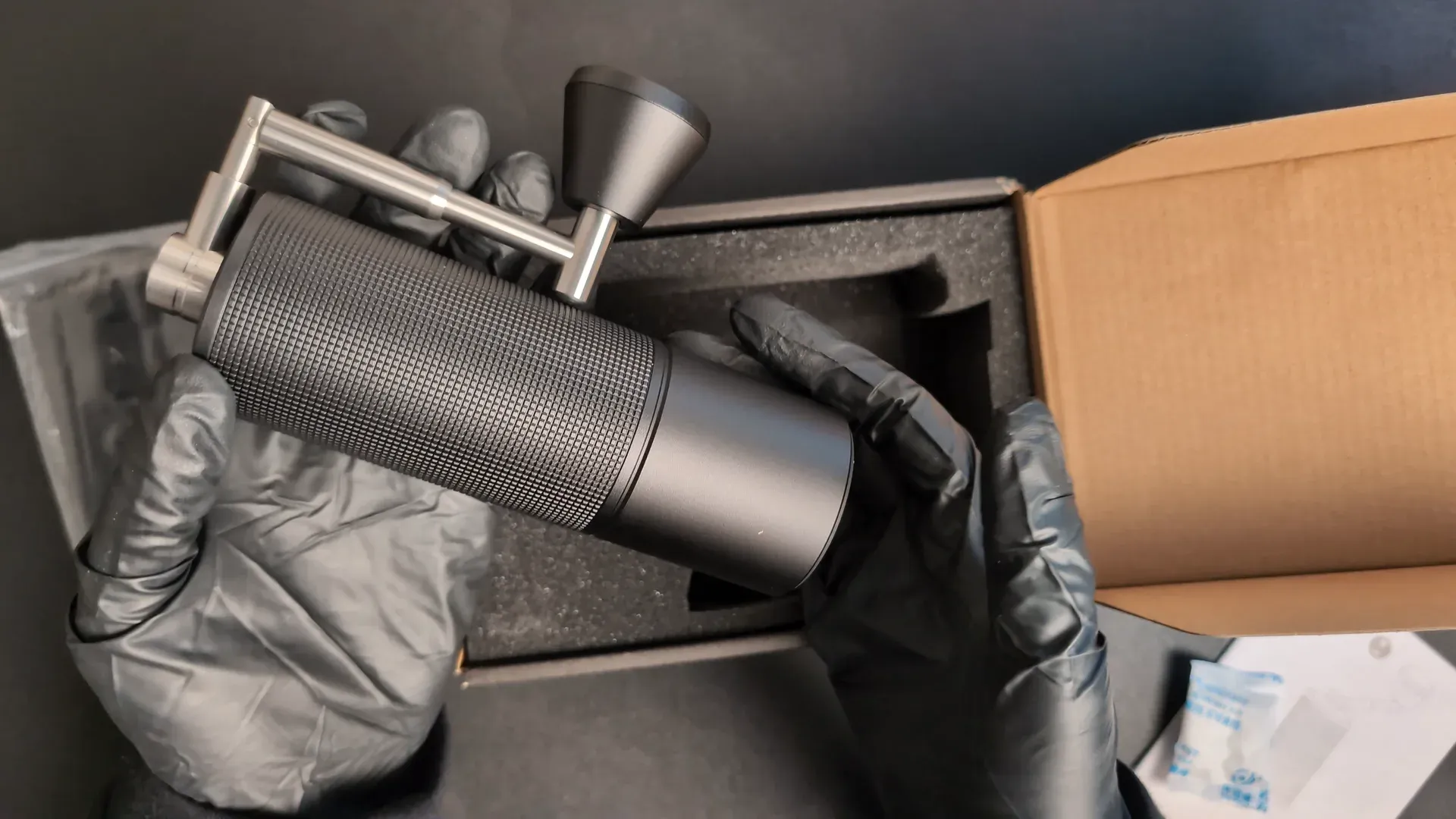
The ESP Pro comes in a compact black box. The front looks pretty elegant, with a minimal image of the grinder and a small callout in gold highlighting the S2C burrs inside. Looks-wise, it manages to capture a premium feel for something that costs $100. What you get in the box is pretty basic: The grinder itself, held in place by foam, the guide book, a simple carrying pouch, and a plastic-handled cleaning brush.
The pouch and the brush are useful inclusions, but users prioritizing portability may be left wanting a more substantial carrying case. The grinder itself weighs just over a pound (1.168 pounds/530 grams) and feels substantial but not overly heavy. The first impression you get from holding the grinder is one of durability. It’s all metal (minus the silicone base) and it definitely feels like it.
Design
The “Pro” part of the ESP Pro is the foldable crank handle, featured on the ESP Pro and C3 Pro, which replaces the basic one-piece handle on the rest of the C3 line. When it’s folded away, the whole thing stows nicely into the carrying pouch, and would tuck easily into any weekend bag. The folding joint snaps into place, and feels solid when not folded. It held nicely in testing for the (many) cranks that grinding espresso required.
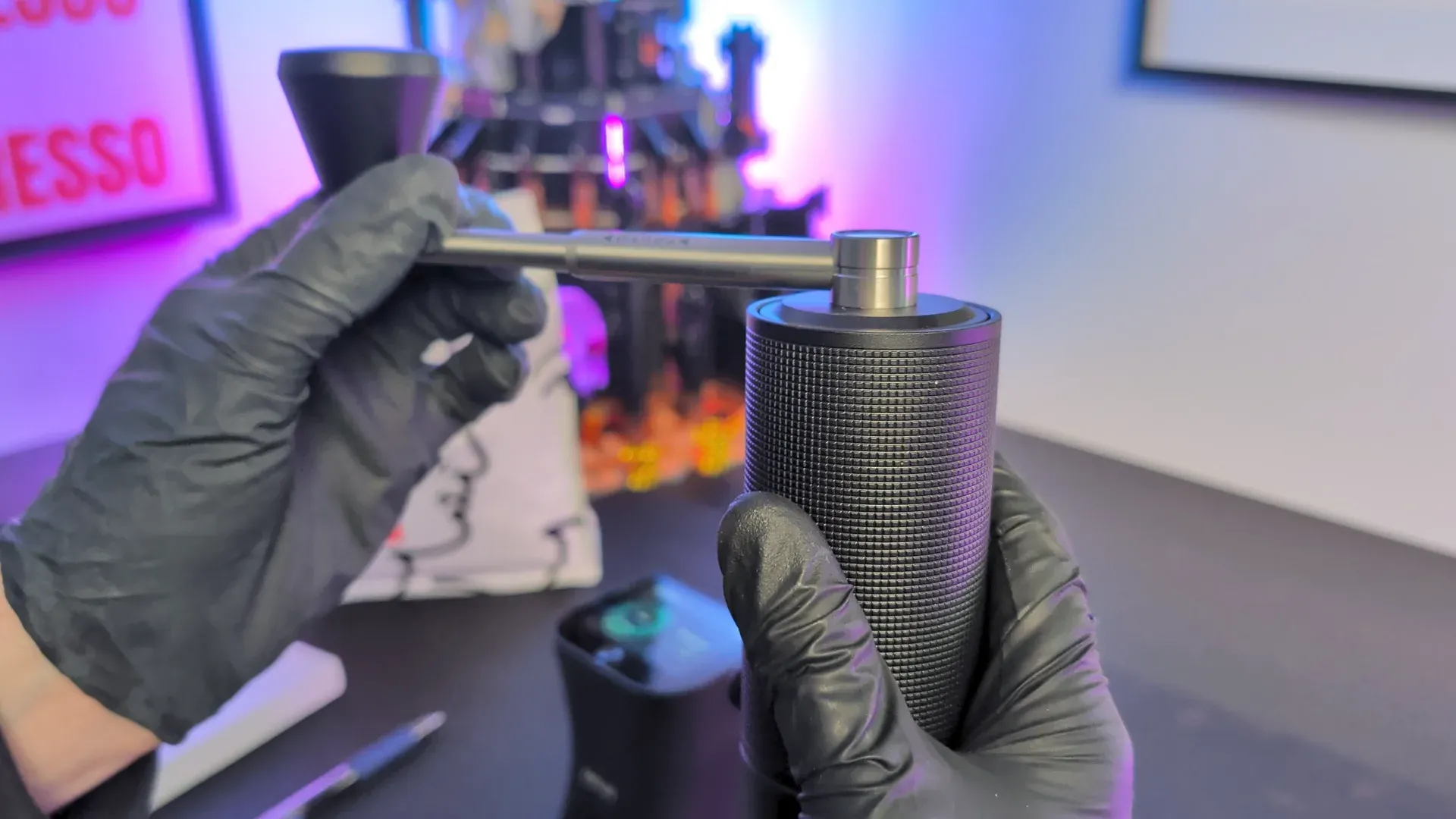
The ESP Pro's foldable crank handle in grinding position
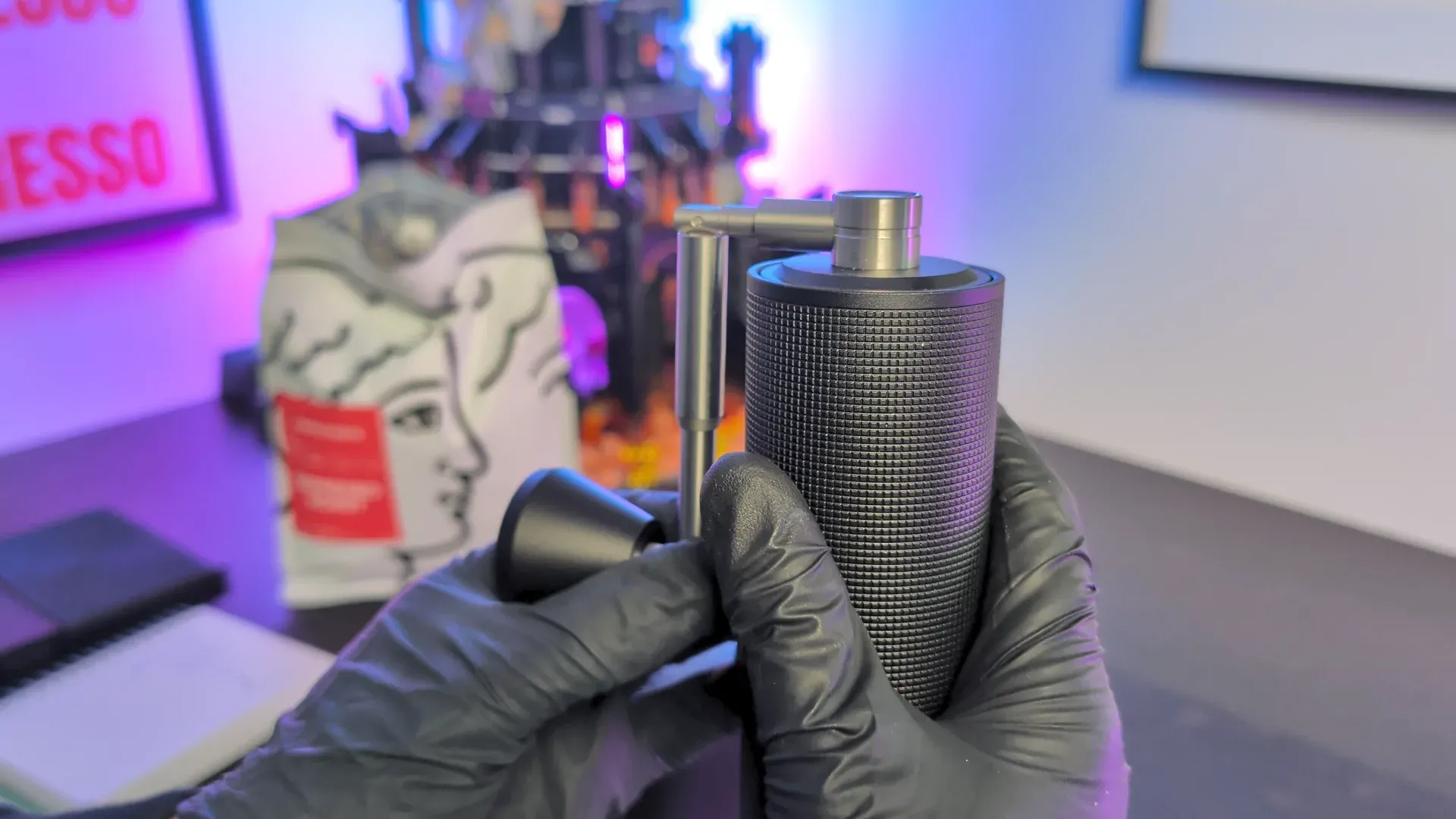
...and folded up so the ESP Pro can be stowed away
Anyone who’s had to hand-grind espresso before will know the importance of getting a good grip, and the textured body on the outside of the outer cylinder manages to handle this requirement well. Some competitors will add a rubber grip here, but the raised grid here works well without compromising on the all-metal design.
The ESP Pro’s catch cup holds ~25g of ground coffee, and it unscrews easily. The decision to use a screw-in cup rather than just sealing it to the body with a rubber o-ring is a good one for espresso, as it’s more secure and less likely to pop off in your hands during the ~1 minute grinding times needed for a fine grind.
The ESP Pro’s silicone base is a nice touch, but, realistically, with the effort it takes to hand-grind most beans to espresso fineness, you’re not going to be grinding with this thing while the base is in contact with a surface.
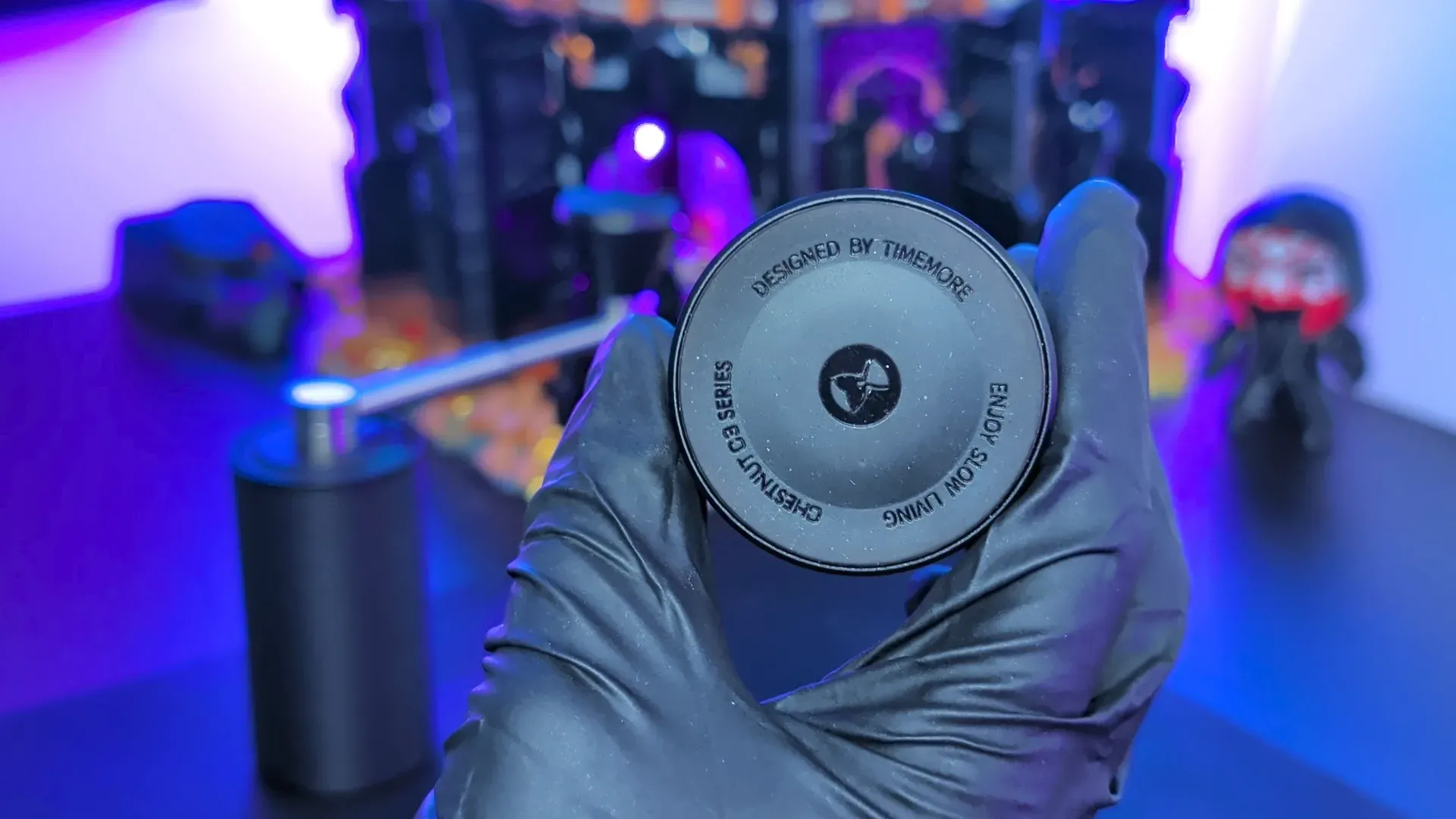
Cleaning and Maintenance
Unscrewing the cup reveals the grind adjustment which is housed under the burr set. This could be a con for some users who might prefer to have the grind adjustment placed on the exterior of the grinder for easier access, but in practice, I found it helped protect from accidental grind-setting changes, and kept the ESP Pro looking sleek and minimal.
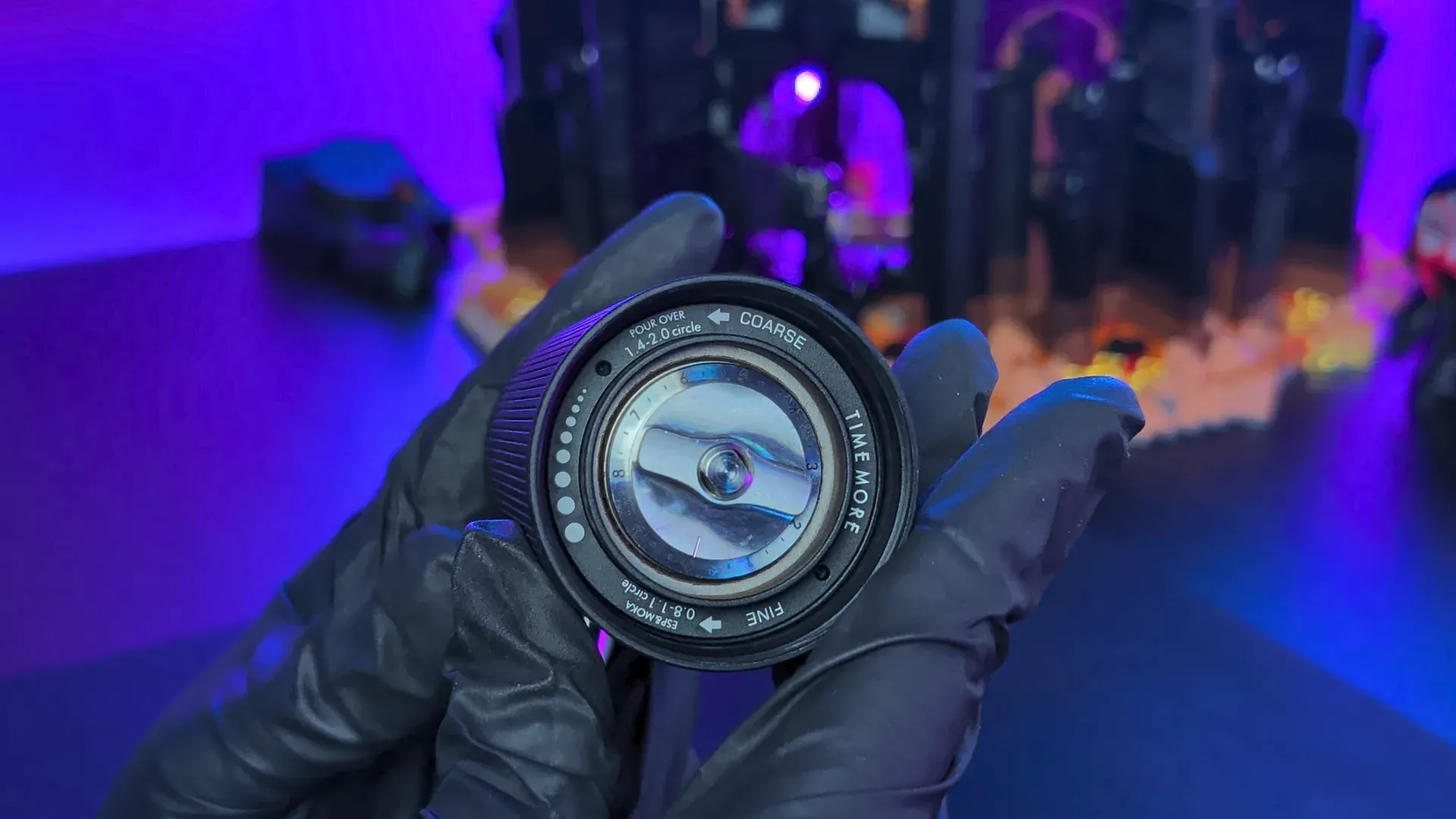
Disassembly and cleaning is pretty straightforward, just rotate the dial all the way off which will drop out the burrs, shaft, spring, and two washers. But there’s an important thing to pay attention to when reassembling. The washers look identical at first glance, with a small lip near the center. But only one of them has a flat side, so you need to make sure the flat side of the washer gets reinstalled on the upper part of the shaft and facing up, where the handle attaches to. If you don’t do this, you’ll probably find that the dial doesn’t line up with 0 again when resetting.
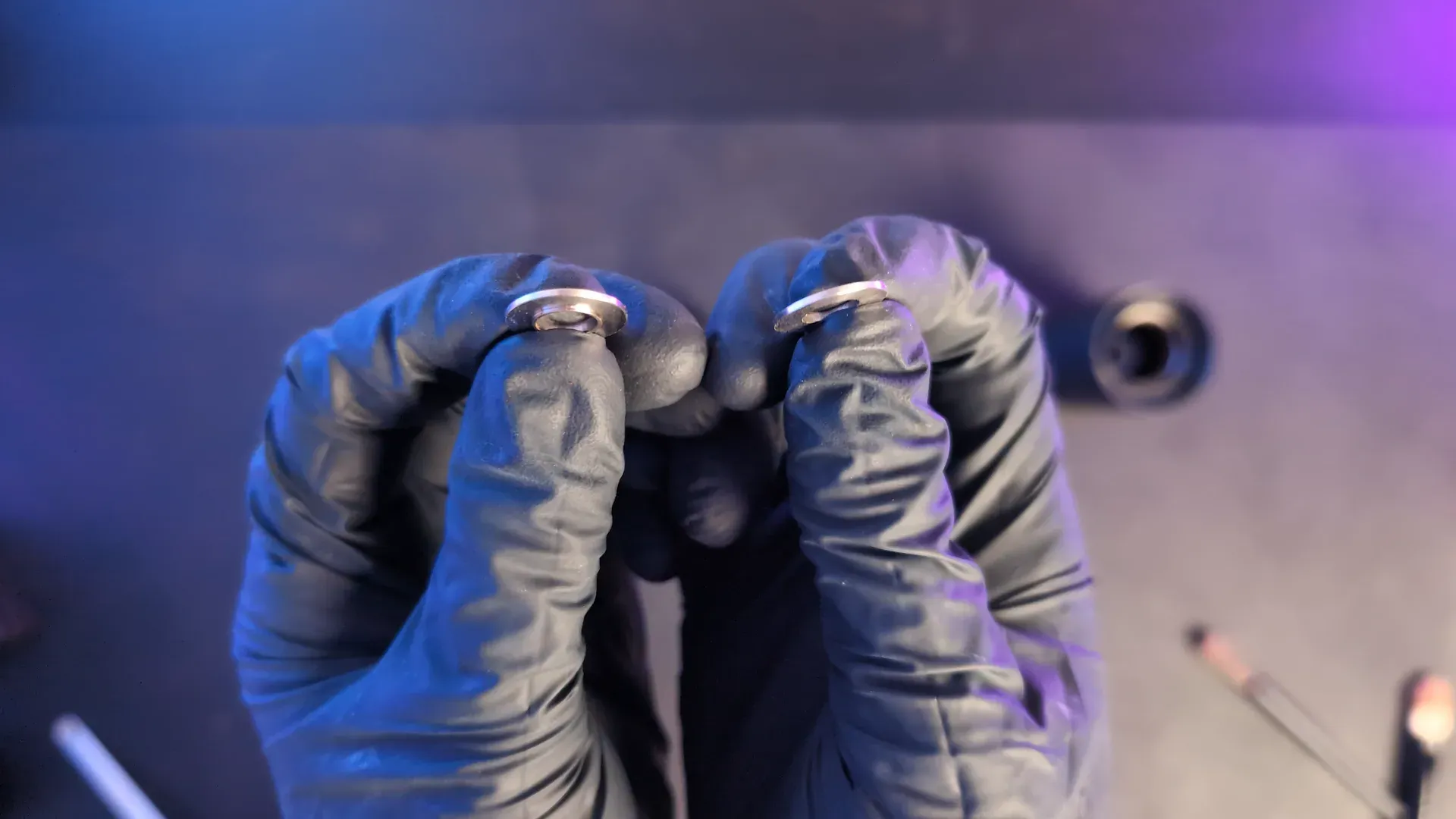
Pay close attention during reassembly! Make sure the washer with a flat side is reinstalled facing up on the upper part of the shaft.
Burrs & Calibration
The ESP Pro uses Timemore’s 38mm S2C (spike to cut) steel conical burrs. They get their name from the additional teeth located at the top of the burr which are meant to cut through the beans before they reach the burrs below. Timemore claims that the additional teeth contribute to less generated heat and a more uniform grind size (jump to the Performance section below to see how they actually performed in our tests).
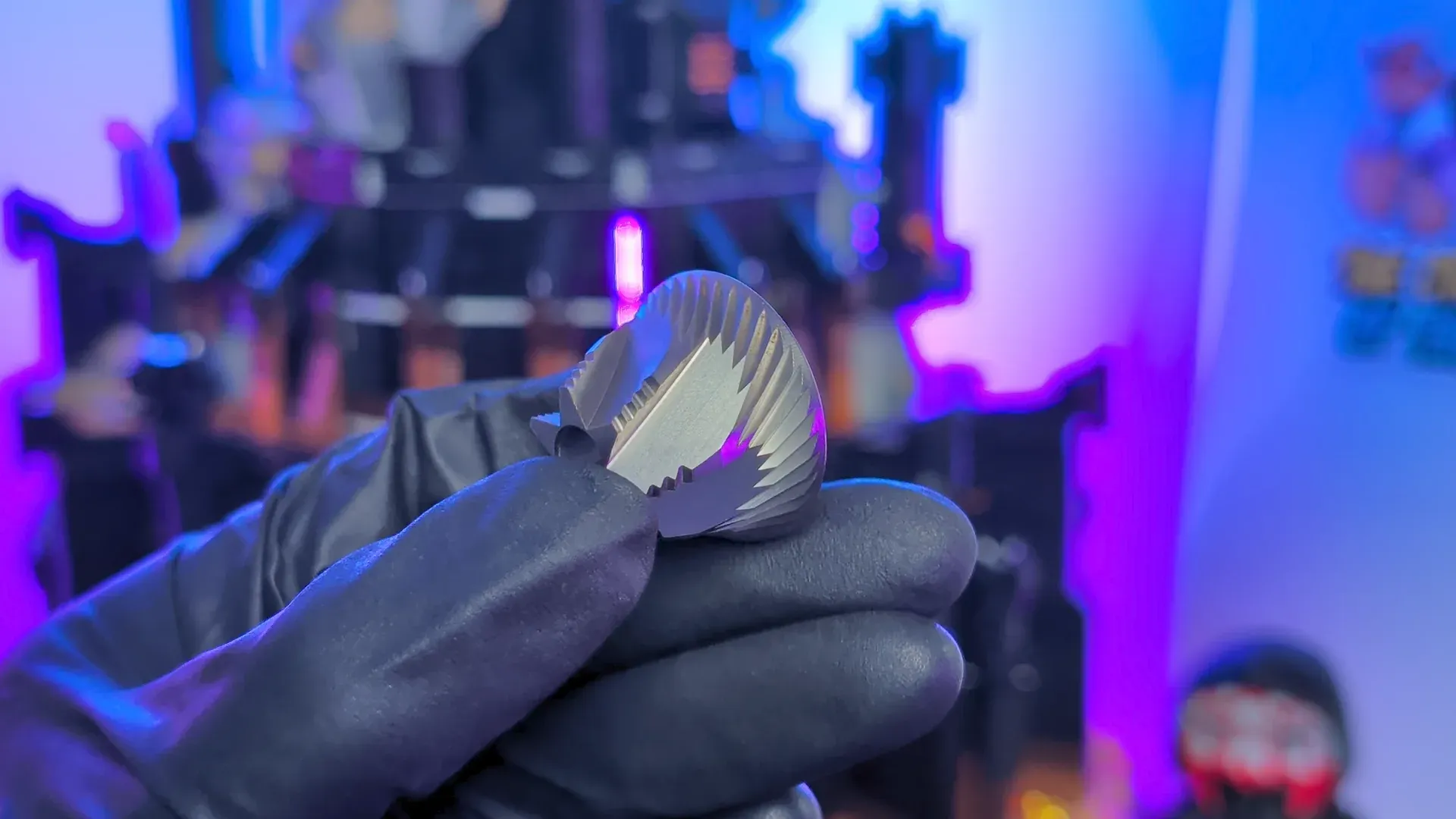
Calibrating the burrs was straightforward. Timemore suggests setting the grind size at 0.8 - 1.1 “circles” (dial rotations) from the lowest grind setting for espresso, and 1.4 - 2.0, and 2.0 - 2.3 for pour over and french press, respectively.
While grind adjustments aren’t stepless, a difference of 23 microns per step means you should be able to dial in accurately regardless of what fineness you’re grinding to.
Performance
Particle Size Distribution Test
For the particle analysis, I tested in 0.2.0 increments all the way up to three full rotations (3.0.0), and performed five tests on each for a total of 75 tests. Every time I change the adjustment, I do a throwaway dose for any retained grinds.
The Timemore C3 ESP Pro performed quite well in espresso ranges, showing a coefficient of variation (CV) of 7.6%, 4.1%, and 6% at settings 0.6.0, 0.8.0, 1.0.0, respectively.
Note: the lowest setting I tested was 0.2.0, which ended up being a choke point, skewing the data as ultra fines clumped together.
Looking at the particle distribution spectrum graph (shown above), settings 0.4.0 through 1.6.0 also have a remarkably consistent spread between clicks, which is fantastic for consistency.
Once you find a baseline setting for a specific bean, making slight adjustments as the beans age should yield exactly the change expected, without unpredictable jumps in extraction time. And for the price of this? What more can you want?
With that said, as we get above 2 full rotations and into pour over territory, things begin to weaken. Setting 2.4.0 had a whopping 18% CV. Then again, the grinder has ESP in the name so I won’t be knocking it for underperforming in a category it wasn’t designed for. Just know what you’re getting.
Retention Test
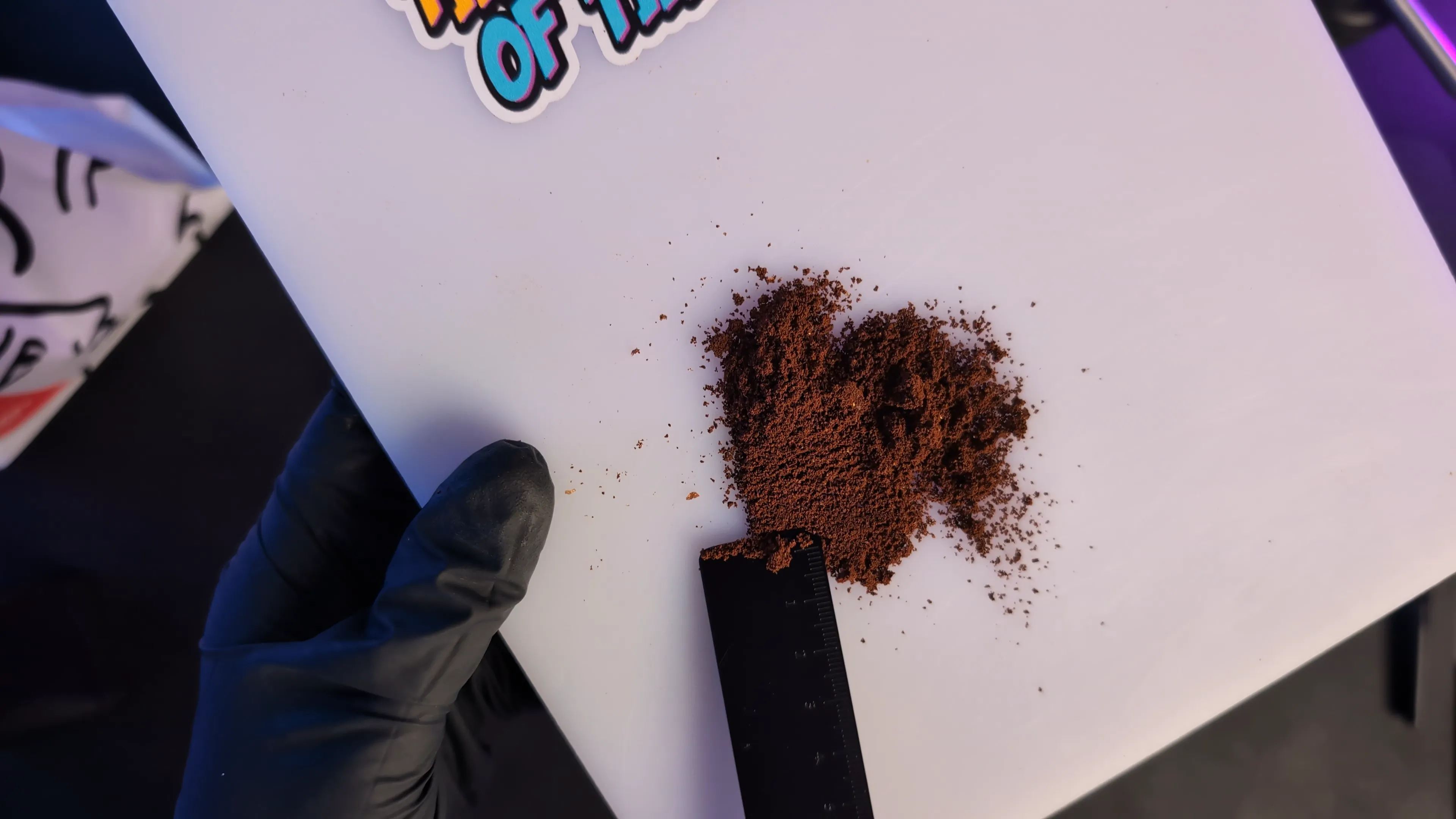
I performed the retention test at setting 0.8.0, or 2 clicks below a full rotation. This is typically the baseline setting for the C3 ESP when dialing in an espresso shot. I also misted the coffee beans to reduce static (Ross Droplet Technique) and lightly tapped the top of the grinder 3 times.
The result was an impressively minimal 0.1 gram loss. For comparison, the Baratza Encore ESP I recently reviewed had very slightly better consistency across espresso settings, but much worse retention.
Final Verdict
Personally, I’m ok with a bit of hand grinding when you factor in less retention issues, very similar grind performance, and half the price. I don’t think many will be disappointed with this one.
Dialing in the unit is also super straightforward. Timemore suggests starting between 0.8 and 1.1 full rotations from zero for espresso, and I found my sweet spot at 0.8. Since it gives you 23 microns per step, it isn’t stepless, but it’s precise enough to accurately dial in your shots.
At just under a hundred dollars, it’s a highly affordable option for espresso and for those who want to avoid the cost of an electric setup, or just need a portable option.
Technical Specifications
| Brand | Timemore |
|---|---|
| Model | C3 ESP Pro |
| Adjustment | Stepless |
| Range | 0 - 1009 μm |
| Settings | 16 mapped |
| Weight | 1.76 lbs |
| Capacity | 20 g |
| Burr Size | 42 mm |
| Time to Grind (18g) | 70 seconds |
Common Questions
- Can the Timemore C3 ESP Pro handle coarser grind settings? Or is it only really worth buying for espresso?
- The C3 ESP Pro can be used for pour over, AeroPress, and filter, but espresso is definitely its sweet spot. Grind consistency weakens noticeably above 2 full rotations, which is right in the middle of the filter-brewing range. It's technically an all-rounder, but if espresso is not your primary brew method, a grinder without "ESP" in the name will serve you better.
- How long does it take to hand-grind espresso with the Timemore C3 ESP Pro?
- Expect roughly 45–60 seconds for a standard double-shot dose of around 18g at espresso fineness. Considerably more labor-intensive than using an electric machine, but the lack of retention and grind performance of the C3 ESP Pro make this a fair trade-off.
- What's the difference between the C3 ESP and the C3 ESP Pro?
- The difference is in the handle. The ESP Pro has a foldable crank handle for improved portability, while the ESP has a one-piece handle. Most retailers currently only stock the ESP Pro, but if you don't plan on taking your grinder with you anywhere, then you can still find some non-Pro ESPs out there at a slightly cheaper price point.