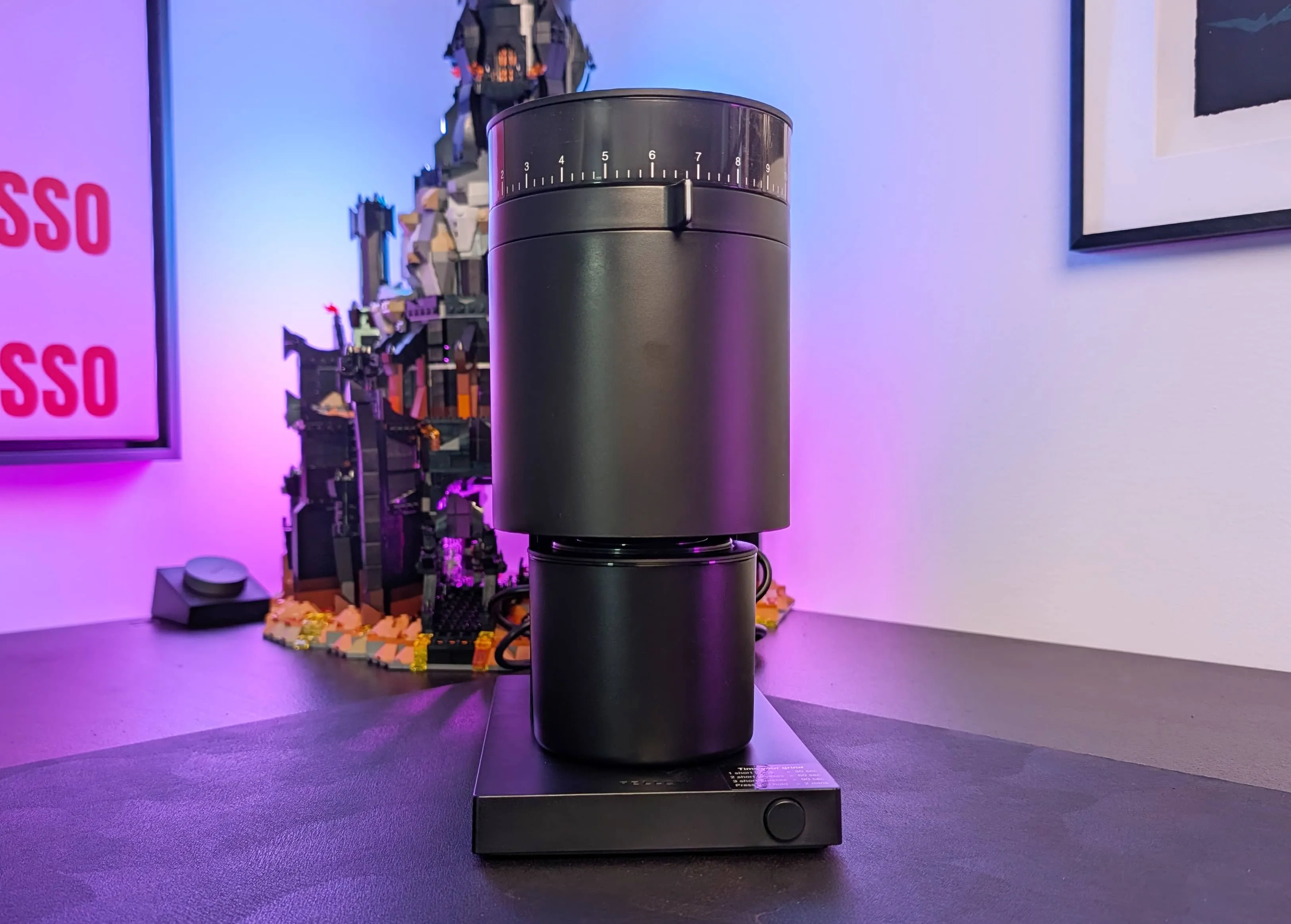
Fellow Opus Review and Grind Chart
Among the best grinders for the price, even though it can be finicky at times.
Grind data is captured via DiFluid Omni NIR analysis. I plot the particle distribution across 16+ settings to identify the 'Optimal Zone' for each brew method. Actual results vary based on roast type and freshness, among others; however, it remains a starting point for dialing in.
This site is 100% ad-free and always will be. This particular review was conducted on a factory-new, calibrated unit, and was not sponsored. I purchased this unit for testing purposes. Purchases made through our links may earn a commission, supporting the testing and data acquisition.
Opus Grind Size Chart
A Note on These Settings: The interactive chart below uses a combination of manufacturer and crowdsourced data from CoffeeOS to give you a rough "ballpark" starting point for dialing in. For the true technical breakdown, scroll down to my particle analysis, where I use a DiFluid Omni to measure actual micron distribution, fines percentage, and grind consistency of this unit.
Full Review and Benchmark Test
The Opus is Fellow’s entry-level all-purpose grinder. It stands out from the other mainstay in Fellow’s line up, the Ode 2, in two key ways:
It grinds across all grind sizes from espresso to cold brew
It’s half the price
Compared to the Ode 2, the Opus makes a couple of compromises to keep the price down (40mm conical burrs and a plastic body to the Ode 2’s 64mm flat burrs and an all aluminum body) while adding the ability to grind to the level of fineness needed for espresso. After 3 years on the market, the Opus is set to get its own sequel, the Opus 2, in May of 2026. The Opus 2 is set to debut at the current generation’s price of $199, which could see the first generation become even more affordable in the weeks ahead. Let’s see how it performs as a jack of all trades, and whether it should be considered a savvy bargain purchase to look out for when the next generation is released.
Features:
- Matte black or matte white finish
- Fellow’s 40mm conical C6-40 Burly Burrs
- Anti-static technology
- 41 stepped grind settings (with an adjustable inner ring to increase fineness)
Unboxing
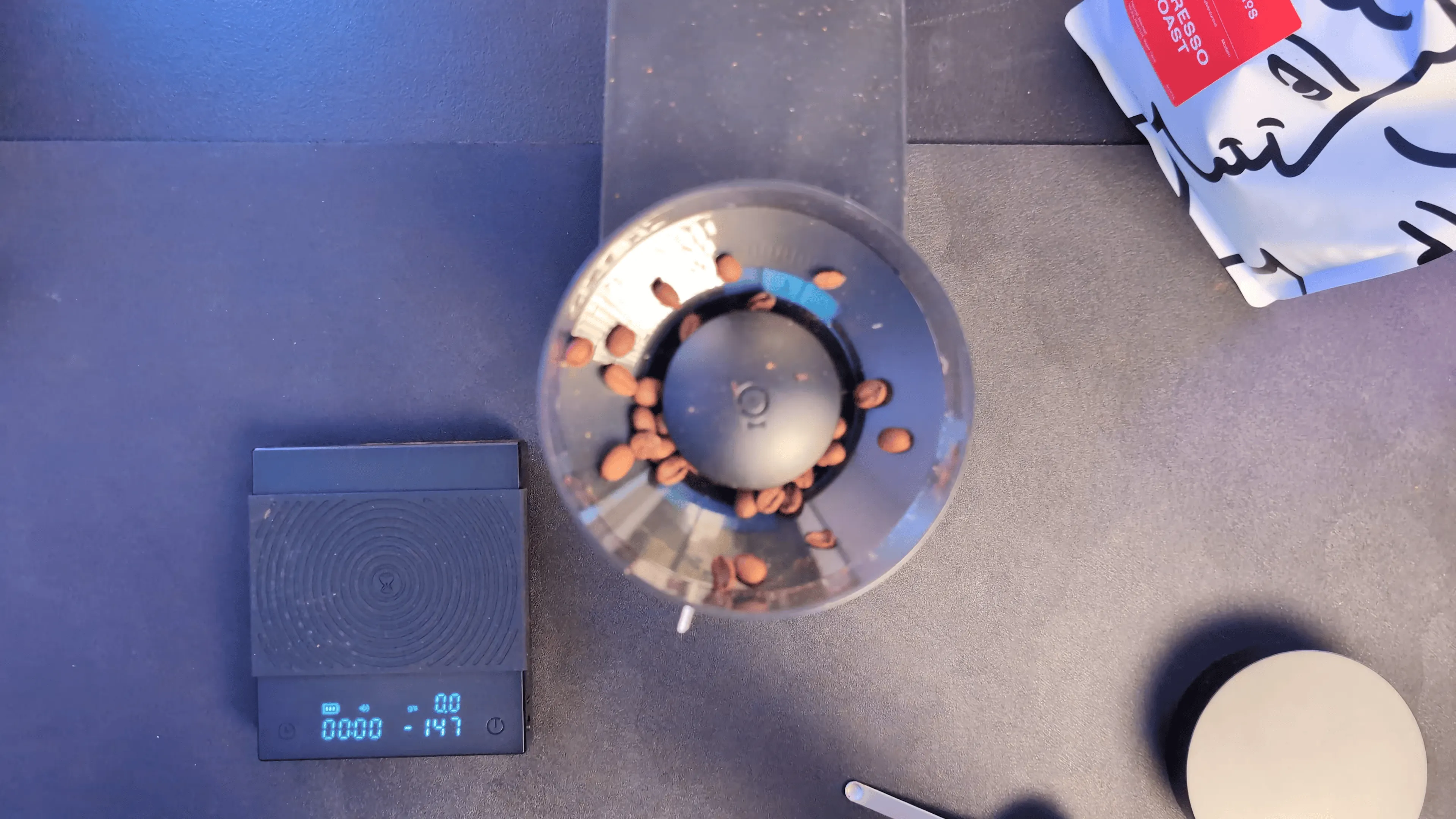
The Opus comes out of the box practically ready to use. Outside of the instructions and warranty information, the only separate piece in the box is the catch lid for non-espresso grinds. The catch cup itself is held to the base of the grinder with a magnet, and it satisfyingly snaps back in place whenever placed near its home.
The grinder weighs 5lbs/2.3kgs, and despite the plastic casing, the matte finish and the vertical ridges on the back of the unit give the whole thing a feeling of quality.
The catch cup contains a portafilter adapter lid that is compatible with 54mm and 58mm portafilters which can be swapped out for the other included catch lid.
Once the packaging is removed from the power cable and catch lid, the Opus is ready to grind (although, as you’ll see, dialing in may be a different story for espresso drinkers).
Design
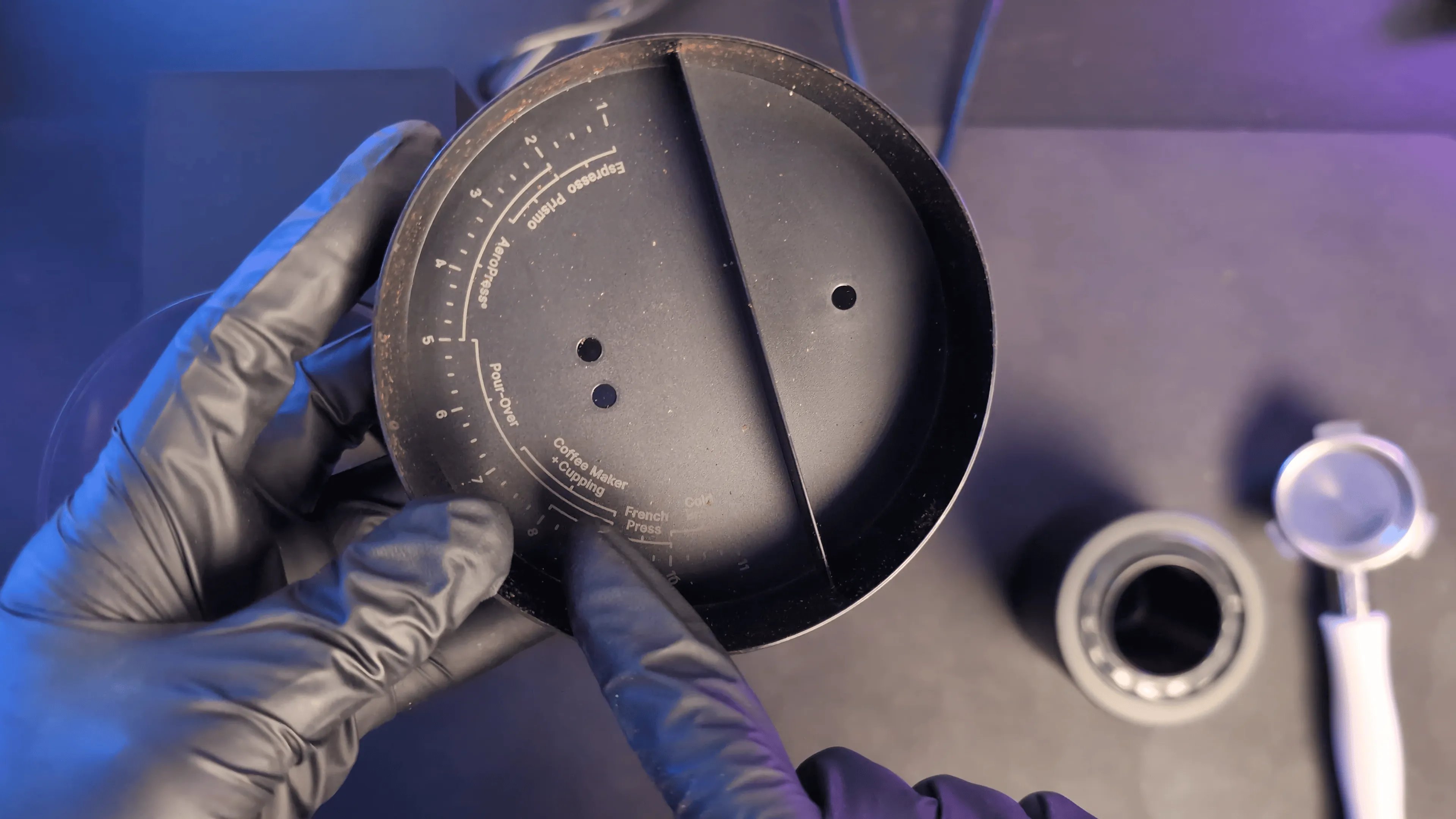
Design is what sets the Opus apart from comparably-priced grinders, both for good and for ill. A lot of the Opus’s features are thoughtful, if not always useful. For example, the load bin’s lid is separated into sections. The smaller-sized section can be filled with beans to get the approximate measure needed for a small pour-over or double shot espresso, the larger section can be filled for a 2 cup pour-over, and the whole lid can be filled for a 12 cup batch brew. That’s really clever, but it’s hard to imagine someone shelling out $200 for a coffee grinder without already having a scale in their setup.
There are two fins molded into the catch cup which are meant to make it easy to pour beans into a pour-over basket, but in practice, they offer a haven for coffee grounds to get stuck behind.
There’s also the anti-static technology, which consists of two pins in the Opus’s exit chute that are meant to reduce retention of grounds on their way to the catch cup. In practice, the results are mixed (see the “Performance” section for more) and Fellow’s help pages indicate that it can start to fail without cleaning at fewer than 60 grind cycles.
Other elements of the design, like the suggested grind settings on the underside of the hopper lid, the magnetic base of the catch cup, and the timed grinding based on how many times you press the grind button (once for 30 seconds, twice for 60, three for 90, and hold for 120) are far more impressive and useful, and it’s worth noting that, like everything Fellow does, the grinder looks simple and elegant.
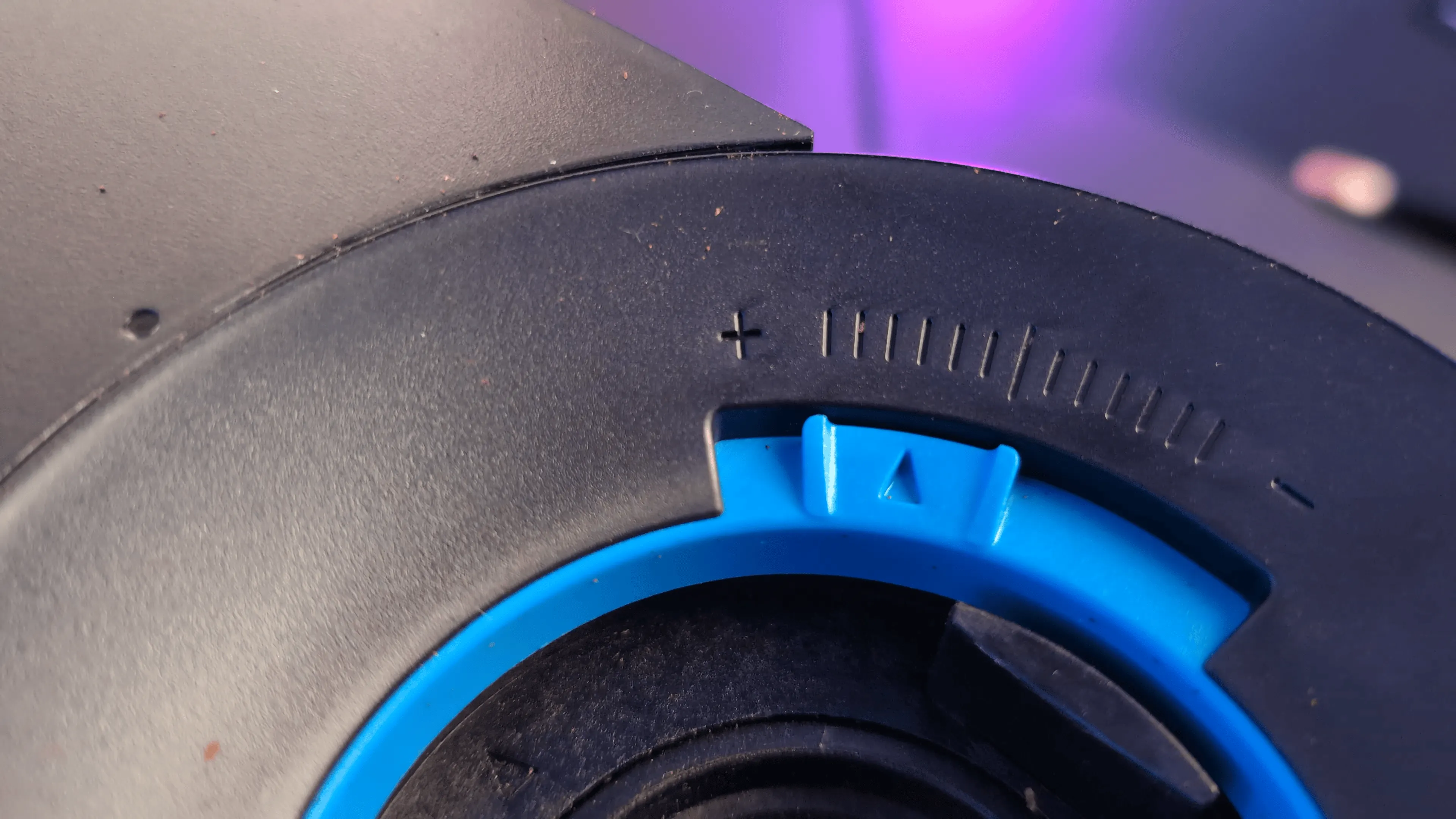
The Opus’s Achilles’ heel is the adjustable inner ring that increases the fineness of the stepped grind adjustments. We’ll get to what these adjustments actually mean for grind size in the section below, but accessing the inner ring requires removing the hopper and making adjustment before replacing hopper and grinding again. This can make dialling in cumbersome, and may not be worth the trouble for beginner espresso drinkers, especially with stepless adjustments on the way in the Opus 2.
Burrs & Calibration
The Opus uses Fellow’s C6-40 burly burrs (”C” meaning conical, “6” meaning 6-bladed, “40” meaning 40mm, and “burly” seeming to refer to their longevity). It’s worth noting that the Opus 2 will be receiving an upgrade in this area with 48mm burrs.
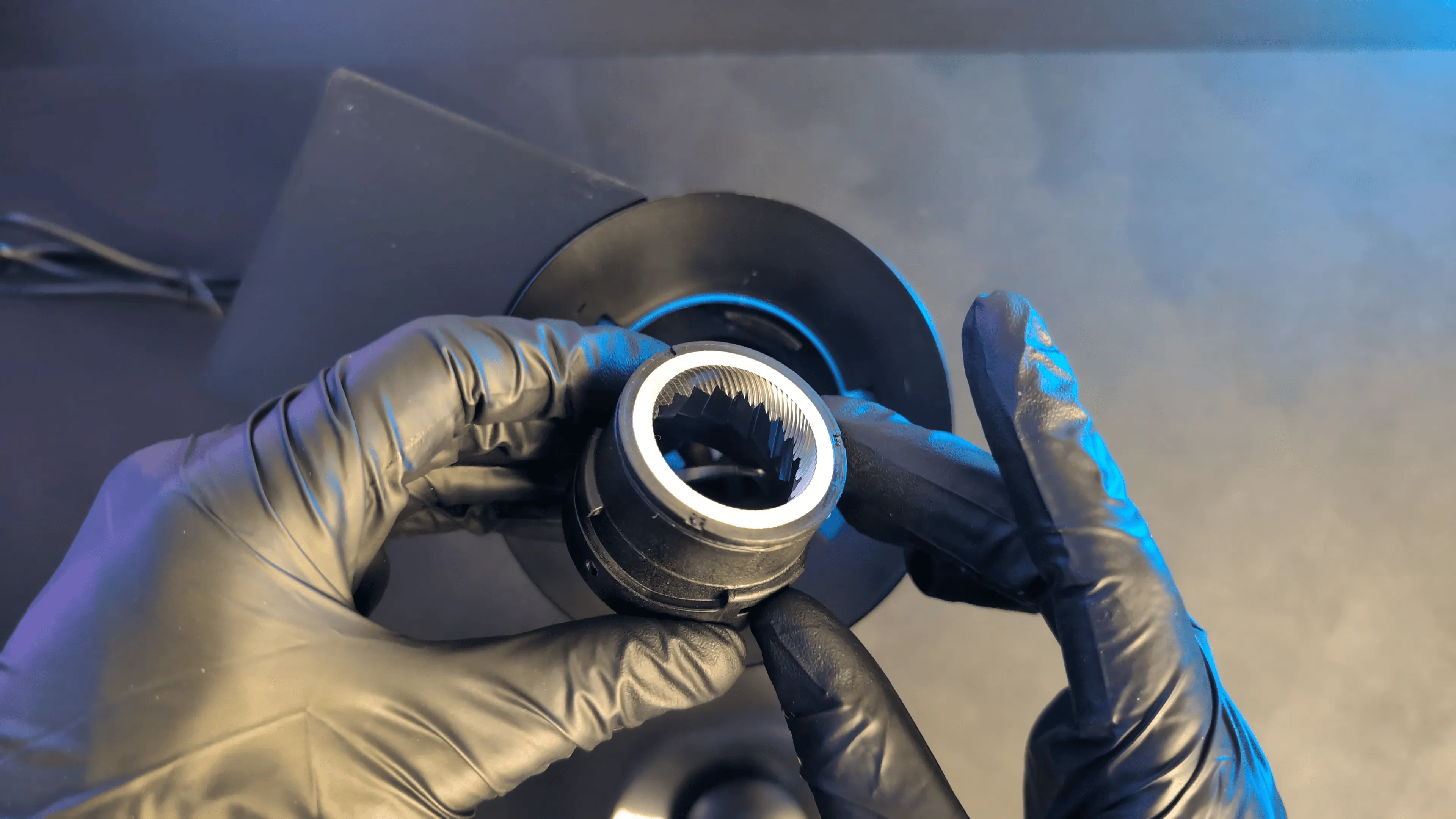
The Opus has 41 grind settings on the outer ring, with adjustments of 50 microns per click between each default setting. As mentioned above, this can be adjusted by rotating the inner ring. Fellow refers to this as “tool-free calibration” and to be fair, you won’t have to break out the tools until the bottom burr needs replacing.
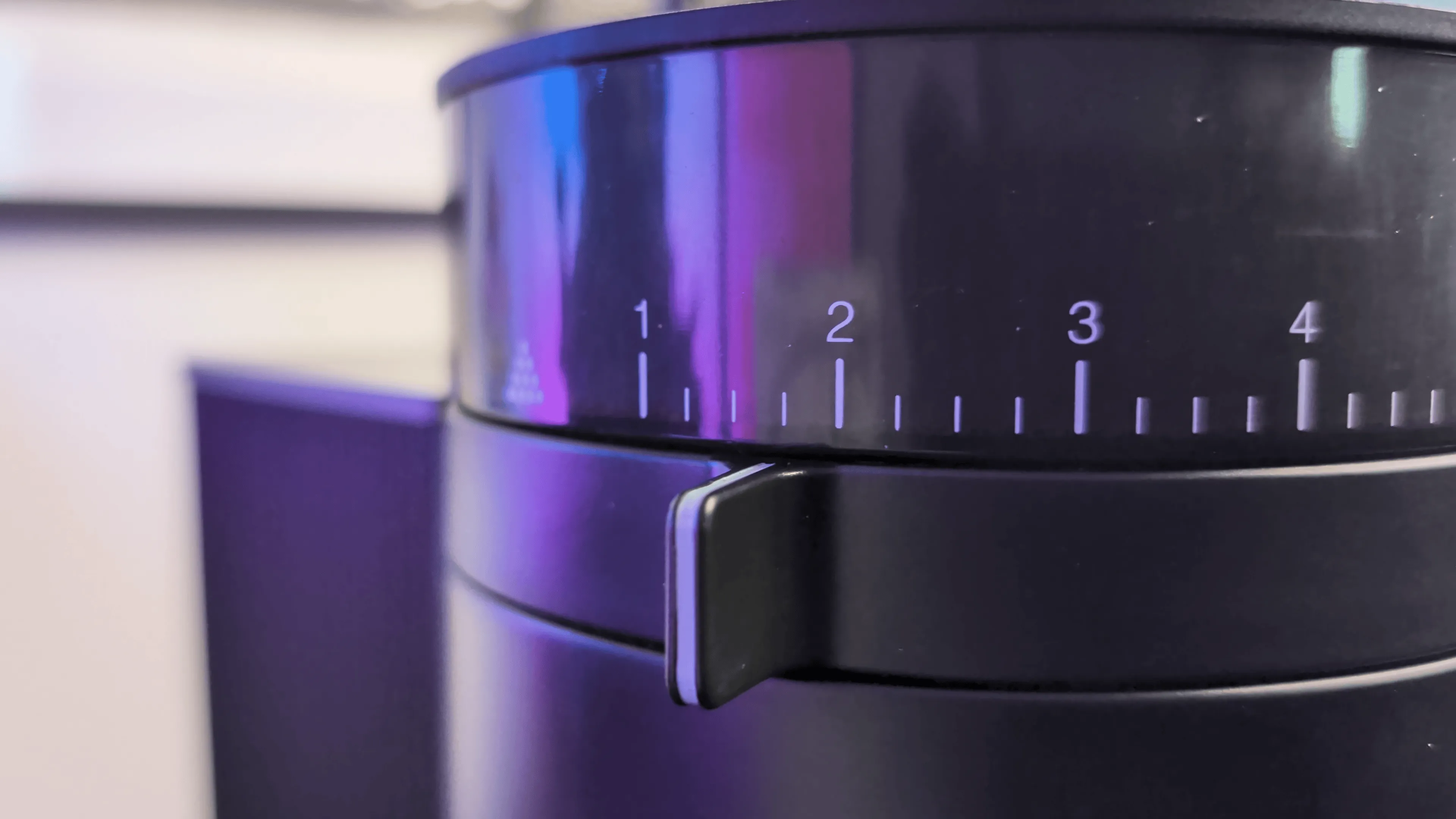
Inner ring adjustments are made in increments of 1/3 of an outer ring adjustment, so while the outer ring only offers 50 microns per click, it’s technically possible to make adjustments at one third of that: 16.7 microns between steps. Technically, the grinder has as many as 120 steps, it’s just a bit of a pain to move between them. For the inner adjustment, you press down on both sides of the blue dial and rotate it. A couple times I had a bean or coarse grounds stuck under it, requiring me to clean it out first.
Performance
Particle Size Distribution Test
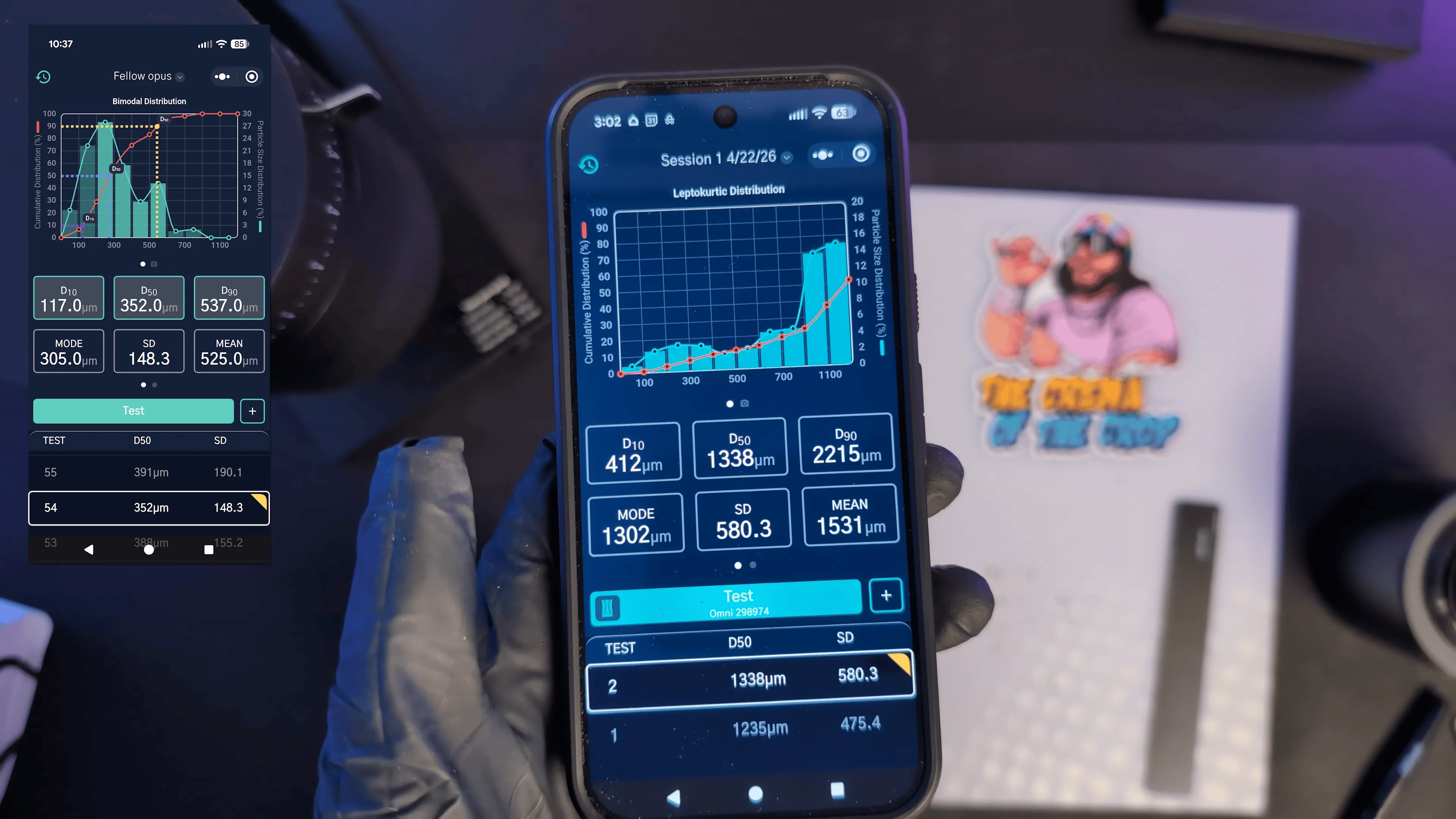
Disclaimer: I use the DiFluid Omni particle analyzer. This has the ability to automatically disperse the particles before analyzing; however, at coarser grind levels, it tends to push the grinds to the edge. So I manually separate the grinds on the tray up until ~600um, then use the automatic dispersion for espresso territory. As always, this is not a definitive analysis. Actual um sizes vary a lot, but this data can be used to spot consistencies and strengths/weaknesses.
At espresso settings, it's very consistent. Once you find your ideal grind, the machine stays locked in and won't wander between back to back shots. This predictability is a huge win for home baristas who want a reliable daily workflow. For comparison, the Opus had a better consistency rating than the Baratza Encore ESP which is the same price point.
The Opus does get a bit more moody as you move into coarser pour over settings. My data shows that the grind becomes less uniform, producing a wide mix of tiny dust and larger chunks. However this is common among grinders, especially at this price point. While this might not offer the clinical clarity of a high end filter grinder, it creates a cup with impressive body and sweetness. It's a stable partner for espresso even if it loses a bit of its focus in the mid range.
Retention and the "Accidental Bellows"
For this retention test I’m using Setting 5, which is more in the pour-over range. I used a Timemore scale to measure the bean weight and then a second weight-check after grinding. The first retention test was 1.3 g under (recorded without the use of water misting). While cleaning it to prepare for the second test, I noticed this really thin O-ring came off. It's very loose, so just a heads up that it can be pretty easy to go missing.
I used a little vacuum and also a burst of air to blow out all the grinds you could see in the container. Quite a bit passed through, in addition to spraying all over the room, so let's try this again.
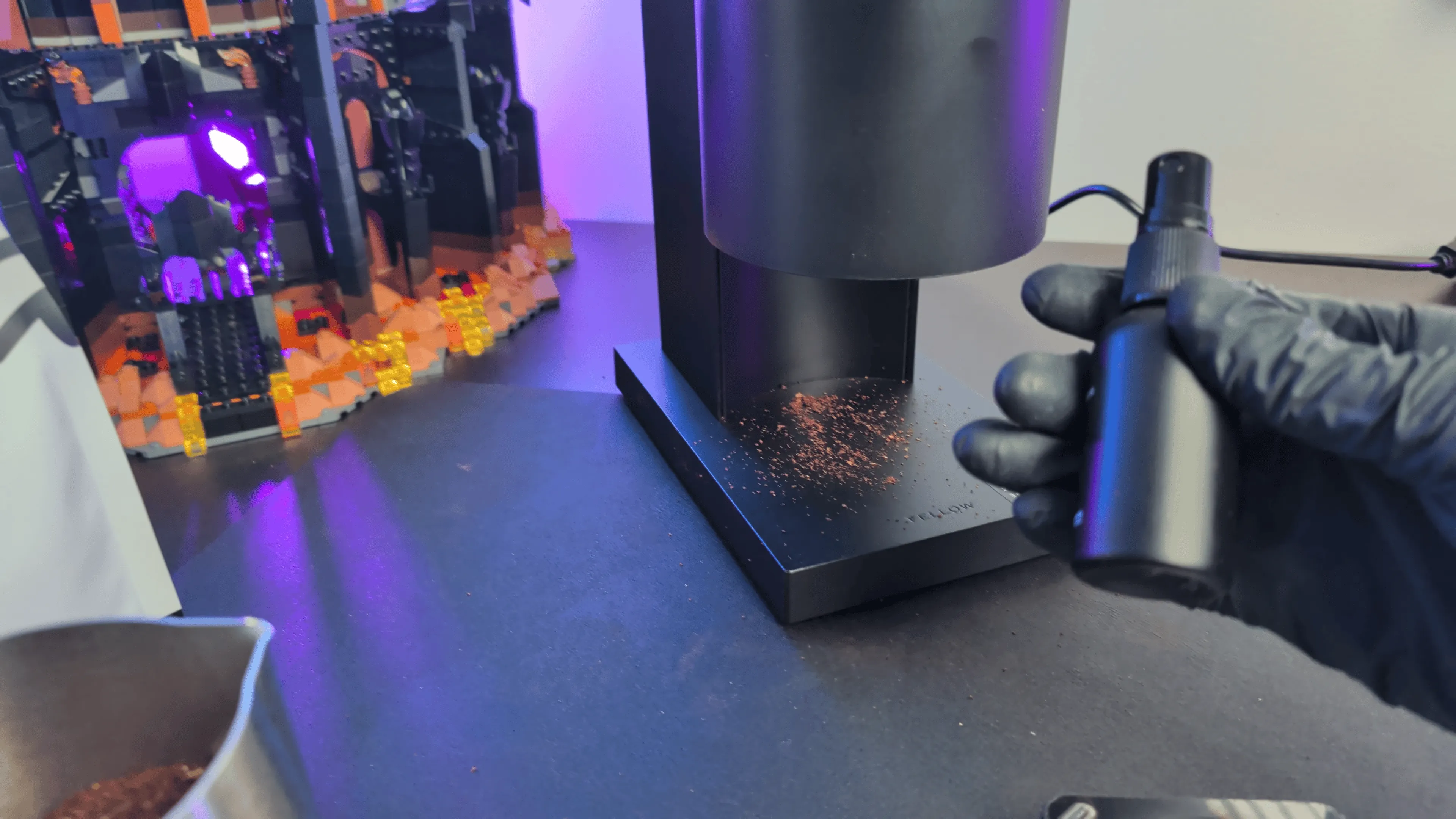
The results improved significantly when utilizing the Ross Droplet Technique (RDT). Misting the beans prior to grinding reduced the retention to 0.3g. Additionally, the hopper lid provides a mechanical benefit that is not explicitly advertised. Because of the tight fit and resulting suction, the lid can be used as a manual bellows to force trapped grounds through the exit chute. By performing two or three firm presses on the lid after the motor stops, the unit is capable of achieving net zero retention. This is honestly amazing.
I do this for every shot now. Two quick mists, grind, then two firm pushes on the lid. I love that I have more control over the final output, unlike grinders where you just smack the side of it and curse the gods when your grinds are stuck in purgatory.
Sound and Power
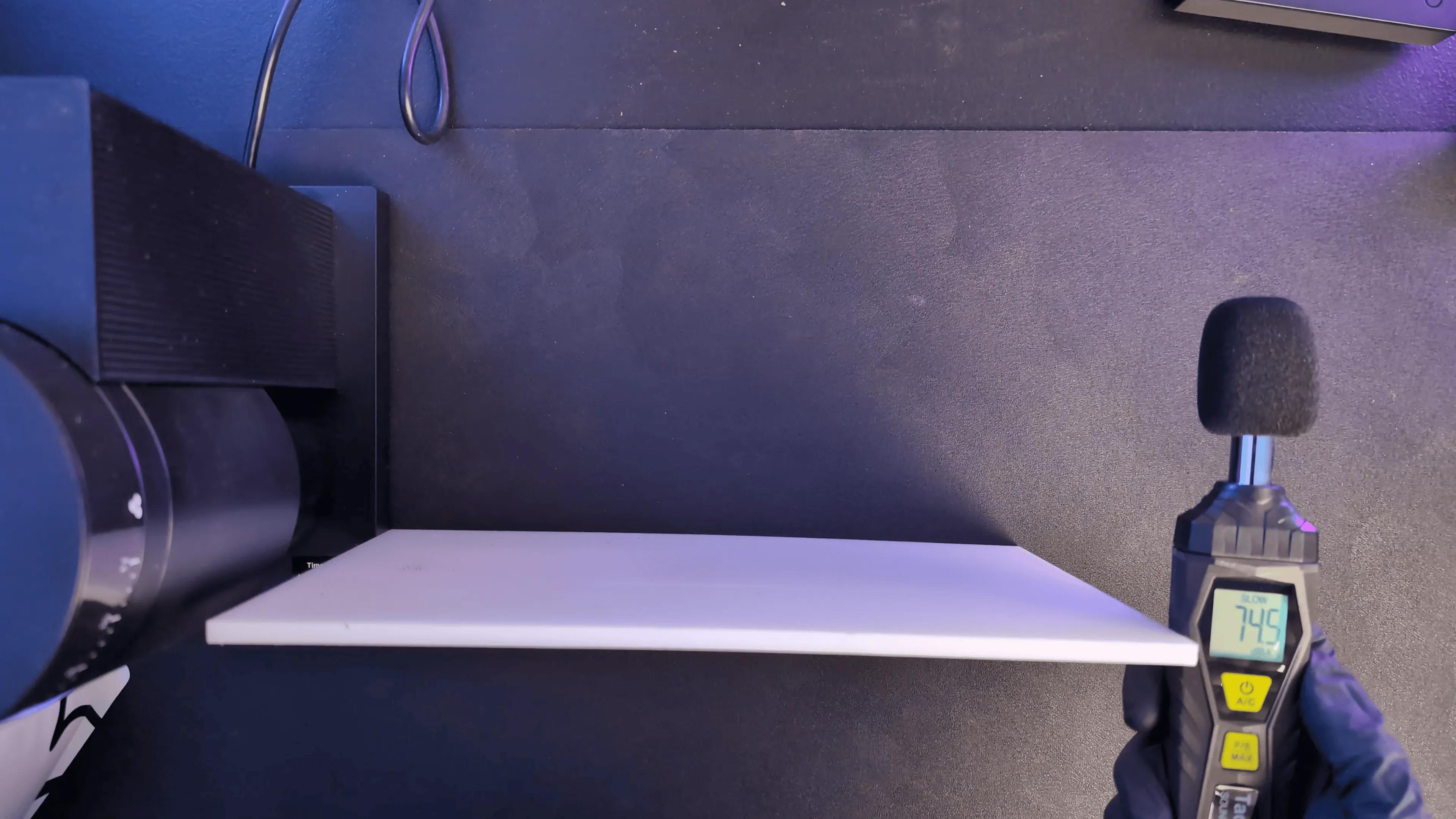
The Fellow Opus Gen 1 is a quiet operator in the all-purpose category. It recorded a max of 77.3 dB (averaging approximately 76 dB), significantly lower than the Baratza ESP which came in at a max of 88.2 dB under the same testing conditions. The Opus also produces a more tolerable hum compared to the high-pitched whine of the Baratza motor.
Dialing In and Taste Test
Dialing in was a cake walk. Reddit’s /r/espresso sub often suggests a setting range of 3-5 for espresso, but that was way too coarse for my unit. This goes to show the differences in grinder calibrations straight from the manufacturer, so while the grind chart at the top of the page is a starting point, just know you will absolutely need to iterate and fine-tune from there.
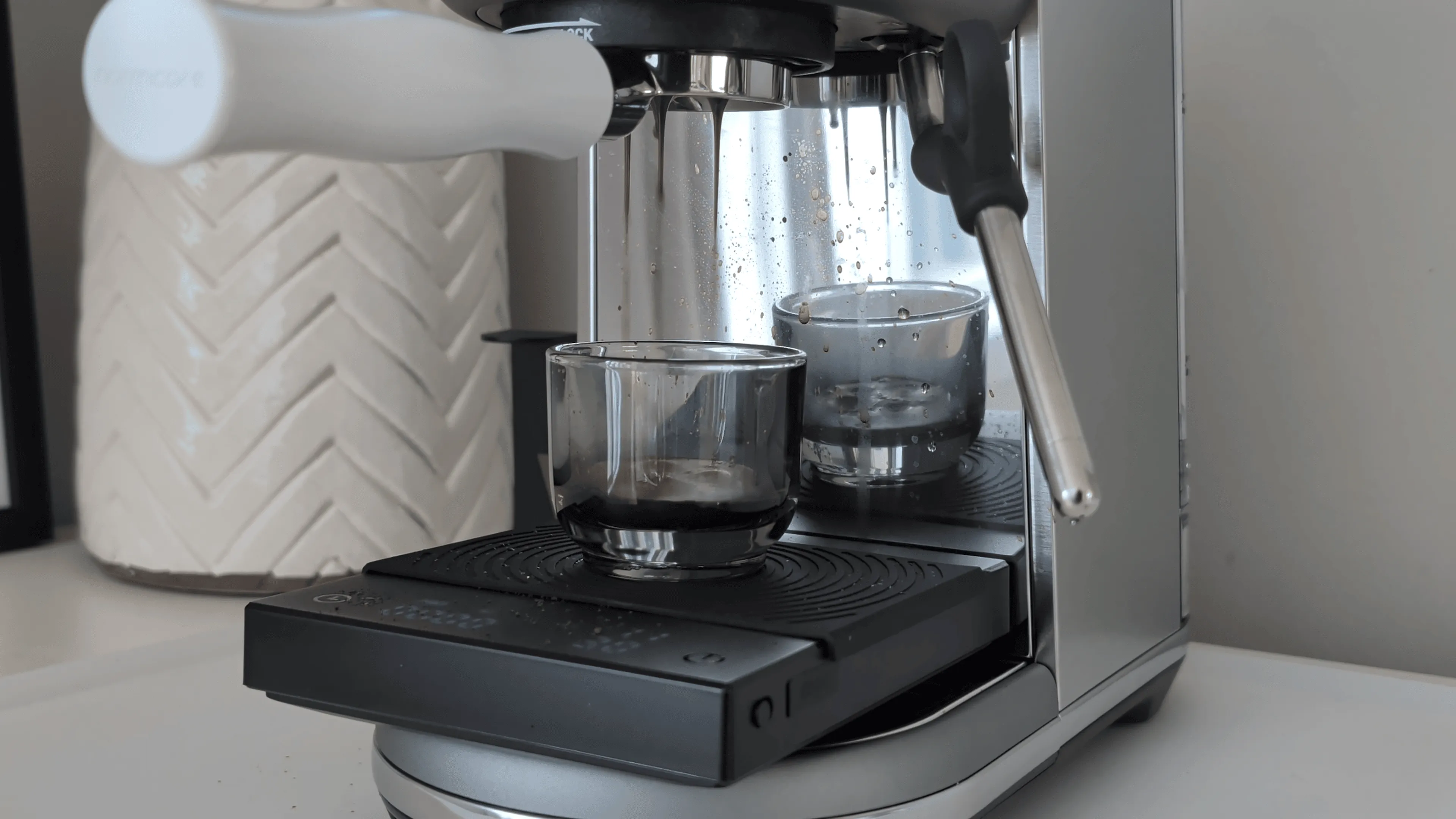
I jumped all the way down to Setting 2 (with a 3g dose to clear out any retained grinds) and made an espresso. This was pretty close, but needed a bit more fine-tuning. My final recipe for an 18g dose was found at one tick below 2 on the outer ring, combined with three clicks in the "positive" direction on the internal micro-adjustment ring. This had me at a 18g/36g 28 second shot. High body and a heavy, chocolate-driven sweetness.
Final Verdict: A Budget Magnum Opus
For the price, it’s really, really hard to beat. Fellow cut costs by using a lot of plastic but managed to keep the design impressively pretty. But more importantly, the design works. Whether intentional or not, the lid helps push out retained grinds, allowing very precise grind weights.
Technical Specifications
| Brand | Fellow |
|---|---|
| Model | Opus |
| Adjustment | Stepped |
| Range | 230 - 1160 μm |
| Settings | 11 mapped |