Gevi VelPro 400 Review and Grind Chart
The Gevi VelPro 400 is a serious piece of hardware at an almost unbelievable price.
Grind data is captured via DiFluid Omni NIR analysis. I plot the particle distribution across 16+ settings to identify the 'Optimal Zone' for each brew method. Actual results vary based on roast type and freshness, among others; however, it remains a starting point for dialing in.
This site is 100% ad-free and always will be. This particular review was conducted on a factory-new, calibrated unit, and was not sponsored. I purchased this unit for testing purposes. Purchases made through our links may earn a commission, supporting the testing and data acquisition.
Full Review and Benchmark Test
Where coffee equipment pricing used to be set by incumbents like the Brevilles and Baratzas of the world, the past few years have seen a new cohort of grinder manufacturers that are able to offer premium features like flat burrs at prices that are attainable for a much wider slice of the market.
The rapid ascension of the Chinese-made Df54 and Df64 grinders into the home espresso zeitgeist are one such example.
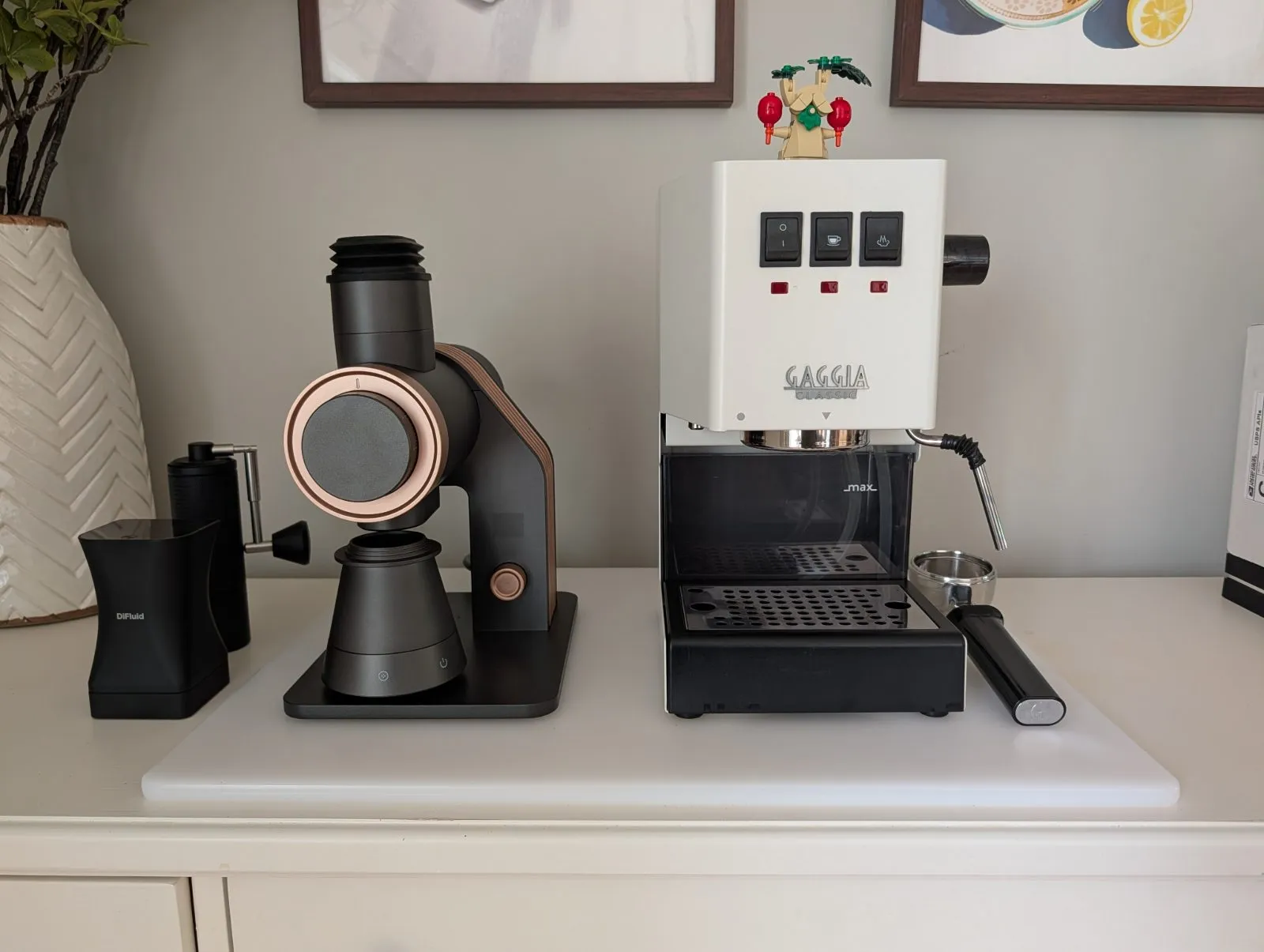
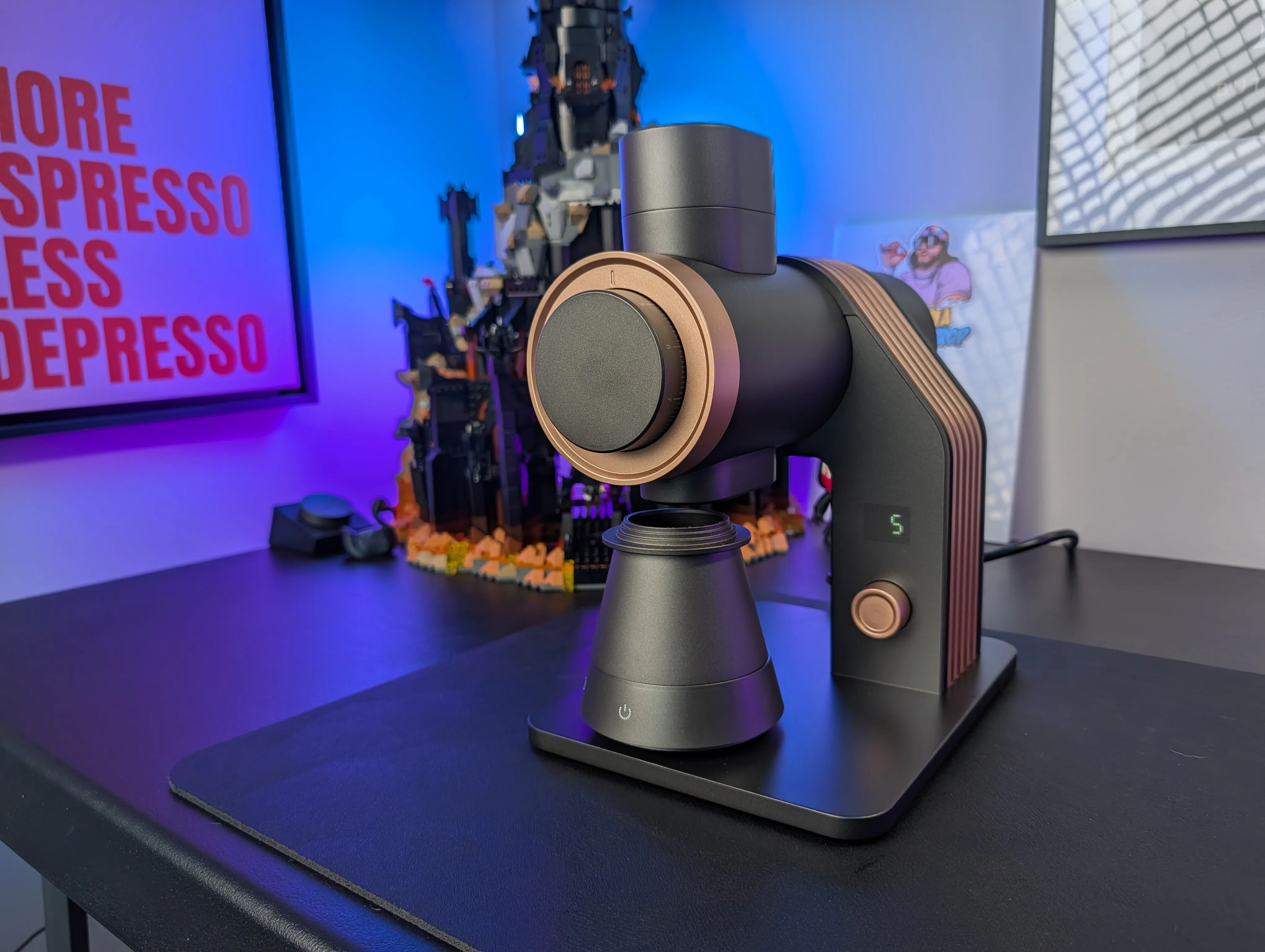
Today we’ll be looking at another: the Gevi GrindMaster VelPro 400.
The GrindMaster entered the world as a crowdfunded stepped grinder back in 2023. Now a standard retail grinder, it’s been upgraded to offer stepless grinding with vertical 64mm flat burrs and a 400w motor with adjustable RPM.
At its full retail price of $490 (and you can often find it for a bit less than that), the GrindMaster undercuts other affordable vertical flat burr options like the TimeMore Sculptor by over $100, making it one of the least expensive options with this feature set available.
But, as with any race to the bottom on price, there’s always the risk that the compromises needed to bring down the price tag are felt in build quality and performance.
Is that the case here? I put the GrindMaster to the test to find out.
Features
- Black or Silver finish
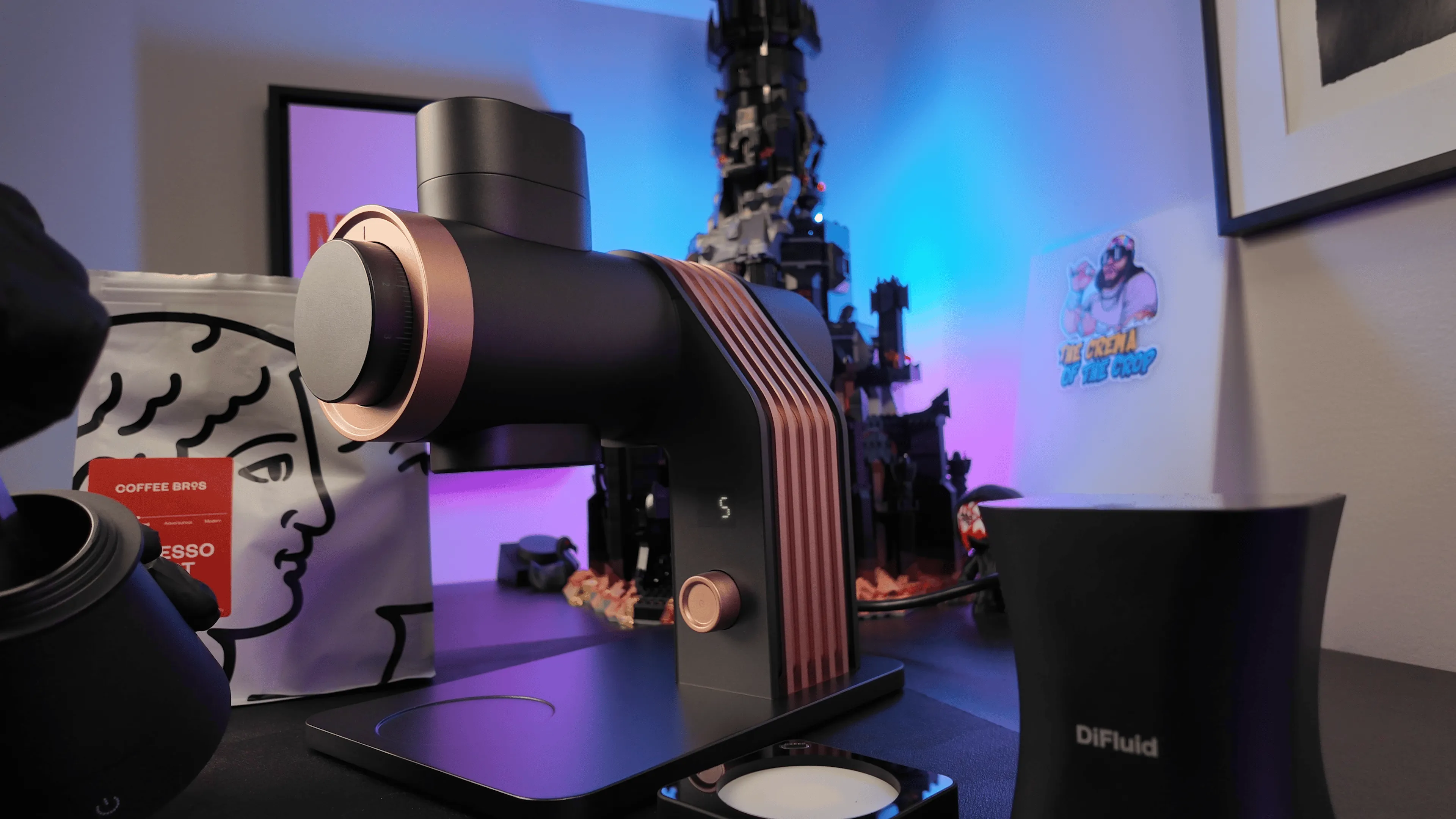
- Vertical 64mm titanium flat burrs
- 400w motor with adjustable RPM (500-1500)
- Plasma generator for reduced retention
- Stepless grind adjustment
- Pre-breaker
- Includes dosing cup that fits into an integrated digital scale
Unboxing
Unless you live in China, the Gevi will be traveling a long way to reach you. Mine came in a box within a box, with the inner box flipping open to reveal the included cleaning brush, dosing cup, scale, bellows, power cord, a USB C cable for the digital scale, and the grinder itself, all individually-wrapped and nestled in a healthy amount of foam.
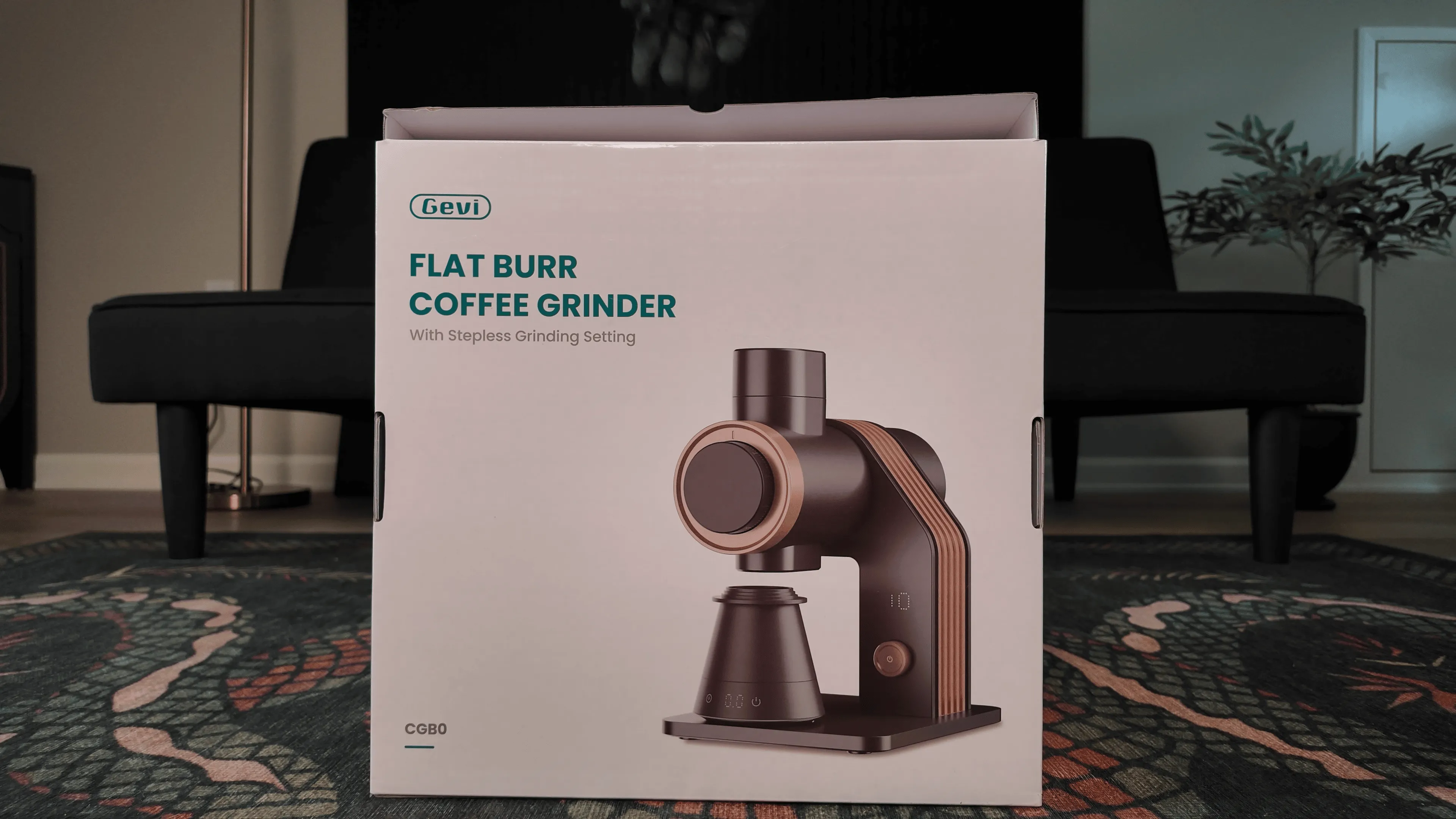
The digital scale greets you with an LCD “hi” when you turn it on, and the strong first impression doesn’t end there.
With the exception of the grind adjustment dial, and scale, the GrindMaster is all-metal and it feels substantial, weighing in at 14.6 lbs.
All the components slot in nicely with the scale and dosing cup satisfyingly being held in place below the grounds chute with magnets.
The GrindMaster will be assembled and ready for use within minutes of unboxing, and we should talk about the design, because it makes quite a statement on your countertop.
Design
The GrindMaster’s appearance is not going to be for everyone. Its half-futuristic-half-art-deco design is definitely eye catching. I personally love it, but it might not be a fit on every countertop.
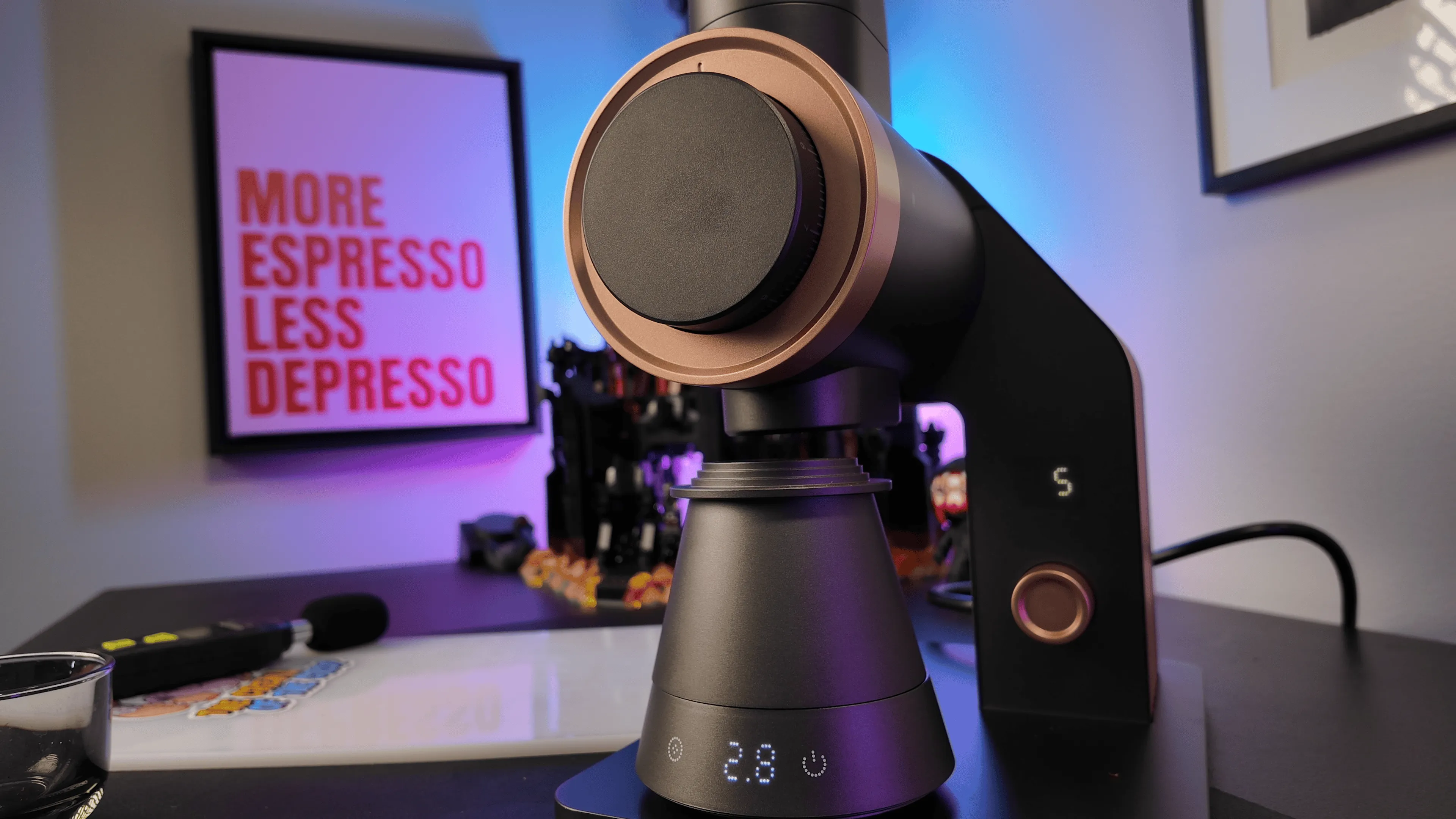
Gevi has made some really clever design choices, starting with the aluminum dosing cup. While its conical shape may take some getting used to, the three steps around its lid mean it will fit snugly within a 51, 54, or 58mm portafilter.
Some people will love the inclusion of a scale, particularly those who value having a clutter-free coffee area. Others who have already invested in an Acaia scale may end up ditching it, but the scale offers 0.1 g precision, which is not bad for a throw-in.
The user interface is straightforward, and everything is operated with two knobs: The grind adjustment, and the RPM knob which doubles as an on/off button. The hidden LED display that sits above the latter helps keep up a clean, seamless appearance when the grinder isn’t being used.
I mentioned earlier that the grind adjustment dial is the only plastic component of the grinder itself, and while that’s not a huge deal, swapping it out for metal would have pushed the GrindMaster into a more premium-feeling territory. Gevi claims that this decision was for “better grip, reduced vibration, and electrical safety” and, if we’re reading between the lines correctly and that means less of a risk of getting electrocuted, then maybe that’s fair enough.
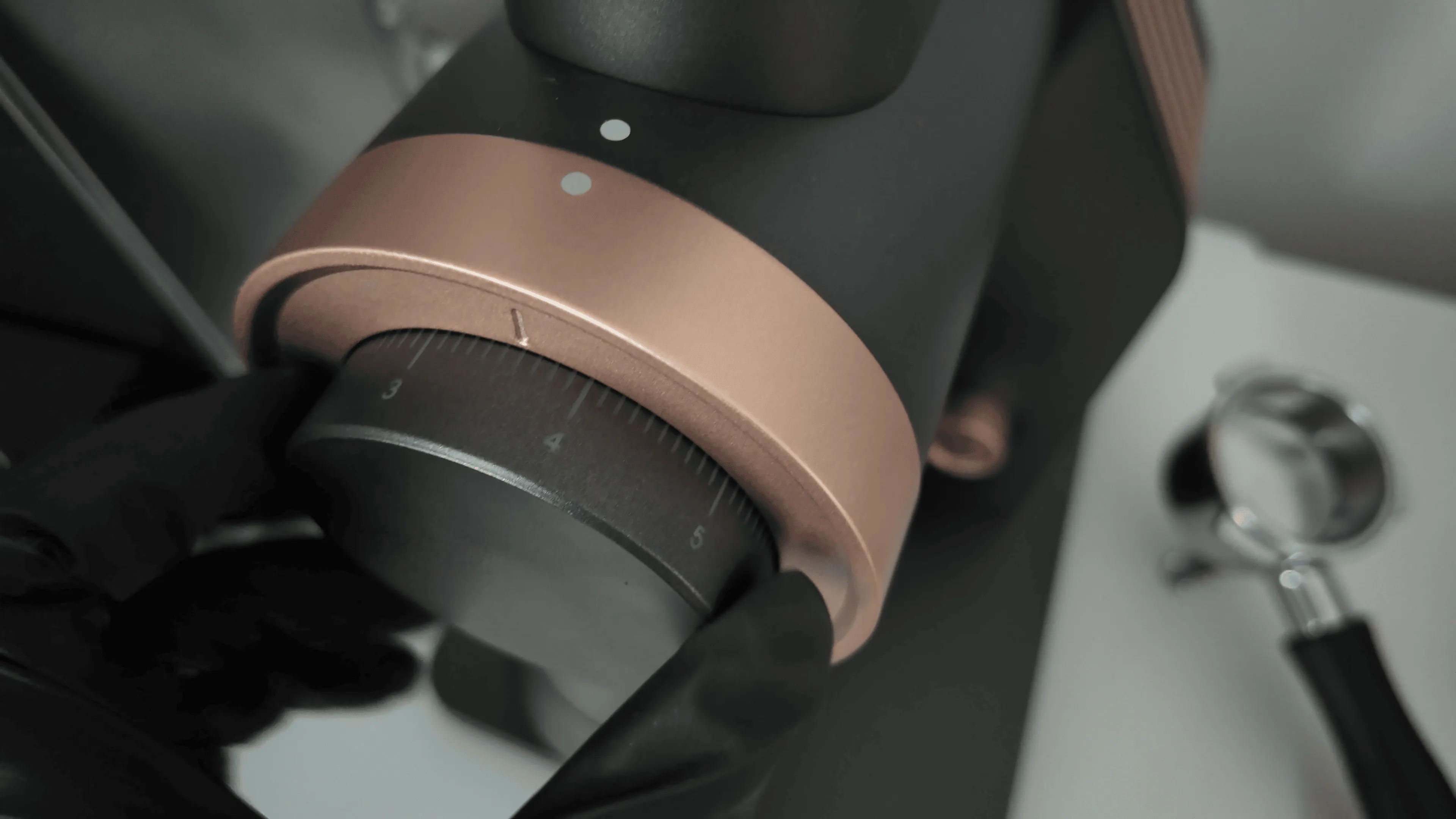
Another nitpick applies to those with limited counter space. The GrindMaster’s decision to support the grinder with an arm that swoops in from the side, rather than from below, like the TimeMore Sculptor, adds significant width to its base, and the GrindMaster does have a pretty significant footprint, measuring 7.3" wide and 11.9" long.
Overall, the GrindMaster is a winner on the design front, with a number of intentional-feeling choices that all add up to a straightforward user experience. But, how does it perform under the hood?
Burrs & Calibration
The GrindMaster’s 64mm burrs are made from strengthened steel and coated with titanium, which Gevi claims adds to their longevity, sharpness, and precision.
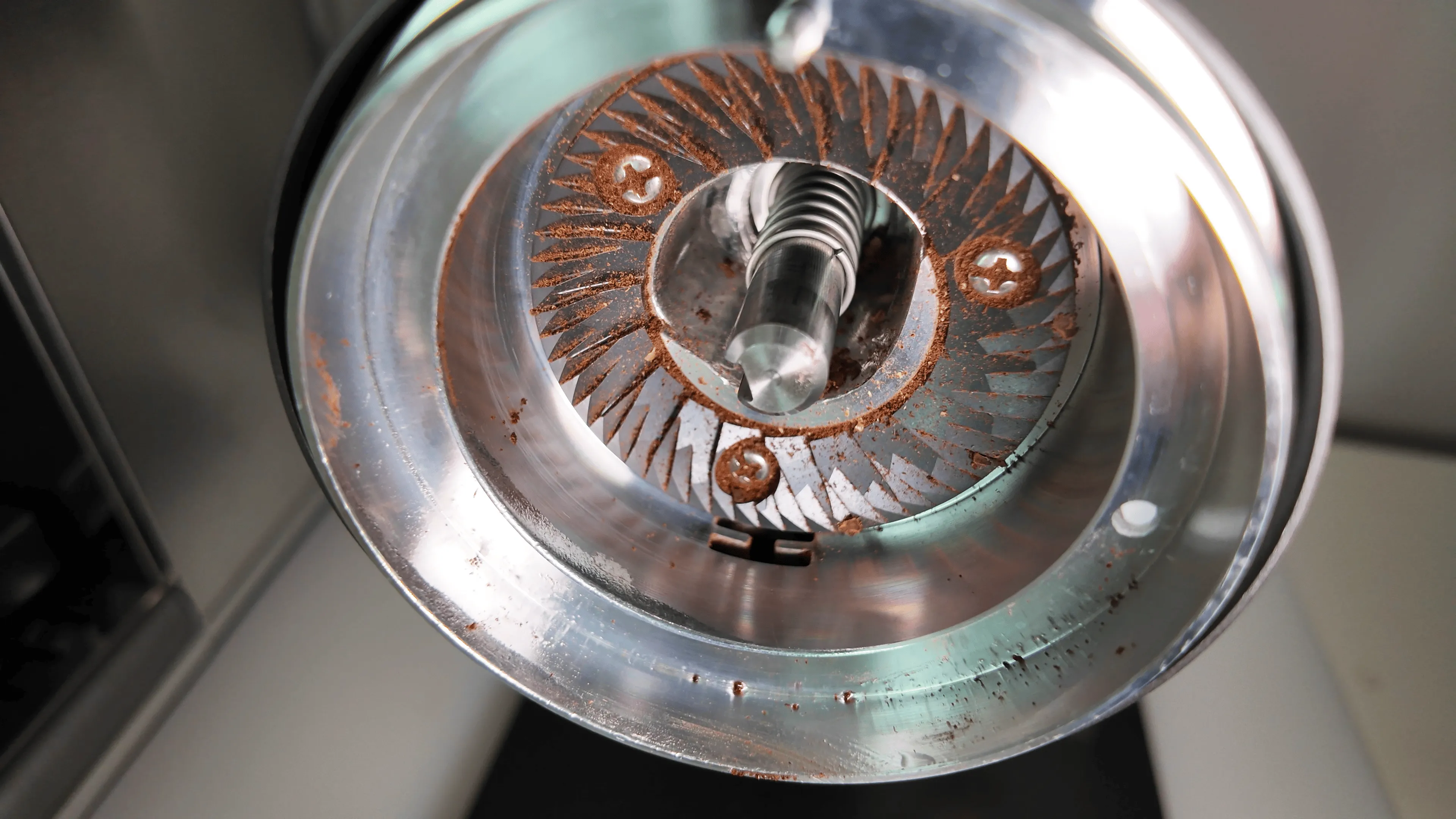
For many users eyeing the GrindMaster, however, the included burrs won’t matter as they can be easily swapped out for a set of third party SSP burrs (widely considered to be the best after-market upgrade there is).
The ability to upgrade the included burrs is a real selling point, especially when you consider the rest of the package: For an additional $185 you could pair the industry’s pre-eminent burrs with a 400w motor and adjustable RPM all for under $850.
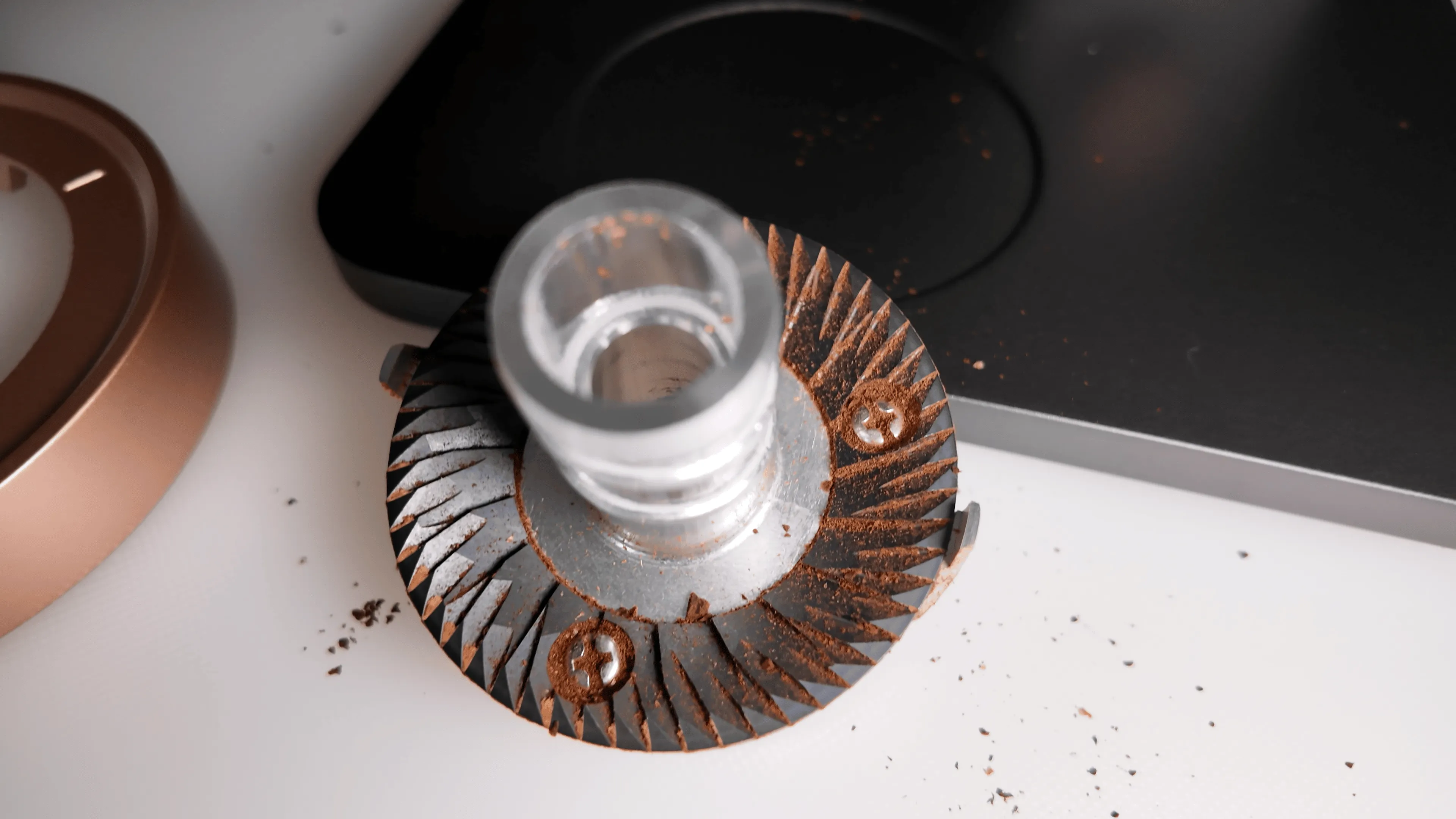
Whether it’s for swapping out or everyday cleaning, Gevi makes it easy to get at the GrindMaster’s burrs by rotating the inner burr collar. This is especially useful, because over time grounds can build up in a number of different areas around the burr mechanism, despite the use of included bellows and the retention-reducing plasma generator.
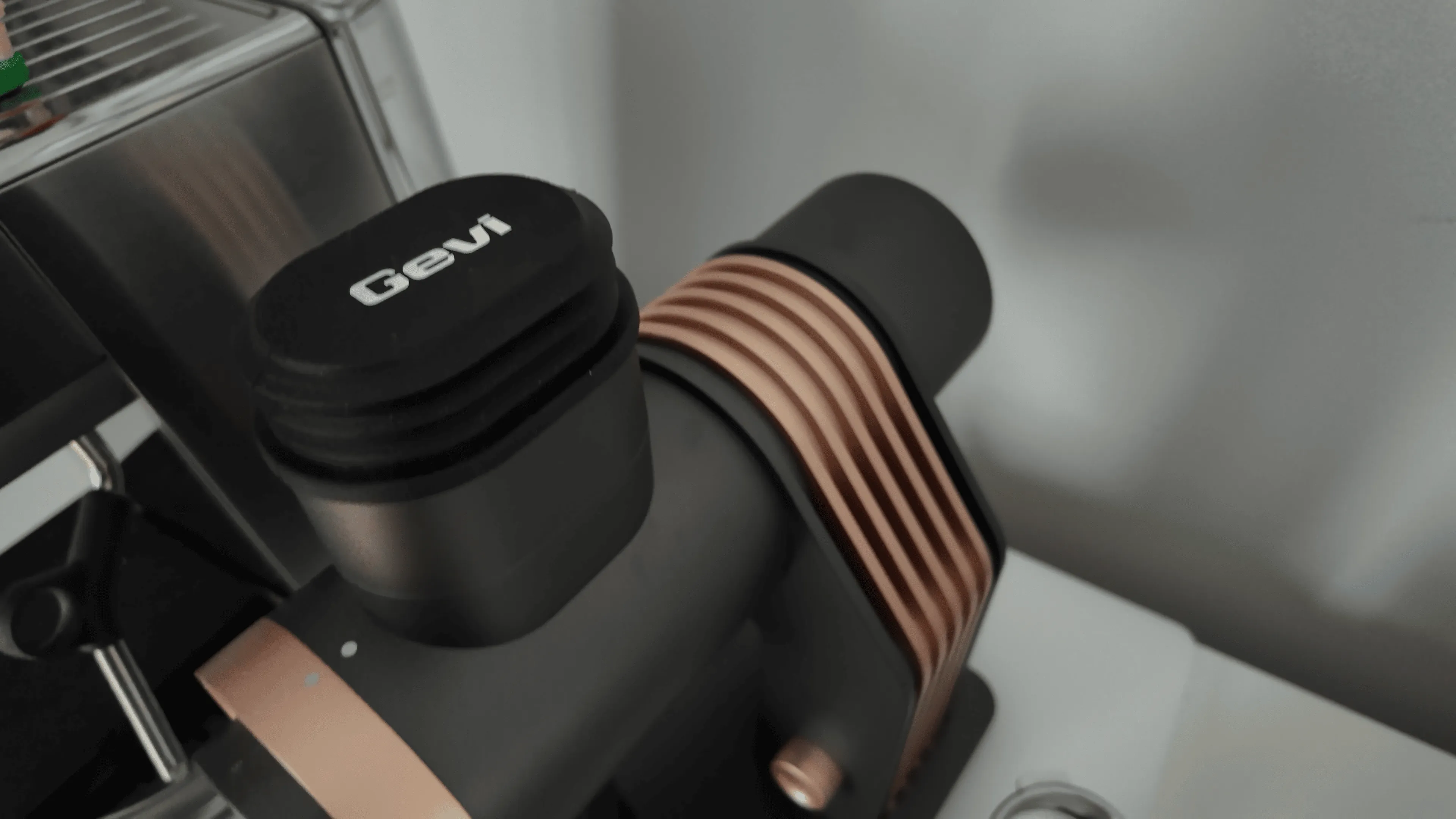
Calibrating the burrs after cleaning is also made easy by aligning two dots on the grinder’s body and the inner ring cover when the latter is fully tightened. If the two don’t align, Gevi offers detailed instructions for finding the zero point once the burrs touch and calibrating from there.
The earliest versions of the GrindMaster had stepped adjustments and meant limited ability to dial in espresso. Quickly after its release, Gevi made the decision to upgrade to stepless adjustments for the current version of the GrindMaster, and in doing so made it a true all-rounder, a distinction that can’t be claimed by some competitors in this price range like the Fellow Ode 2.
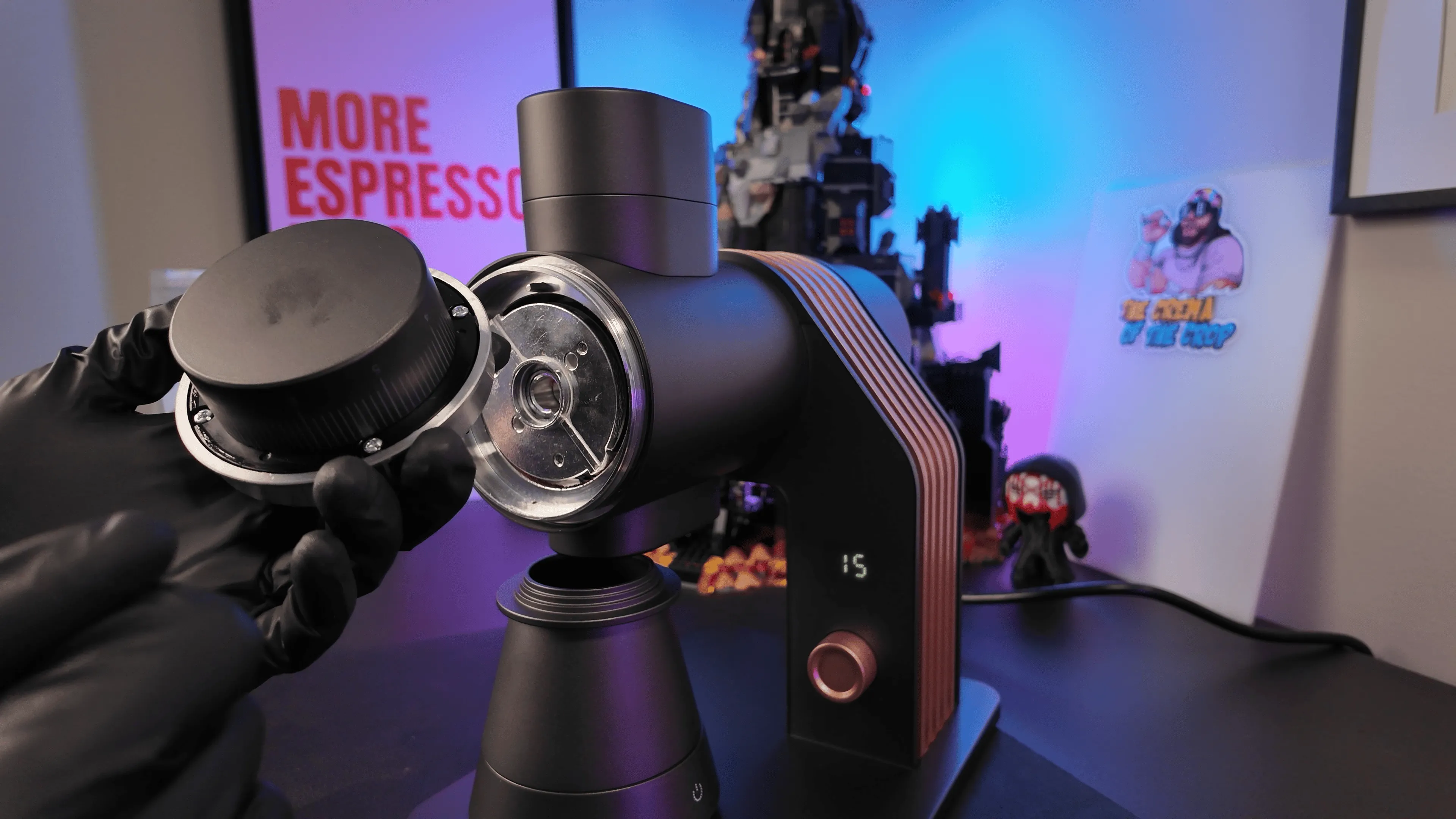
The addition of adjustable RPM also means, in theory, that it’s possible to control the amount of fines that make their way into the cup, with lower RPMs grinding at a slower pace in which beans are ground more consistently, with higher RPMs allowing more fines through. This promises to offer greater control over the resulting flavor profile of the coffee.
On paper, it all sounds great. Now, let’s see how it performs.
Performance
Particle size distribution
I’m stoked to confirm the Gevi VelPro outperformed my expectations in every regard. The build quality initially surprised me considering the price. But looking at the data, it remains remarkably consistent.
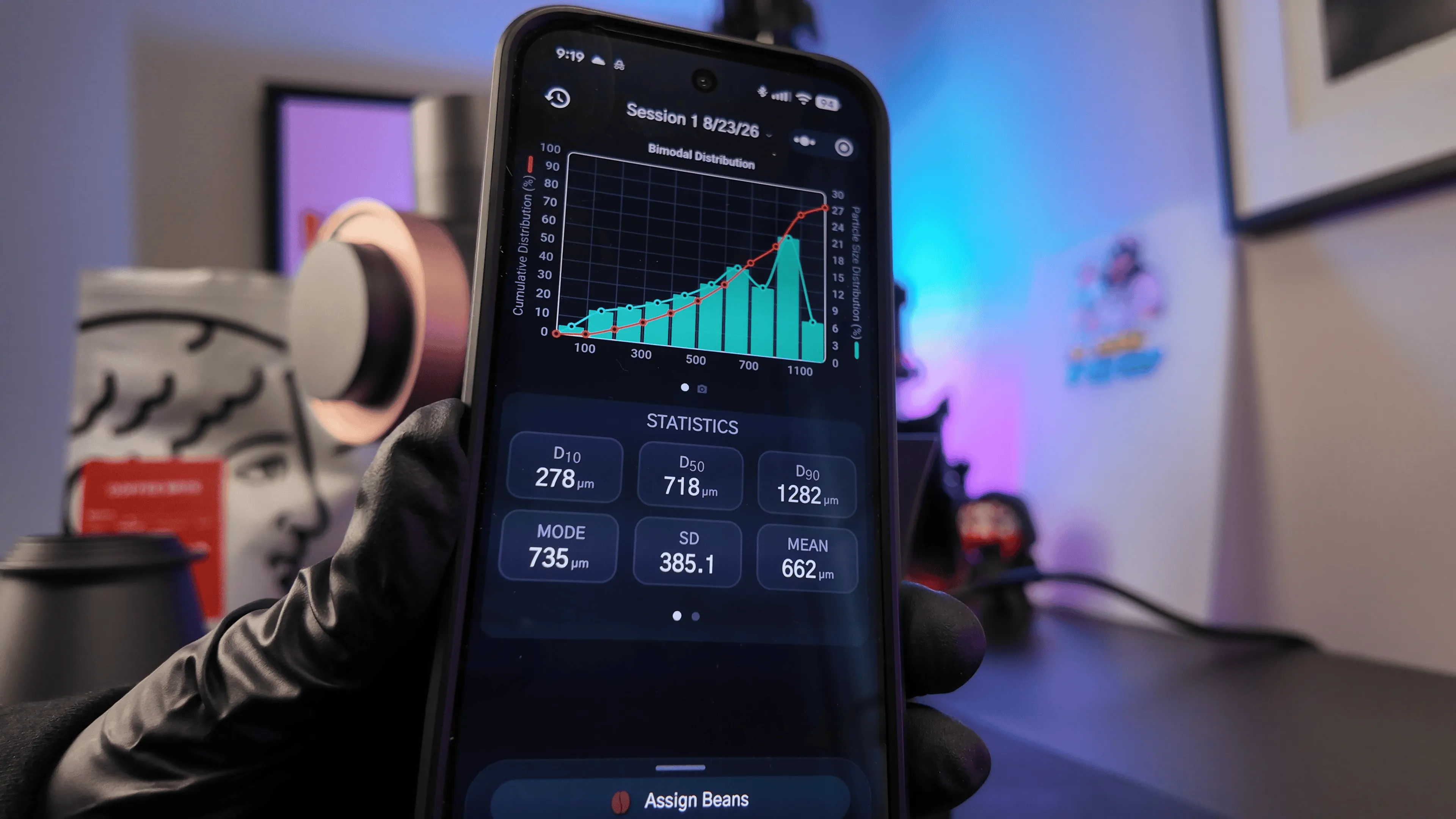
At setting 3, slightly above espresso level, I recorded the lowest between-run standard deviation out of any grinder tested so far. And this performance remained consistent from setting 1 all the way through to setting 10. The dial continues into another rotation, so I did not record the max yet, but take a look at the data so far.
Low vs High RPMs
After running the general particle analysis, I reran another series of tests using setting 4 (after calibration). The first set I ran at 500 RPM, and the second set at 1500 RPM. By tripling the speed from 500 to 1500 RPM, I noticed an increase in the volume of fines by about 2.4%, which pulled the average particle size (D50) down by roughly 12um. Moreover, the between-run standard deviation was 22.5 @ 500RPM and 24.7 @ 1500RPM.
So while this isn’t a huge difference, and I’m only working off of 5 data samples (with Bessel’s Correction), the results do help confirm the general knowledge of higher RPMs producing more fines. Which really makes you wonder - shouldn’t more manufacturers be focusing on this as a standard feature?
Retention
Gevi included the bellows for a reason. When grinding at 500 RPM and at espresso fineness, I noticed about 0.2 - 0.3 grams (from an 18g dose) will be retained before using the bellows. Once you push some air through, you’re able to get close to the full dose out (typically still about 0.1g under).
But, when I bump the RPM up to 1500, I’m getting the full 18g dose out without even needing the bellows. The extra speed of the burrs is enough to kick the remaining bit out.
So here’s my trick when running at 500 RPM. Let the grinder continue to run for about 5-7 seconds after you think the beans are finished. You’ll notice a small amount continues to kick out. Then, kick up the speed to 1500 RPM and use the bellows. It’s the most foolproof way to get everything out of the burrs from a 500 RPM grind.
The combination of the integrated scale, the variable RPM, and the included bellows makes it really easy to fine-tune and verify your final dose.
Sound Test
This grinder is also remarkably quiet without beans in it. A lot of electric grinders, especially in the budget range, have a bit of a motor whine. This does not. Obviously the sound level increases when there’s beans in the hopper, but the low-vibration, low-whine motor has a more pleasant sound over something like the $200 range Fellow Opus or Baratza Encore ESP.
No Beans | While Grinding | |
|---|---|---|
5 RPM | 47 dB | 78 dB |
15 RPM | 57.5 dB | 85 dB |
For comparison, the Fellow Opus recorded 77.3 dB and the Baratza Encore ESP recorded 88.2 dB.
Final Verdict
I wasn’t sure what to expect with the product. Or, I should say, I didn’t have very high expectations as Gevi isn’t a well known name. But the build quality is obvious when you pick it up, the design is (in my opinion) quite beautiful, and there’s not many other choices at this price point with variable speed motor like this.
Technical Specifications
| Brand | Gevi |
|---|---|
| Model | VelPro 400 |
| Adjustment | Stepless |
| Weight | 14.6 lbs |
| Footprint | 11.9"L x 7.3"W x 11.9"H |
| Capacity | 40g (Single Dose) |
| Burr size | 64mm |
Common Questions
- Can the GrindMaster VelPro 400 grind espresso?
- Yes. Despite early versions of the GrindMaster only offering stepped grind adjustments, the current VelPro 400 is fully stepless, with most espresso grind settings existing within the 2-4 range on the adjustment dial. It's capable of a more modern, clarity-focused shot of espresso.
- Will replacing the GrindMaster VelPro 400’s burrs void my warranty?
- Gevi offers a 1-year warranty where they will replace “any part of the machine which fails due to a defect in materials or workmanship.” While product modifications are excluded, Gevi doesn't count swapping the burrs as a modification. It's designed to be able to use industry favorite SSP burrs.
- How does the GrindMaster’s RPM adjustment impact flavor?
- The impact on flavor has to do with the TDS % (total dissolved solids) in the final cup of coffee. At a lower RPM, fewer fines will make their way through the burrs, while higher speeds will allow more through, adding more solids to the cup and changing the flavor profile.