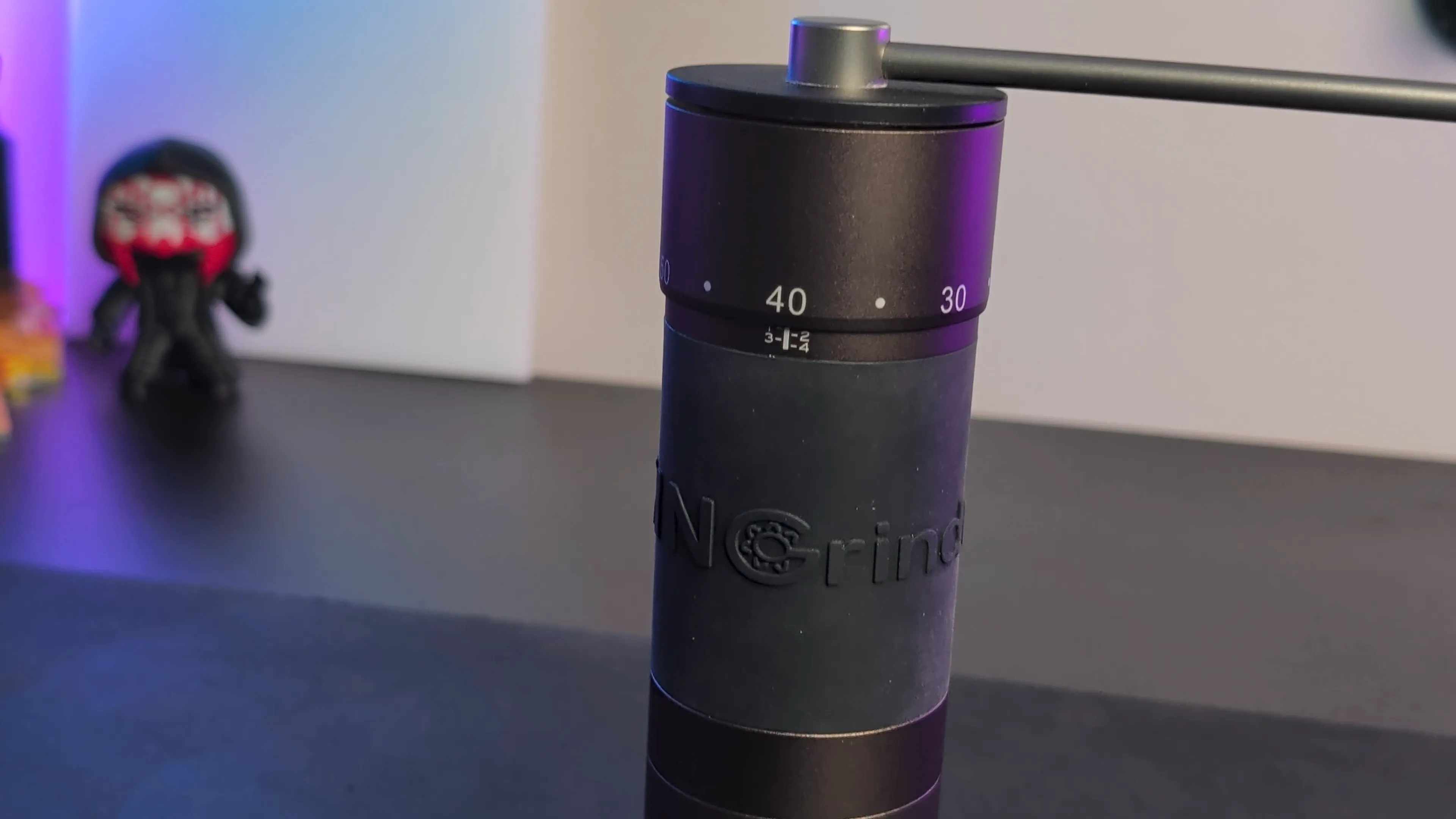
Kingrinder K6 Review and Grind Chart
The K6 is a solid and precise grinder, but its external grind adjustment holds it back from being crowned king of the ~$100 hand mill.
Grind data is captured via DiFluid Omni NIR analysis. I plot the particle distribution across 16+ settings to identify the 'Optimal Zone' for each brew method. Actual results vary based on roast type and freshness, among others; however, it remains a starting point for dialing in.
This site is 100% ad-free and always will be. This particular review was conducted on a factory-new, calibrated unit, and was not sponsored. I purchased this unit for testing purposes. Purchases made through our links may earn a commission, supporting the testing and data acquisition.
K6 Grind Size Chart
A Note on These Settings: The interactive chart below uses a combination of manufacturer and crowdsourced data from CoffeeOS to give you a rough "ballpark" starting point for dialing in. For the true technical breakdown, scroll down to my particle analysis, where I use a DiFluid Omni to measure actual micron distribution, fines percentage, and grind consistency of this unit.
Full Review and Benchmark Test
The KINGrinder K6 is the Taiwanese grinder maker’s current top of the line (with the K7’s release looming on the horizon for some point in 2026). KINGrinder’s lineup is split between the P series of grinders, which focuses on compact size and affordability, and the K series, which offers finer adjustments and (for the most part) bigger burrs. The K6 is the priciest option of the bunch at the moment, but at $109 that’s not saying much.
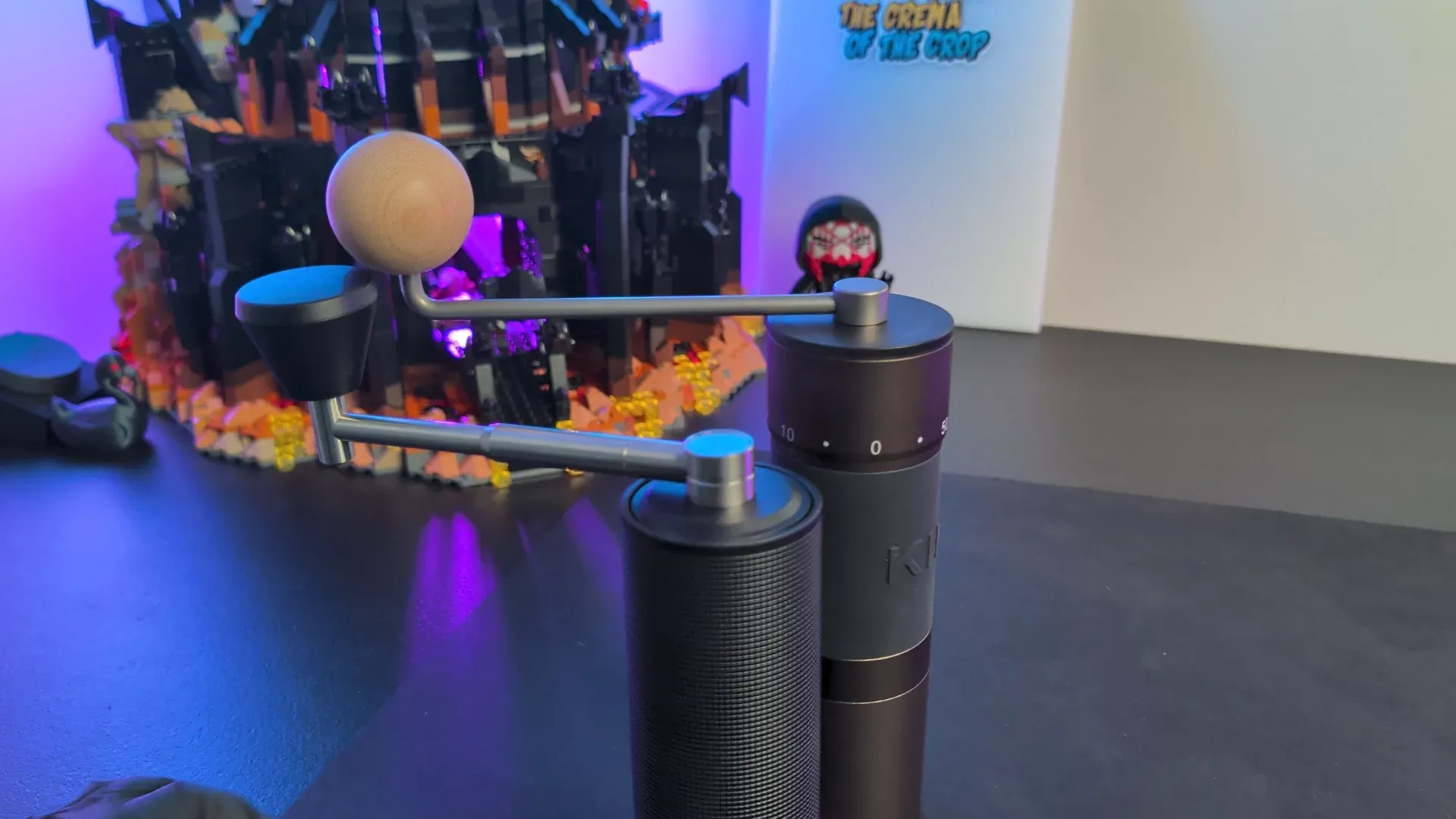
The K6 is an all-rounder, grinding from Turkish coffee all the way up to french press. Its price-point and feature set places it in a similar category and user base to the Timemore Chestnut C3 ESP Pro: users who either want a feature-rich manual grinder but aren’t yet ready for the expense of an electric grinder, or who value portability without wanting to compromise on grind size. A potentially key difference is the option to use a drill adaptor for electric grinding right out of the box (assuming you’ve got a drill and a 1/4” hex shank). Let’s see how it stacks up.
Features
- Aluminum body with rubber grip
- 240 total grind settings (4 rotations of 60 clicks per rotation)
- 16 micron per click grind adjustment
- 48mm stainless steel burrs
- Compatibility with a drill for optional electric grinding
- Included cleaning brush
Unboxing
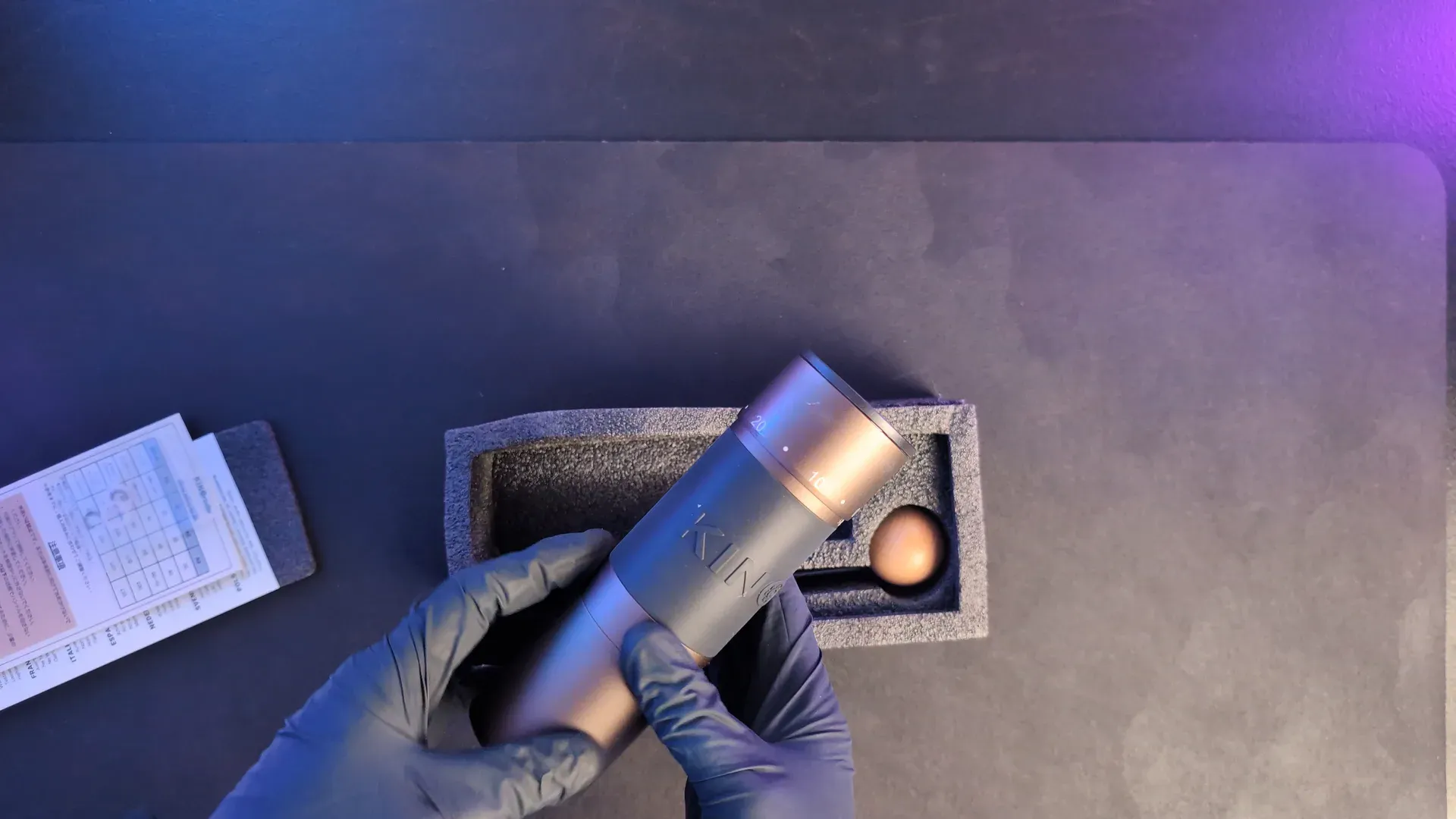
As you’d like to see in an affordable grinder, it looks like almost none of the K6’s $109 price tag went into the packaging. The quality of the grinder looks out of place next to the cheap-looking foam it comes encased in, and holding it for the first time the weight (1.4 pounds/630 grams) makes the grinder feel substantial in your hand while still feeling light and portable. The body is brushed aluminum with a thick rubber grip, and the plastic hopper lid is the only part that looks inexpensive once the packaging is out of sight. The choice to use wood instead of plastic for the grinder’s knob also lends to the premium look and feel of the grinder.
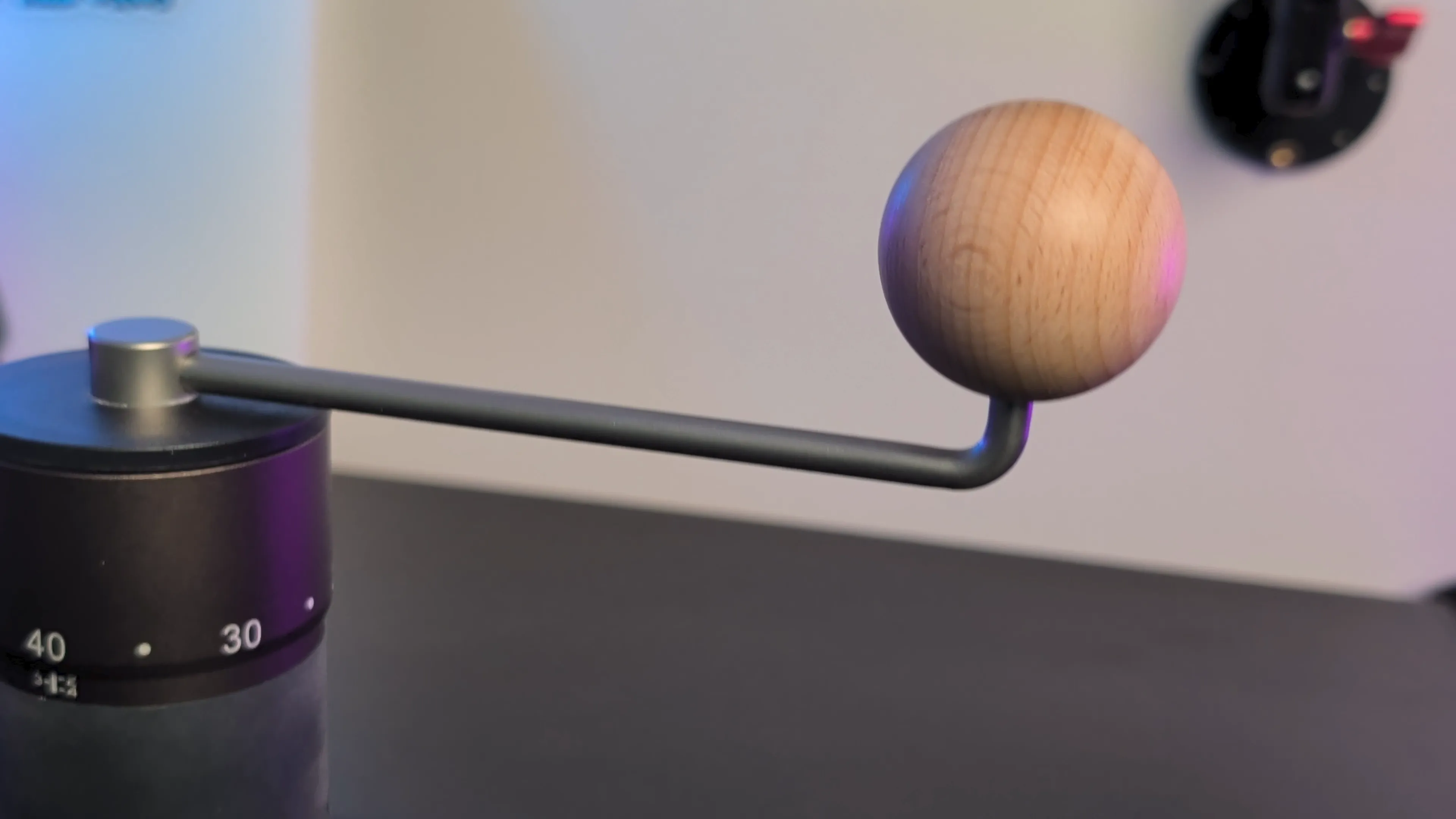
The one-page set of instructions come written in Mandarin on one side and English on the other. The English instructions are a bit head-scratching, but leads with an excellent reminder to not use this for shredding your fingers.
The K6 also comes with a cleaning brush (plastic but it will get the job done), a replacement circlip for holding the burr mechanism in place, and a couple o-rings which confuse many users. This is used to secure the handle in place; just make sure you attach the o-ring on the under-side of the lid
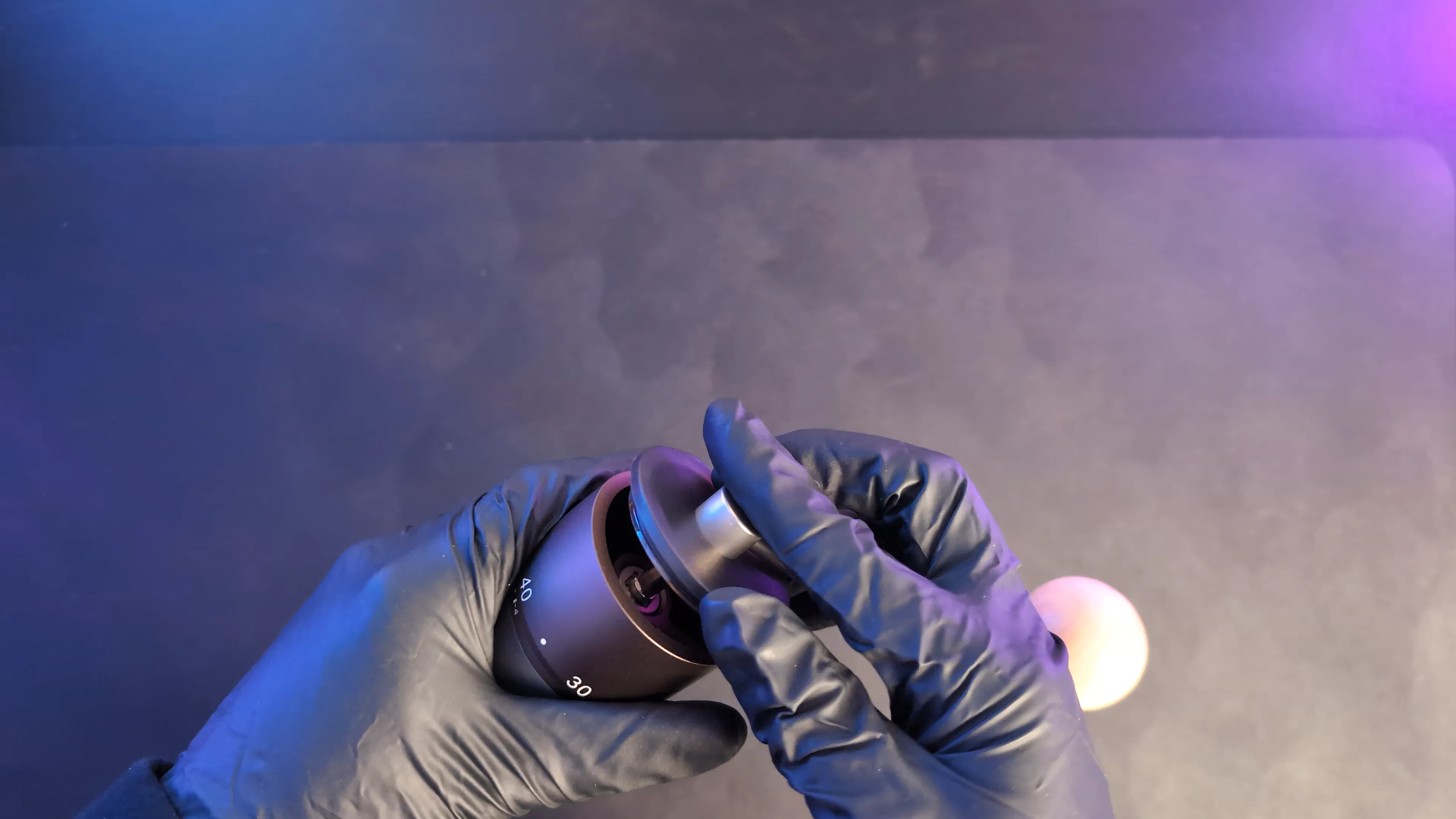
Once you’ve got the white o-ring in place, you’re ready to grind.
Design
The K6 makes a lot of clever design decisions for a manual grinder that’s as likely to be used for espresso as pour-over. The first is the palm-width rubber grip that covers the middle of the grinder’s body. If you’re grinding at an espresso-level fineness, getting a good grip for as much as a minute of grinding is essential, and the grip works well here.
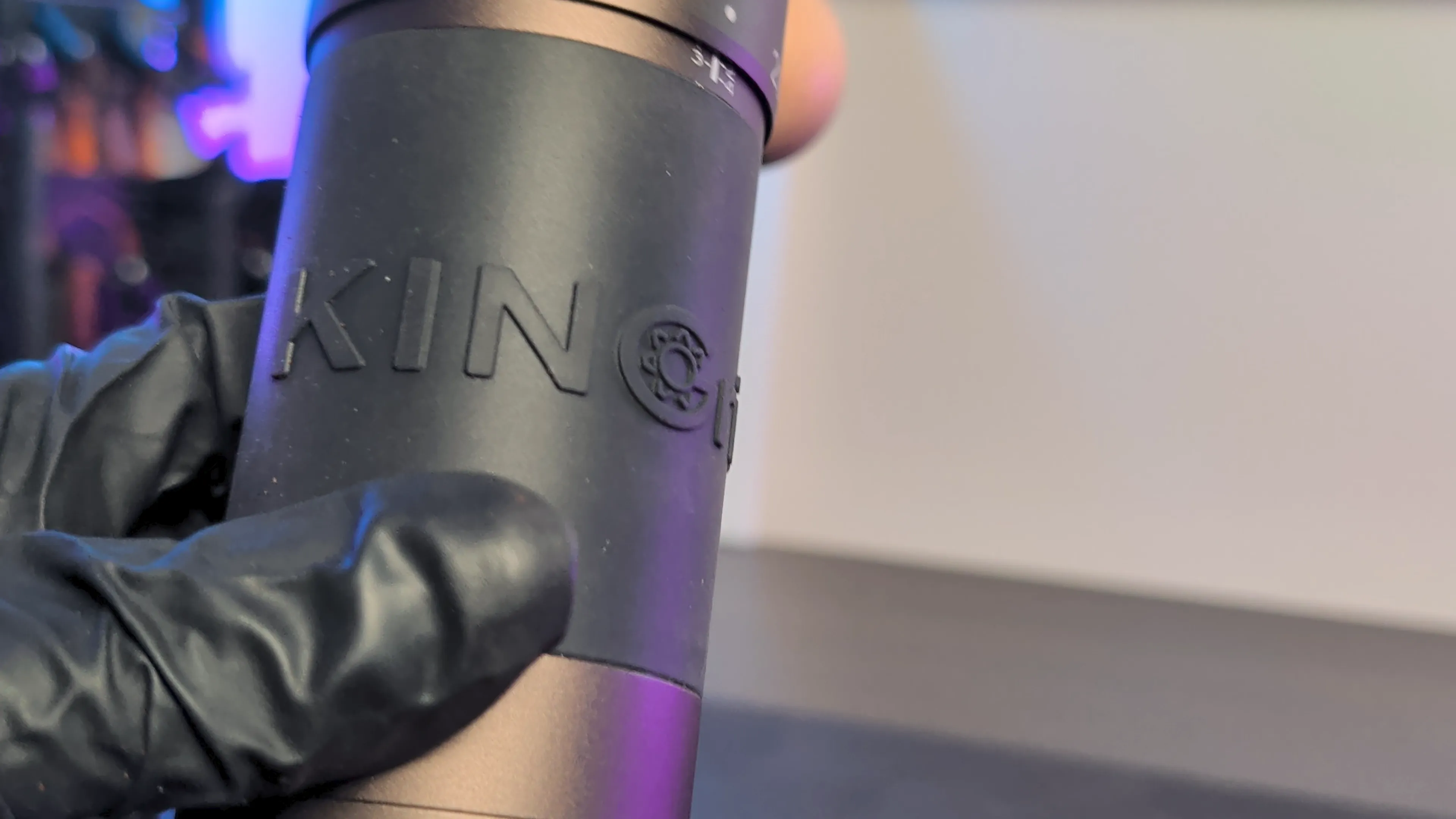
The same goes for the threaded catch cup, which was easy to get on and off. It’s a small thing, but catch cups held in place with a magnet or o-ring always have a slight risk that the cup will come off during grinding (especially if you’re really putting your back into it), but there’s no risk of that with the K6. Interestingly, it looks like this will change with the release of the K7, which uses a magnetic catch cup instead.
External Adjustment Settings
The K6 clearly labels adjustments with numbers at every 5 steps and has a satisfying click as you spin. At first glance, I thought I really liked how easy and accessible the external adjustments are. But this quickly turned into an annoyance because of how easy it is to bump the adjustment dial.
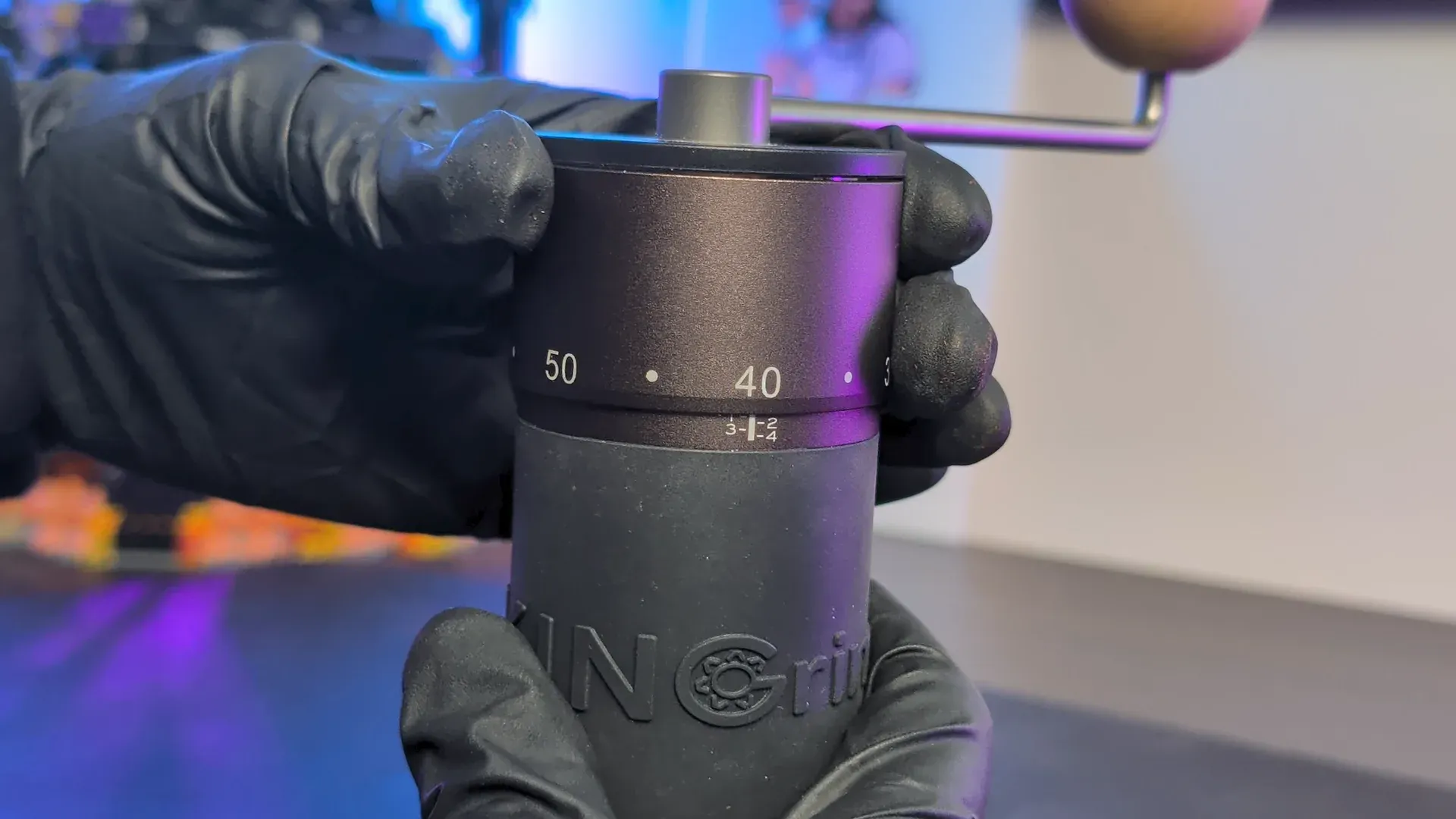
On the one hand, this can be a huge plus if you’re switching between espresso and pour-over in the same day. On the other, if you’re dialed in for a bag of coffee and you’re only making espresso, then accidentally changing your grind setting with the side of your index finger while grinding can be a frustrating experience, particularly if you only notice the change after you’ve made one or more shots. There’s a trade-off here, and it’s ultimately a matter of personal preference. The Timemore Chestnut C3 ESP Pro (which we’ve reviewed previously) housed its grind settings internally, and as that model is focused specifically on espresso, the internal grind settings may make more sense for users who want to dial in and stay in one place.
One really clever design choice is the numbers on either side of the grind-setting indicator which let you know which rotation you’re on. There are 4 total rotations of grind settings, and knowing where you are at a glance helps avoid the frustrating situation of getting lost in the grind settings when switching between significant changes.
Electric “Hack”
Now let’s talk about the option to turn this thing into an “electric” grinder using a drill. It is technically possible to swap out the handle of the K6 for a drill with a 1/4” hex shank, but it’s not the electric-grinder-replacing hack that it might sound like on the surface. For one thing, do you want to keep a drill in your kitchen? If you don’t mind having a slightly jankier coffee setup, then you can shave some manual effort and grind time off of manual grinding, and it’s all possible out of the box, but you will have to control your drill speed to avoid damaging the grinder. It’s all a bit clunky, and ironically, drilling your morning coffee might push you towards buying a full-electric grinder before manual grinding does.
Burrs & Calibration
The K6’s 48mm stainless steel heptagonal burrs set it apart from the other offerings in the KINGrinder lineup. Across the K series, the K6 is the only grinder that pairs seven-sided burrs (Ks 1 through 4 are all 6 sided) with 16 micron-per-click adjustments (the K5’s are seven-sided but at 18-microns-per-click).
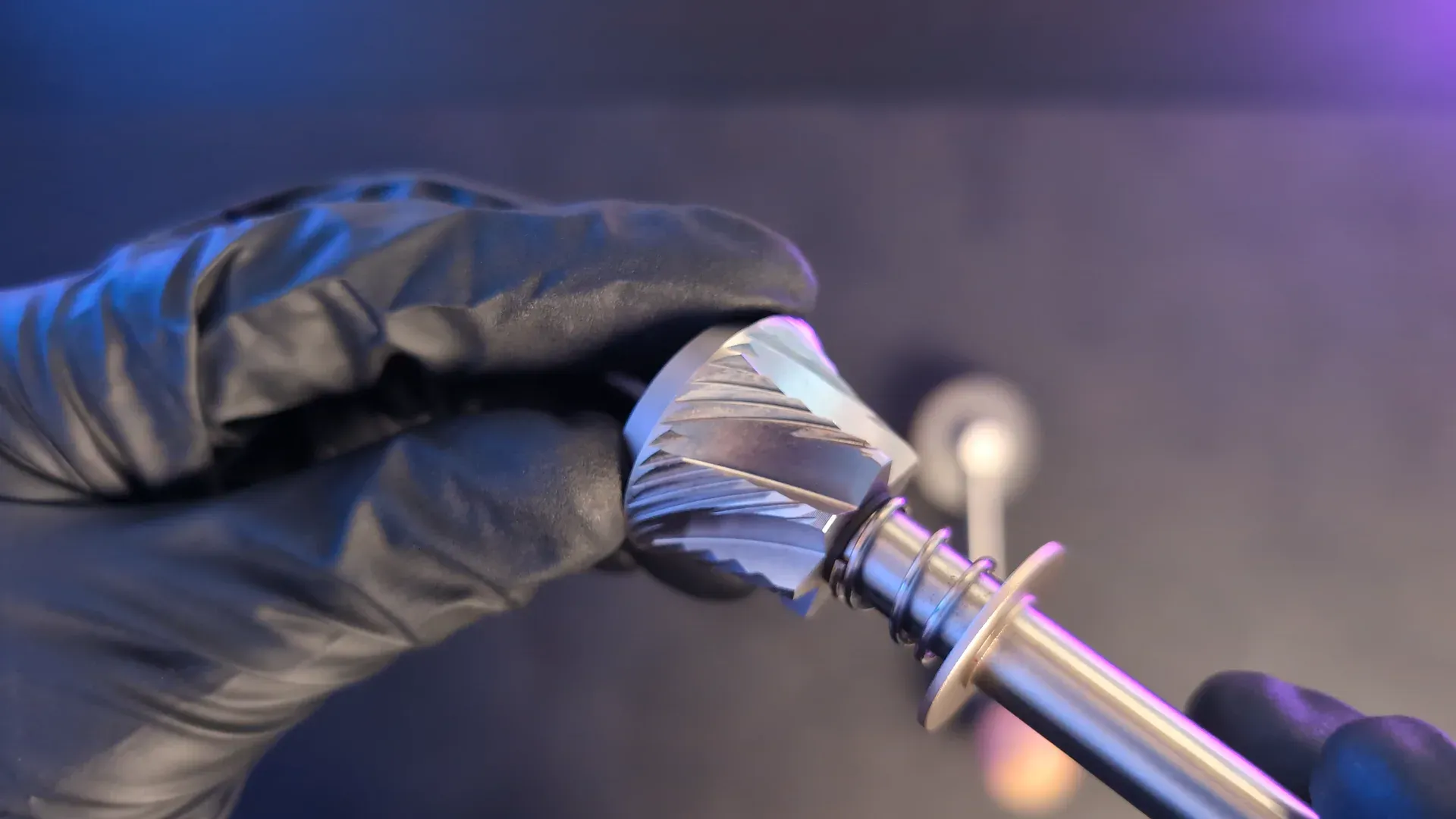
Changes are stepped but extremely fine. The K6 just beats out the Timemore Chestnut C3 ESP Pro for precision, which offers 23 microns-per-click. We’re splitting hairs here (technically fractions of a hair - a single strand is 70 microns wide) which are practically inconsequential for all but the most discerning espresso drinkers, and while the K6’s stat-line has the slight edge in precision, both grinders are more than suitable for espresso.
The adjustment dial rotates from 0 to 60 across 4 full rotations, for a total of 240 possible grind settings from the moment the K6 is out of the box.
Performance
Particle Size Distribution Test
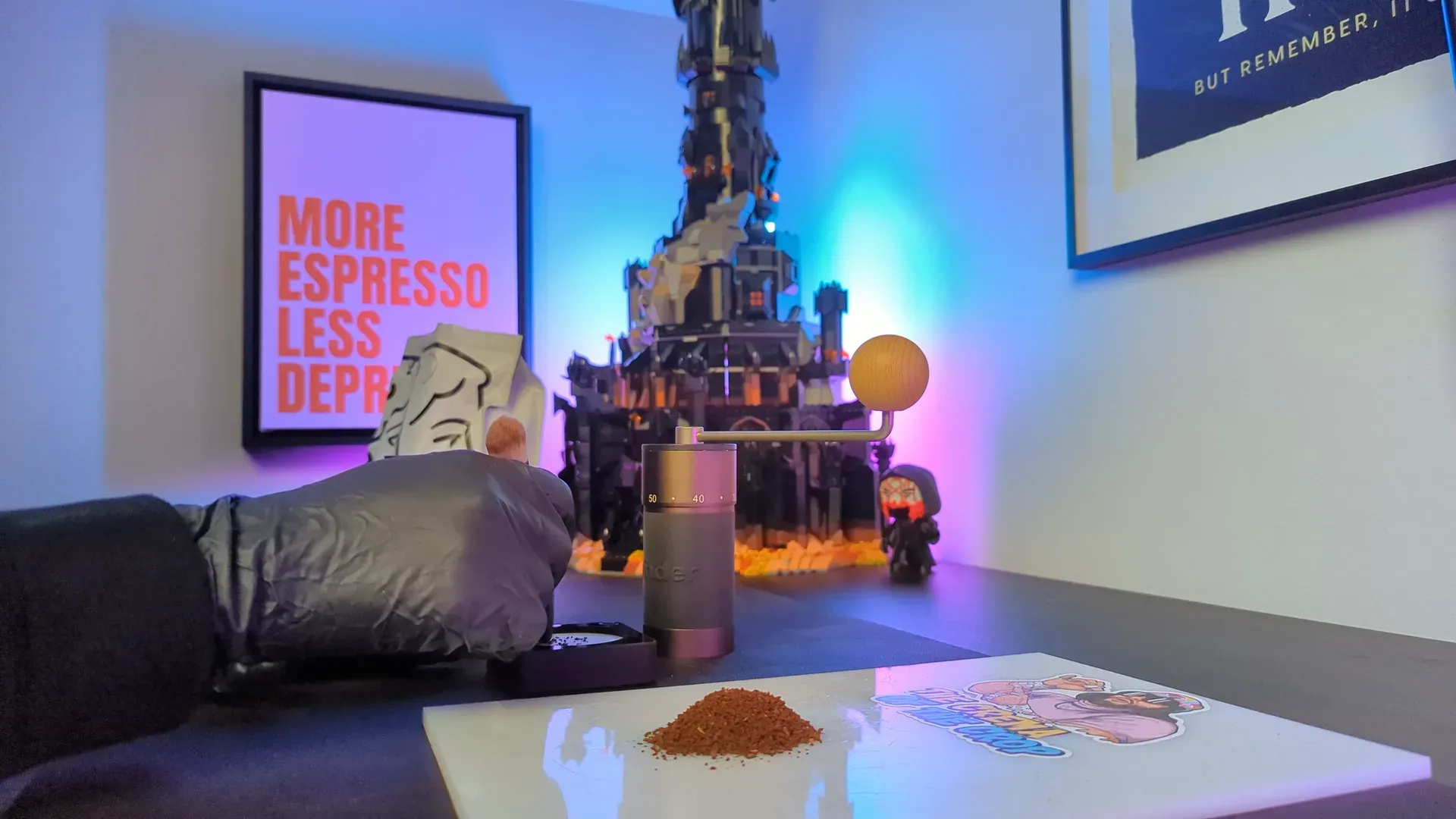
It’s remarkably easy to accidentally move your grind setting while using this. But once you get used to removing the lid without adjusting the dial and begin to look at the data, the KINGrinder K6 delivers excellent consistency.
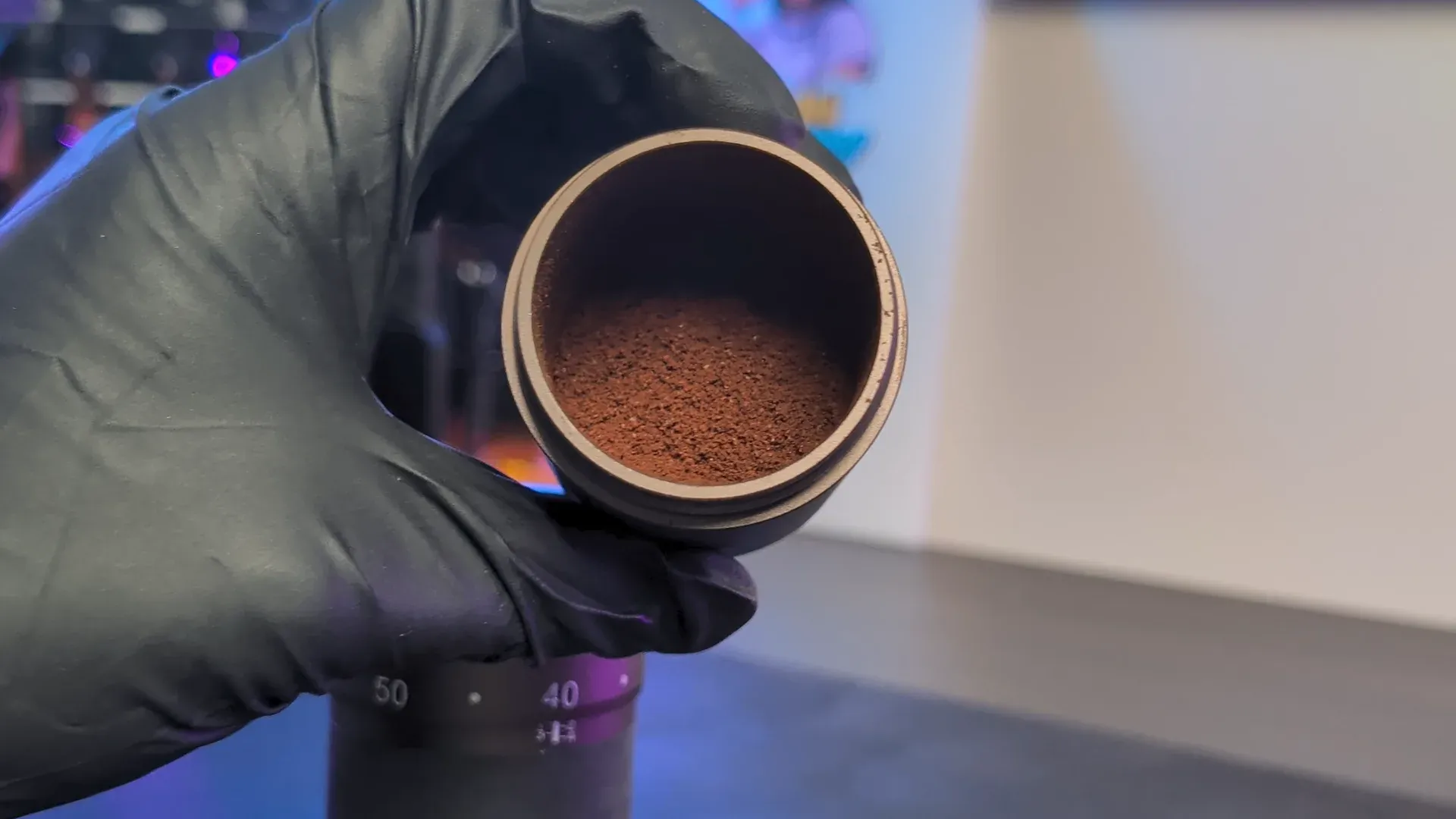
KINGrinder suggests 40 clicks for espresso, but 30 is much more common (but always depends on your beans). And at 30 clicks, it produced an insane 2.2% Coefficient of Variation (CV).
Things became more unpredictable at two full rotations (120 clicks), but everything leading up to it is very impressive.
Retention
Manual grinders typically have pretty good retention rates due to their simplicity, but material and opening design can influence this quite a bit. So retention remains as one of the best benchmarks to understand potential performance, since varying dose sizes effects your output from shot to shot.
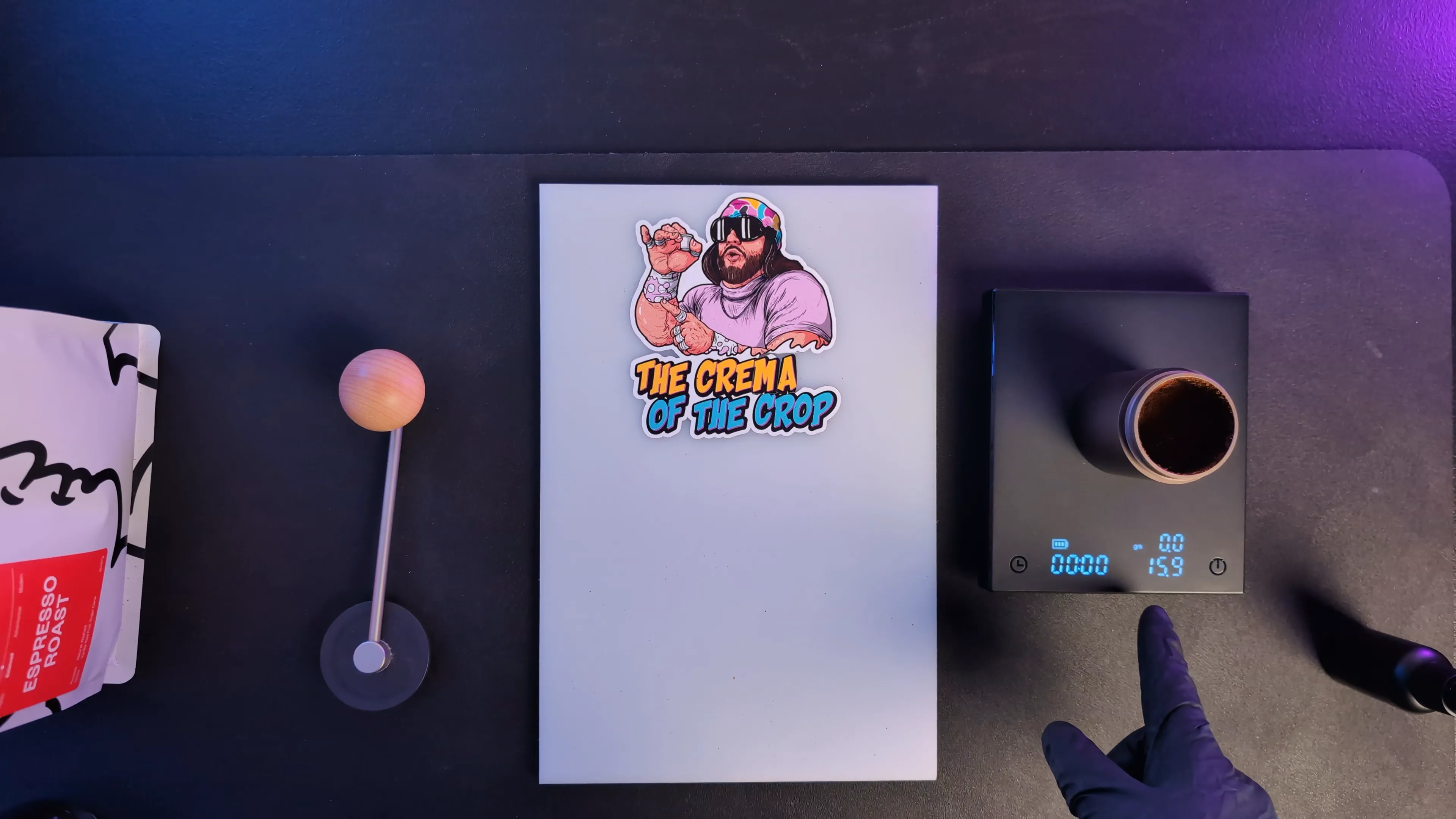
I disassembled the K6 and thoroughly cleaned it before running the test at their recommended setting of 40 clicks for espresso. I used 16 grams of beans, a quick mist and shake, grind, 3 love taps, and the result is just 1/10th of a gram retained. This is what I’m looking for in a manual grinder. You can often get the remaining bit out by removing the lid and smacking the top (the lid removed allows your hand to act like a bit of a bellows) and then turning the handle a couple more times. For comparison, the Timemore C3 ESP Pro I reviewed had the same 0.1 gram retention, and they also just so happen to be the same price… which begs the question: which grinder is better?!
Final Verdict
The best way to describe my feelings of the K6 is that I want to love it more. The grind is very solid, especially around 30 clicks for espresso. The retention matches expectations, and the price is great when factoring in the build quality. But I can’t say I love the size of the exterior dial adjustment. Even after using it for some time now, I still find myself accidentally moving my setting, particularly when removing the lid.
Using the K6 feels a bit more clunky compared to a Timemore C3, which is impossible to mistakenly change settings. I feel like they could have reduced the size of the adjustment dial so it didn’t take up the whole area above the grip.
A few design tweaks would take this to the top of my list. Until then, I’m sticking with the Timemore for a $100 budget.
Technical Specifications
| Brand | Kingrinder |
|---|---|
| Model | K6 |
| Adjustment | Stepped |
| Range | 0 - 1400 μm |
| Settings | 8 mapped |
| Weight | 1.4 lbs |
| Capacity | 30-35 g |
| Burr size | 48 mm |
Common Questions
- What grind setting should I use for grinding espresso with the KINGrinder K6?
- The K6’s manual suggests 40 as the best setting for espresso, but you’ll likely want to go a bit finer than that. The settings around 30-35 seem to be the sweet spot for most roasts, but some will take you even lower into the 20s.
- Why buy the KINGrinder K6 over the K5?
- The K5 and K6 use the same stainless steel burrs, but the K6 is the more feature-rich of the two, particular if precision is what you’re after. The K6 offers an additional 2 microns of precision per step, and the exterior adjustment mechanism makes for easier adjustments. The K6 also offers an additional 10g of hopper capacity for users who’ll be grinding multiple pour-over doses at a time.
- How does the KINGrinder K6 compare to the Timemore Chestnut C3 ESP Pro?
- The KINGrinder K6 has a slight edge in precision over the C3 ESP Pro (an additional 7 microns per click), so if you’re after the more precise option on paper, then the K6 is the winner. As we noted in our ESP Pro review, however, the ESP Pro is precise enough to accurately dial in your shots, and we preferred the overall design, making the ESP Pro the winner for us. It's a close race, and the tiebreaker is very likely to be price for most users.