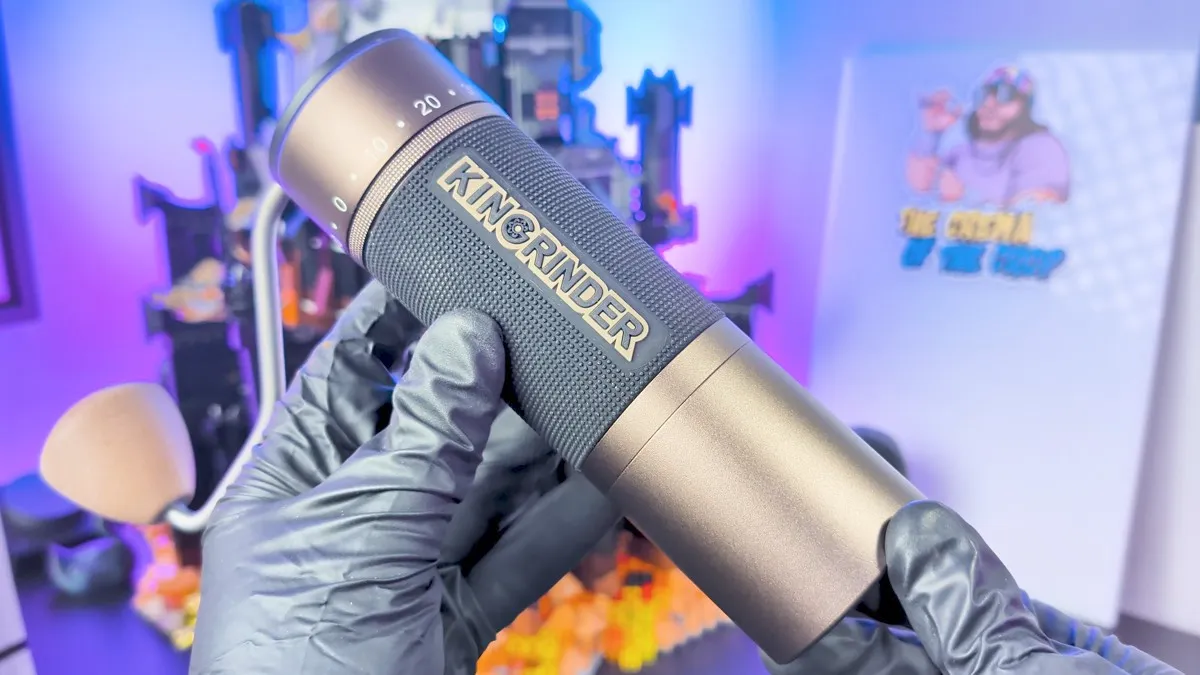
Kingrinder K7 Review and Grind Chart
The K7 sits atop the mountain of the best manual grinders alongside 1Zpresso's.
Grind data is captured via DiFluid Omni NIR analysis. I plot the particle distribution across 16+ settings to identify the 'Optimal Zone' for each brew method. Actual results vary based on roast type and freshness, among others; however, it remains a starting point for dialing in.
This site is 100% ad-free and always will be. This particular review was conducted on a factory-new, calibrated unit, and was not sponsored. I purchased this unit for testing purposes. Purchases made through our links may earn a commission, supporting the testing and data acquisition.
Full Review and Benchmark Test
When we reviewed the KINGrinder K6, we noted that a few design tweaks could take it to the top of the hand mill rankings.
Since then, KINGrinder has released the K7, its new top-of-the-line hand grinder. Debuting at ~$150, the K7 sits about $40 up on the K6. Notably, it also sits $100 back of the premium 1Zpresso ZP6, a grinder that KINGrinder has positioned itself against with this newest instalment in the K-series of grinders, based on a lot of the online discourse out there.
KINGrinder has marketed the K7 towards “pour-over enthusiasts” (the ZP6’s target market) while still supporting the grind settings needed to go from the fineness of Turkish coffee to the coarseness of french press.
Let’s take a closer look and see if the K7 is enough of an improvement on the K6 to make it worth the price jump, and, if so, whether it can beat out the pricier options out there to take the hand grinder crown.
Features
- Aluminum body with rubber grip
- 100 total grind settings
- 15 micron per click grind adjustment
- 53 mm stainless steel burrs
- Compatibility with a drill for optional electric grinding
- Magnetic catch cup
- Included cleaning brush
Unboxing
Just like the K6, it’s clear from the simple packaging of the K7 that almost every penny of its price went into the grinder itself rather than the packaging.
The grinder sits in cheap foam, alongside a set of o-rings, The grinder handle, an included plastic cleaning brush, and KINGrinder’s signature idiosyncratic instructions, complete with a handful of small typos and grammatical errors on the English side of the 1-page setup guide. Fortunately, these don’t interfere with the otherwise simple setup, provided you make sure to swap out the black o-ring on the lid for a white one if you’re planning on using the handle for hand-grinding rather than an electric drill (check out our K6 review for our thoughts on using a drill as a “hack” - it’s an interesting idea, but in practice this is a case where the vast majority of users will prefer the lower-tech option).
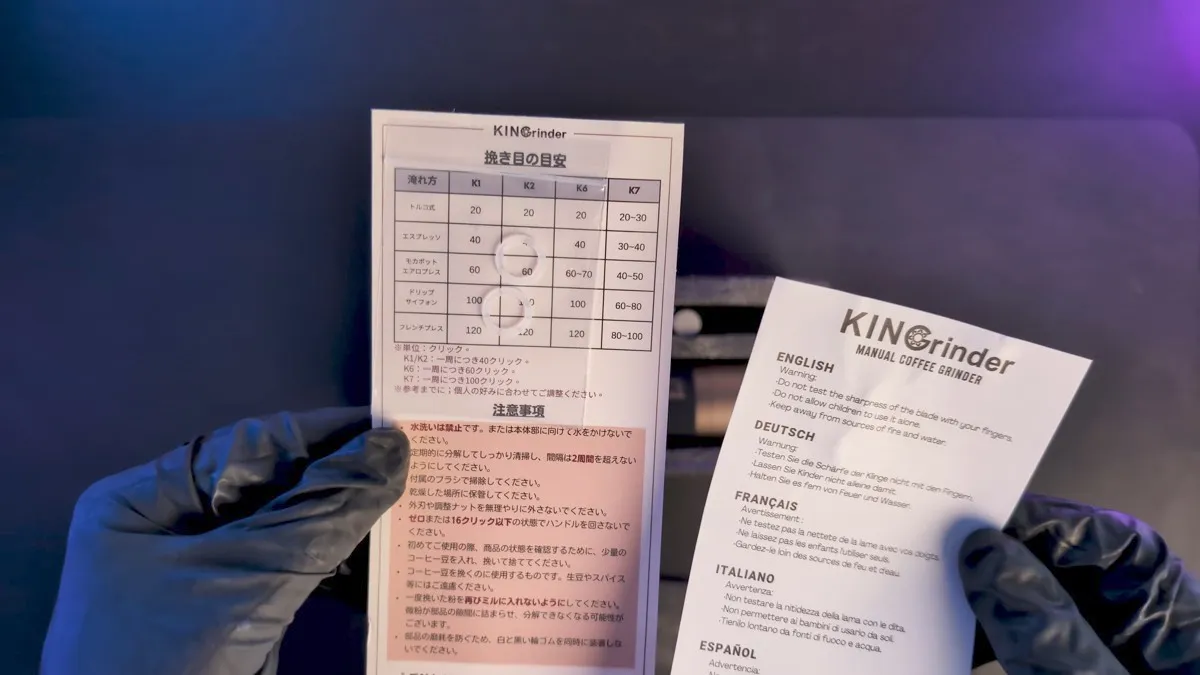
Gone is the fiddly metal circlip from the K6, which held the burr mechanism in place, which bodes well for the K7’s reassembly being more straightforward than the K6’s.
Consistent with the rest of KINGrinder’s lineup, the build-quality of the K7 noticeably punches above its weight at this price point. The K7 is slightly taller and heavier than the K6, and the aluminum body feels substantial in your hand from the moment you remove it from the packaging. Added texture on the K7’s rubber grip gives an immediate impression of added quality over its predecessor.
Design
The first design change that users will encounter with the K7 is its grind setting. The K6’s single external adjustment dial has been replaced with two pieces: an upper dial containing grind settings from 1 to 100, and a lower zero-point nut for calibrating the external 0 setting with the lowest burr setting.
This doesn’t meaningfully resolve our biggest pain point with the K6, which was the annoying tendency to accidentally nudge the grind adjustment higher or lower during grinding or removal of the grinder lid. KINGrinder’s online guide acknowledges this, telling users “If the zero point nut shifts after grinding, you just need to repeat steps 1 and 2.” It may be easy enough to adjust the grind settings back to where they were, but the fact that it’s so easy to change the grind setting after dialling in without noticing can be a headache.
Another key change is the catch cup, which connects to the body using magnets and a quarter-turn latch. The K6’s catch cup screwed on, and while this was less sophisticated, it meant that the catch cup was always firmly in place during grinding. With the K7’s less-stable connection, you may occasionally feel the catch cup shift under your pinky during grinding. To be fair, the catch cup has never come off completely during testing, but the feeling is enough to make the heart of anyone who’s ever lost a partial or full dose during grinding skip a beat.
The rubber grip has been upgraded with some added texture, and while personally I find the KINGrinder branding on it to be a bit over-the-top visually, it functions well. A silicone base has also been added to the bottom of the catch cup, making for a very small quality-of-life improvement over the K6’s metal base.
Between the possibility for accidental adjustments at the top end of the grinder, and the fear of accidentally knocking off the catch cup at the bottom, it’s hard to see the improvements that the K7 makes over the K6 externally.
The real design improvements come into play internally. Disassembling and reassembling the K7 is super straightforward.
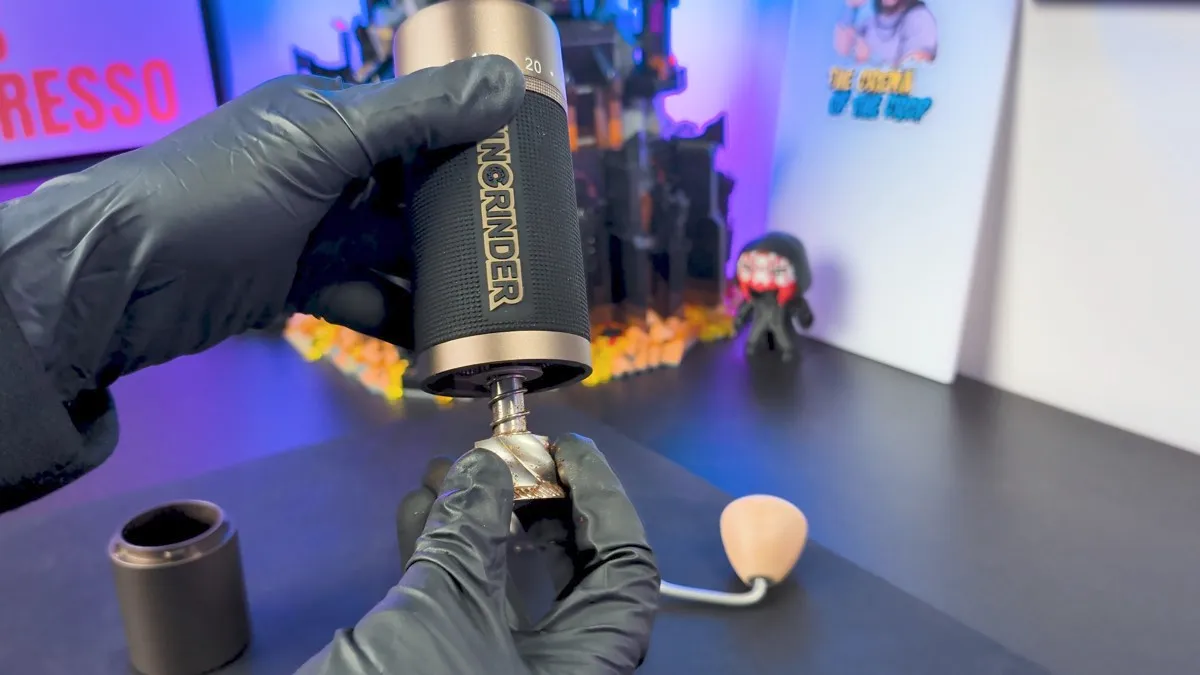
Gone is the need to remove the small metal circlip that held the K6’s burr assembly in place. Instead, the internal parts can be removed by adjusting the zero-point nut to the coarsest grind setting and applying pressure to the bottom of the burr. Reassembly is just as easy, with an internal dot in place to guide the burr shaft into place.
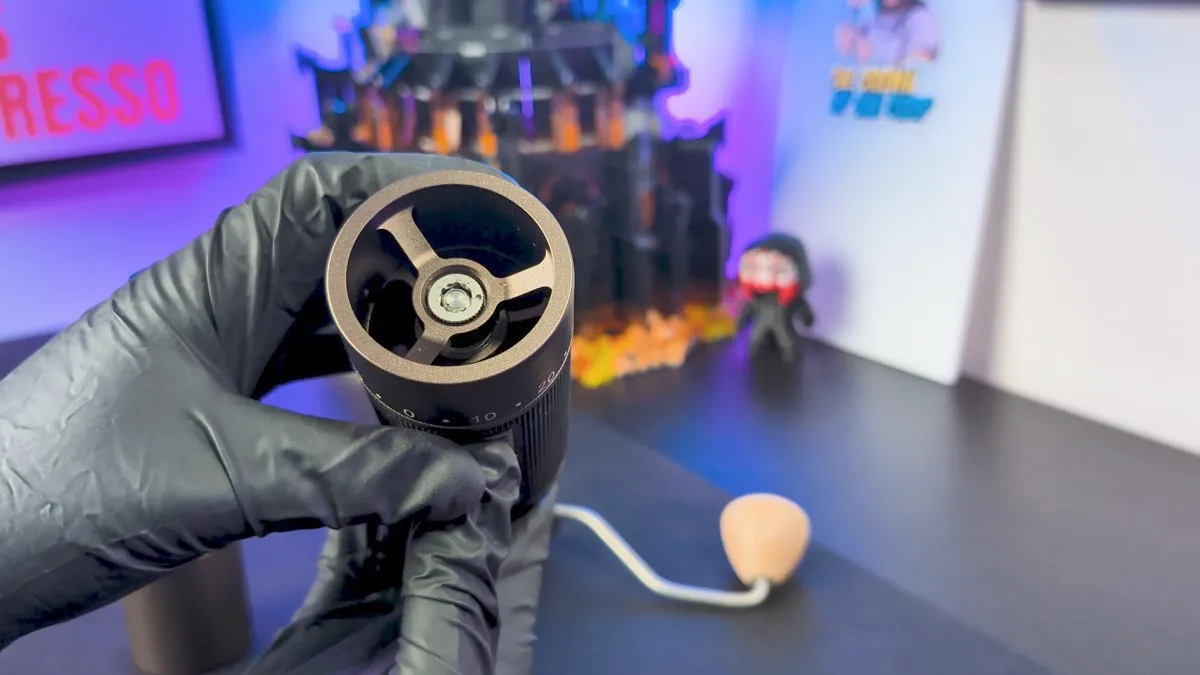
Once all the pieces are back together again, the zero-point nut makes for easy recalibration.
Burrs & Calibration
The K7’s burrs offer a significant departure from the burr design of the K6 both in terms of size (the K7 has 53mm burrs to the K6’s 48mm burrs), and design.
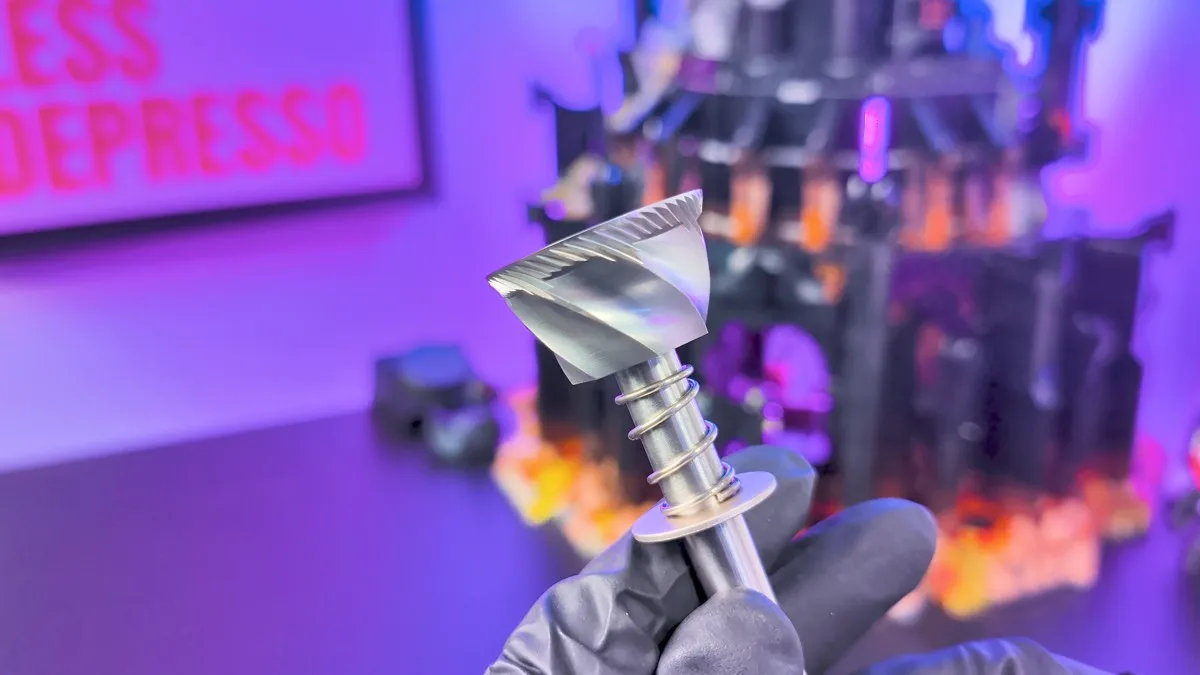
The K6 contains a more even distribution of cutting teeth down the length of each side, while the K7’s cutting teeth sit nearer the bottom end of the burr. In design, the K7’s burrs are a close visual match to those of the 1Zpresso ZP6. The change is likely tied back to the K7’s pour-over focus, where it’s battling head-to-head with the ZP6.
Despite this focus, the K7 offers an additional 1 micron of precision between steps (15 per step) when compared to the K6 (16 per step), which already had more than enough precision to dial in at espresso-level fineness.
For all its flaws, the upgraded adjustment of the K7 makes calibration very straightforward. Turning the zero-point nut all the way to the left, and the upper adjustment all the way to the right until both reach 0 is all it takes to recalibrate the grinder.
Performance
Particle size distribution
As always, I’m using my DiFluid Omni particle analyzer here to measure the particle output of the K7 grinder at major click intervals.
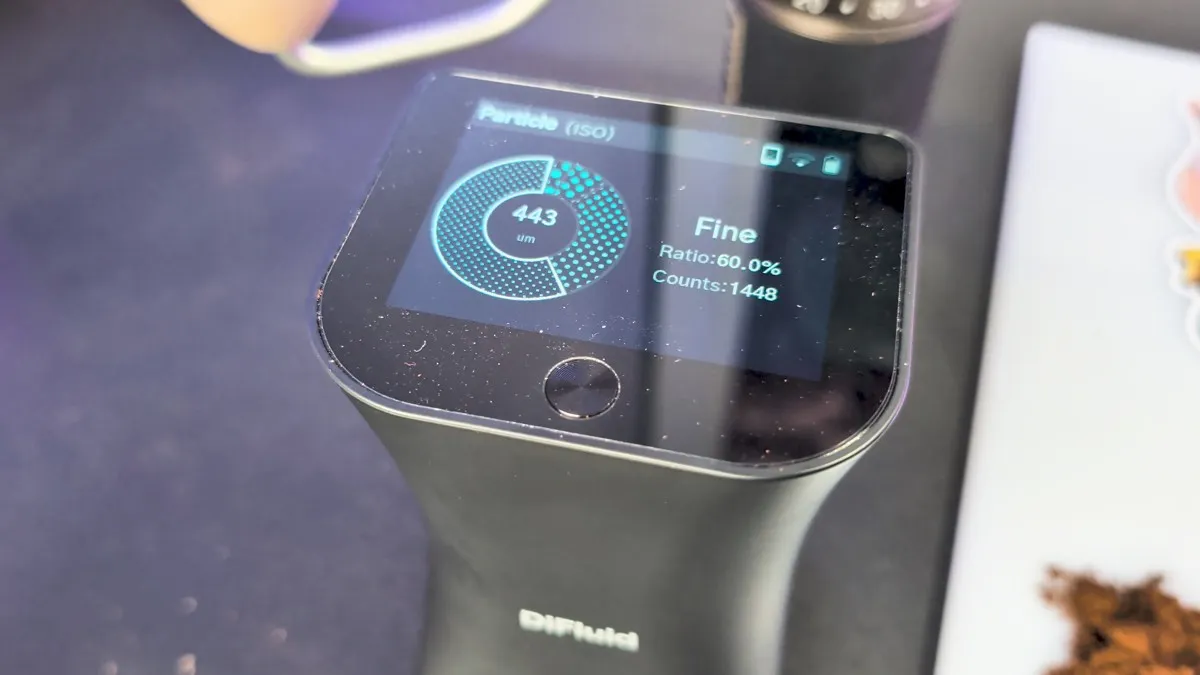
The larger burr size in the K7 compared to the K6 resulted in better consistency across the broad spectrum of brew methods. With the K6, things became a bit unpredictable (minor, we’re not talking unusable) at coarser settings but was very true at espresso ranges. This is notable compared to the K7 which had a crazy low 2.9% CV at its coarsest setting of 100 clicks.
It’s just an incredibly reliable grinder. Even when looking at the spectrum graph (below), you can see very consistent jumps between clicks. The only standout is 90 clicks compared to 100 clicks, which was measuring nearly exactly the same microns.
Retention
And as for retention, net zero. End of story.
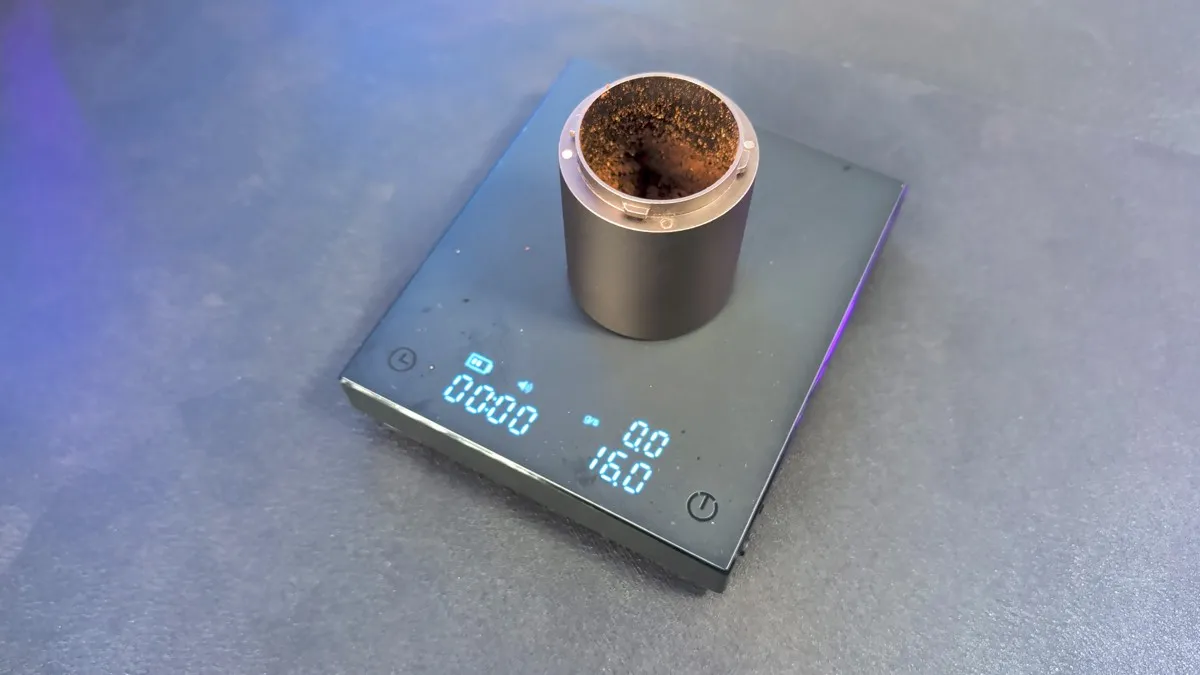
Actually it’s not the end of the story, that zero retention was also achieved without the ross droplet technique, and at an espresso setting, with burrs designed for pour-over.
Taste and Thoughts
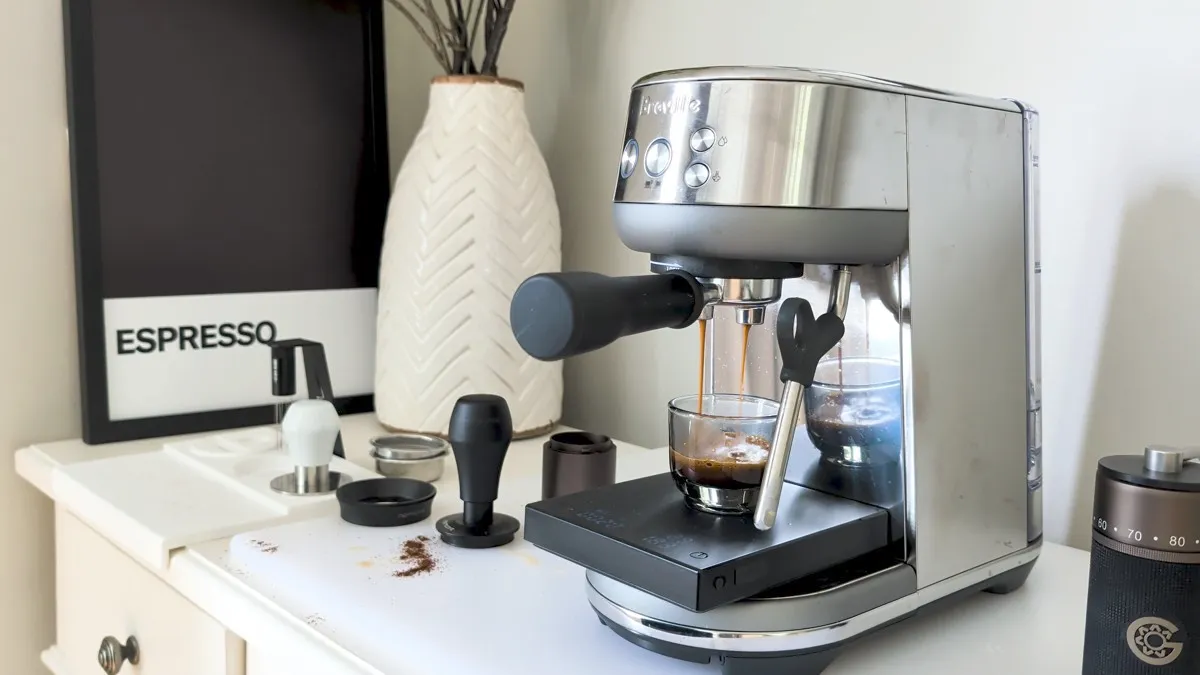
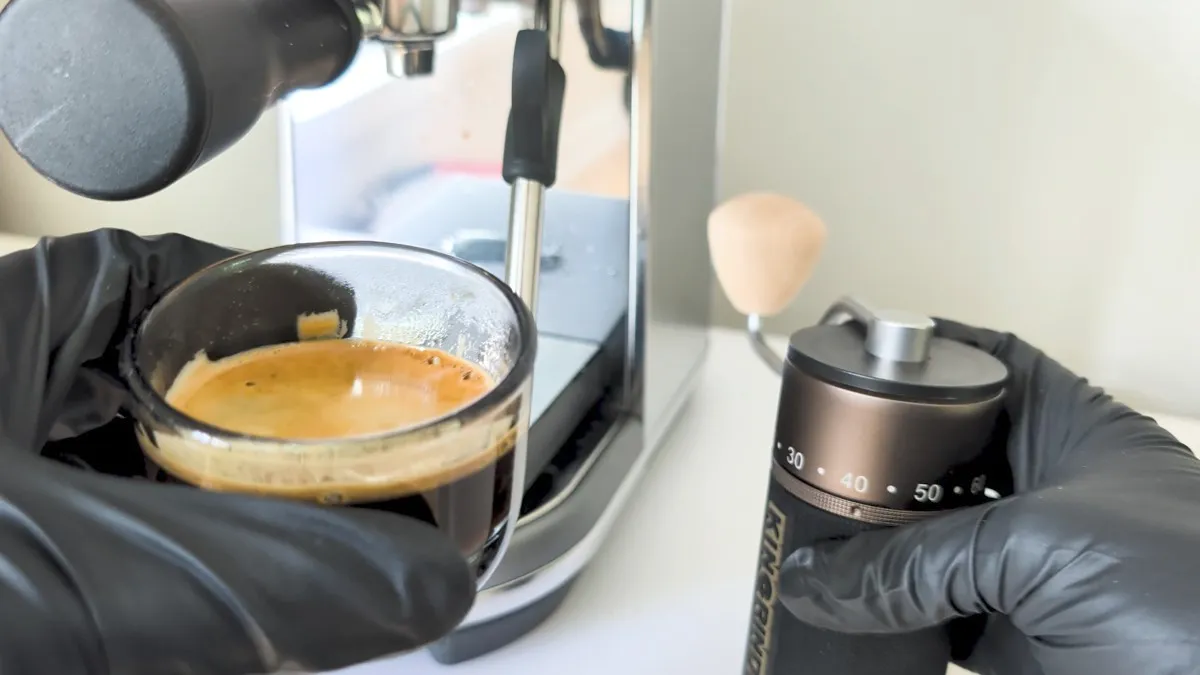
The manual suggests using 30-40 clicks for espresso. I tried it at 35 to start and found it too fine when using a medium Coffee Bros Espresso Roast. My second attempt at 40 clicks produced a pretty nice shot, but it ran through a little too quickly. So between settings 38 and 39 is my sweet spot depending on the age of my beans. I’m really happy with the tastes I’m getting from this grinder.
K6 vs K7
Despite the number of changes between versions, the K6 and K7 are ultimately very similar grinders.
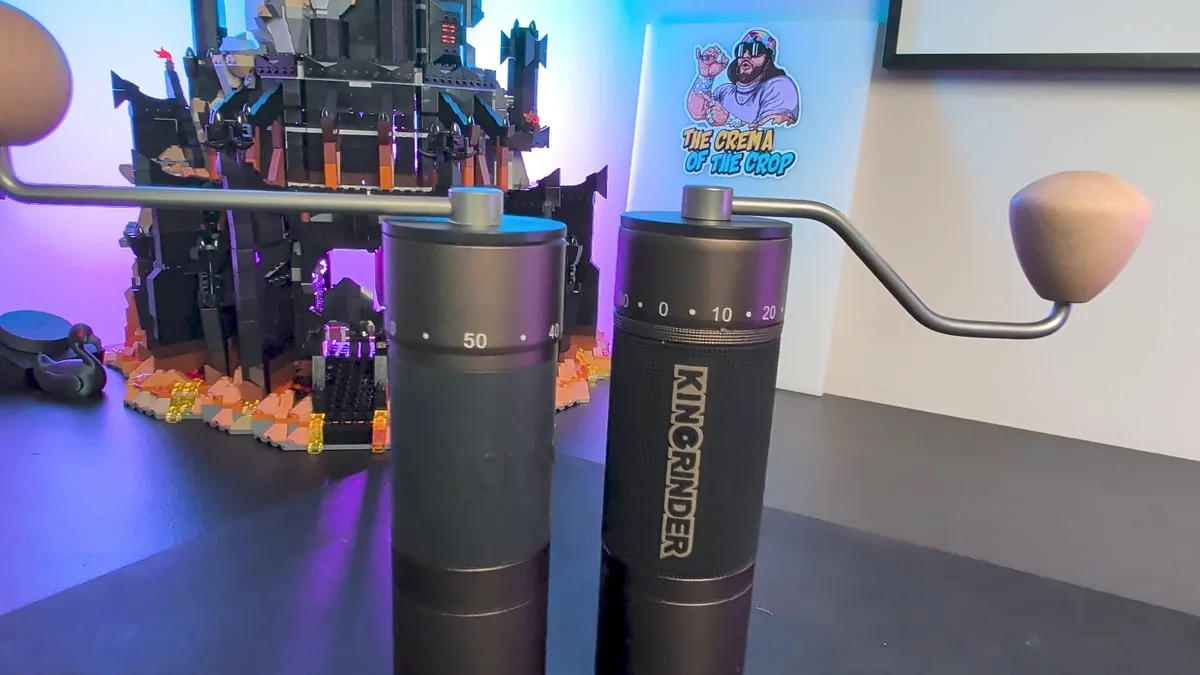
The K6 actually has 140 more grind settings in total than the K7, but these are all at the top end, so unless you’re going all the way from Turkish coffee to cold brew frequently, both grinders offer the settings needed for most brew methods, and 15/16 micron adjustments between each step.
What will push the K7 over the top for most users is the ease of disassembly and reassembly, and its pour-over focus. If you’re a power user and you want a set of burrs that is made to rival the best pour-over grinders, then the K7 will likely be worth the extra $40.
For everyone else, the K6 offers strong value at ~$110, and will continue to for as long as both grinders are available.
Technical Specifications
| Brand | Kingrinder |
|---|---|
| Model | K7 |
| Adjustment | Stepped |
| Brand | KINGrinder |
| Model | K7 |
| Adjustment | Stepped |
| Range | [TBC] |
| Settings | 100 |
| Weight | 1.43 lbs |
| Capacity | 30-35 g |
| Burr Size | 53mm |
Common Questions
- Is the KINGrinder K7 worth buying over the K6?
- At ~$40 more than the K6 at time of release, the K7 is worth the extra money if you value ease of use and you’re looking for a grinder that’s modelled after more premium pour-over-focused competitors like the 1Zpresso ZP6. In our testing, the K7 showed notable improvements in grind consistency over the K6, helped by its upgraded burrs. If you're looking to save money and don't mind a slight downgrade in consistency and user experience, then you could do worse than the K6 or another option in the $100 range like Timemore's C series.
- Can the KINGrinder K7 grind espresso? or is it only good for pour-over?
- Despite being marketed towards “pour-over enthusiasts,” the K7 is capable of grinding espresso. It offers 100 stepped adjustments at 15-micron increments, which is more than enough precision to dial in espresso shots.
- What is the KINGrinder K7’s main competition?
- Based on its strikingly similar set of burrs and pour-over focus, the K7 seems designed as a direct competitor to the 1Zpresso ZP6. While it's not perfect, The K7 gives the ZP6 a run for its money at a price tag that's $100 less.