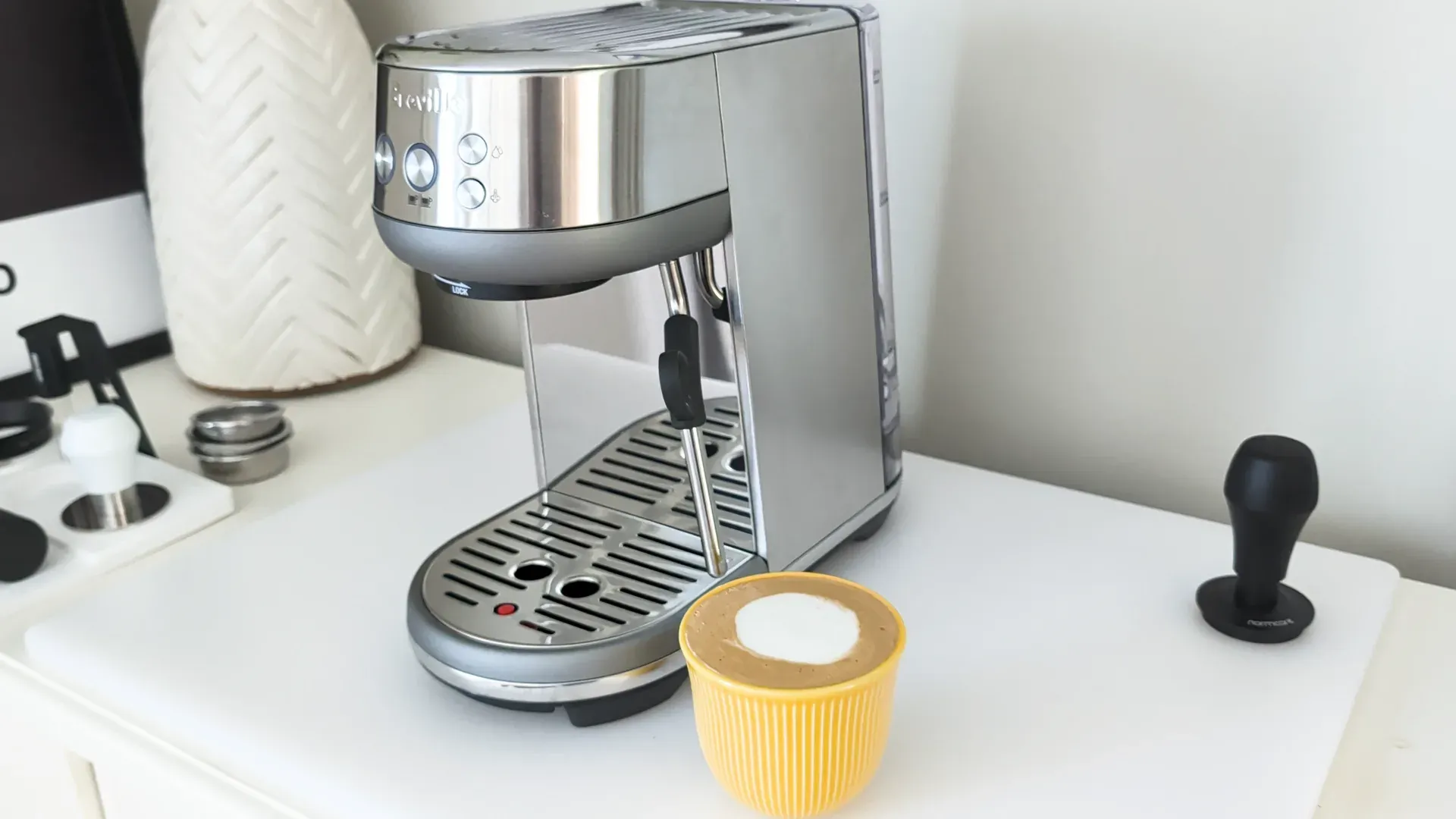
Breville Bambino Review
Meet the Breville Bambino: the undisputed champion of entry-level espresso. This compact workhorse delivers lightning-fast, cafe-quality shots while saving your budget for the grinder that actually matters.
This review was conducted on a factory-new unit. Performance metrics and observations are based on real-world testing with various coffee beans and recipes.
This site is 100% ad-free and always will be. This particular review was not sponsored. Purchases made through our links may earn a commission, supporting testing and content creation.
Full Review
The Breville Bambino arrived on the scene 2 years after Breville released its Bambino Plus back in 2018. The newer version shaved off a few of the plus’s milk frothing features, and with them about $200 in price.
At around $300, the Breville Bambino is the least expensive option in Breville’s well-regarded and ubiquitous lineup of espresso machines.
There are cheaper espresso machines out there, and this corner of the market has gotten crowded, but the Bambino has garnered a reputation for being among the very best entry-level options out there. The Bambino is a rare species of machine that has become popular both with espresso newcomers who come to it for its ease of use, as well as aficionados who value its compact footprint, fast heat-up time, lack of frills, and the ability to spend more of your overall budget on a quality grinder.
In this review, we’ll dig into what the Bambino has to offer to see if the results line up with the sterling reputation and separate it from the entry-level pack.
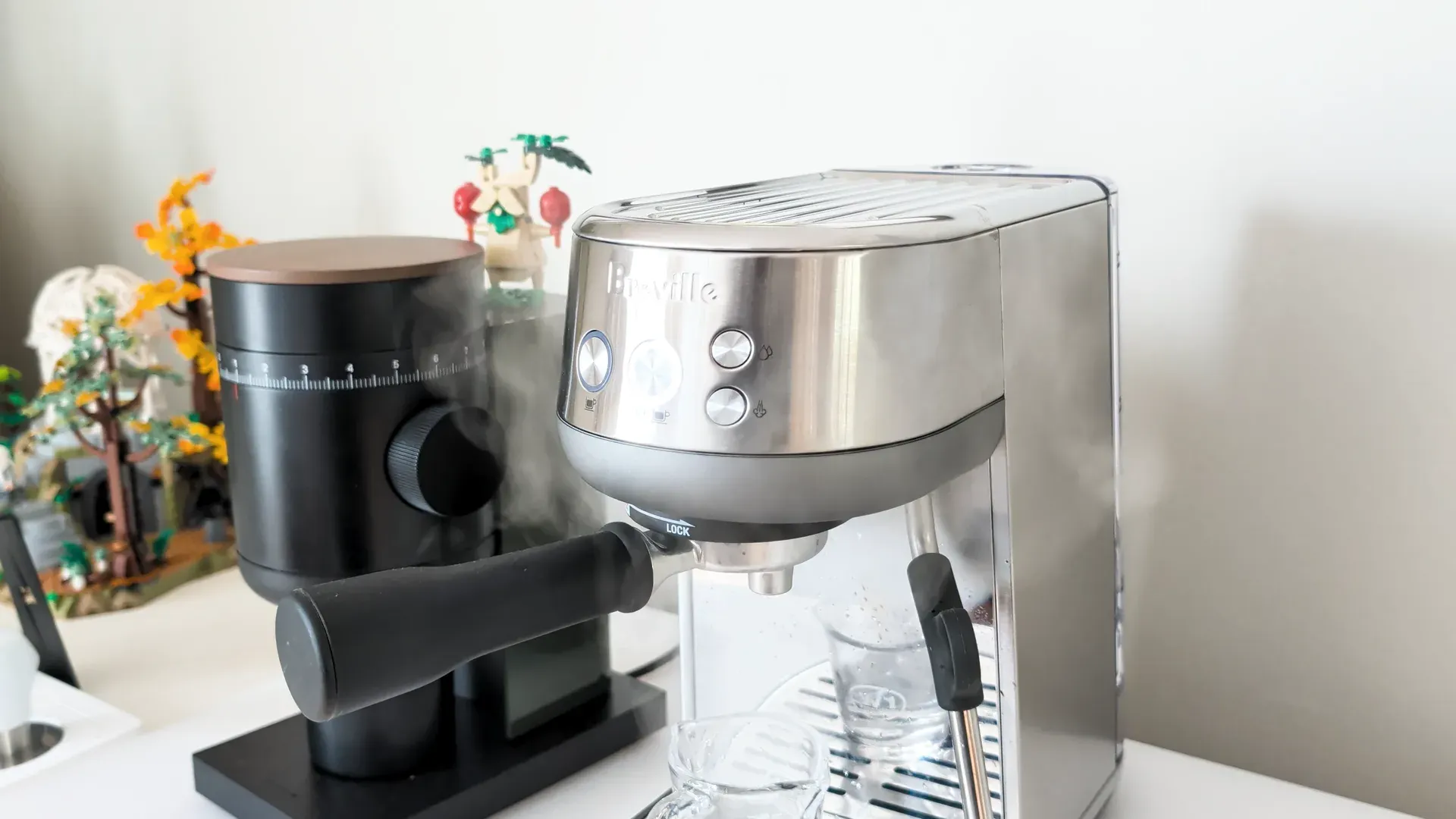
Unboxing
The compact box that the Bambino ships in (when compared to most home espresso machines) is a reflection of its small 13.7" x 6.3" x 12” footprint.
The white-background box doubles as a hype man. It’s covered in copy touting the Bambino’s features like its 3-second warmup time, pre-infusion system, and steam wand.
Inside, the unit itself is well protected in foam, whose top compartments are hollowed out to store a portafilter with a basket and 3 additional baskets. The Bambino ships with single and dual-walled single-shot and double-shot baskets, reflecting its aim to appeal to a broad-ranging audience that’s just as likely to have an espresso grinder at home as it is to buy pre-ground beans from the grocery store.
Also included is a 16 oz milk jug, tamper (so light and plastic-y that it only just qualifies as a tamper), descaler, and a comprehensive set of instructions.
Once the pretty hefty amount of plastic that the Bambino is encased in has been removed, the Bambino is one programmed start-up cycle away from being able to pull shots. Eco-friendly packaging this is not. The Bambino is undoubtedly well-protected, but you’ll be left with a lot of styrofoam and plastic to throw out, which we can’t help but wish was swapped out for cardboard and compostable material.
Design
The Bambino is striking in its efficient footprint. It looks sleek, and it will readily tuck into a corner on the most crowded countertop. Putting aside its performance, the Bambino’s size alone is a huge plus.
The build quality is solid, and will be familiar if you’ve already owned a Breville product. The brushed stainless steel that the majority of the unit is clad in adds to a high-quality appearance, that is slightly undermined by the plastic elements of the Bambino. The drip tray and underside of the machine in particular are mostly plastic and, while not flimsy, add to the fact that this is a light machine.
In practice, this means that you’ll have to keep a firm hand on the top of the machine when removing the portafilter to prevent it from being dragged a few inches to the left.
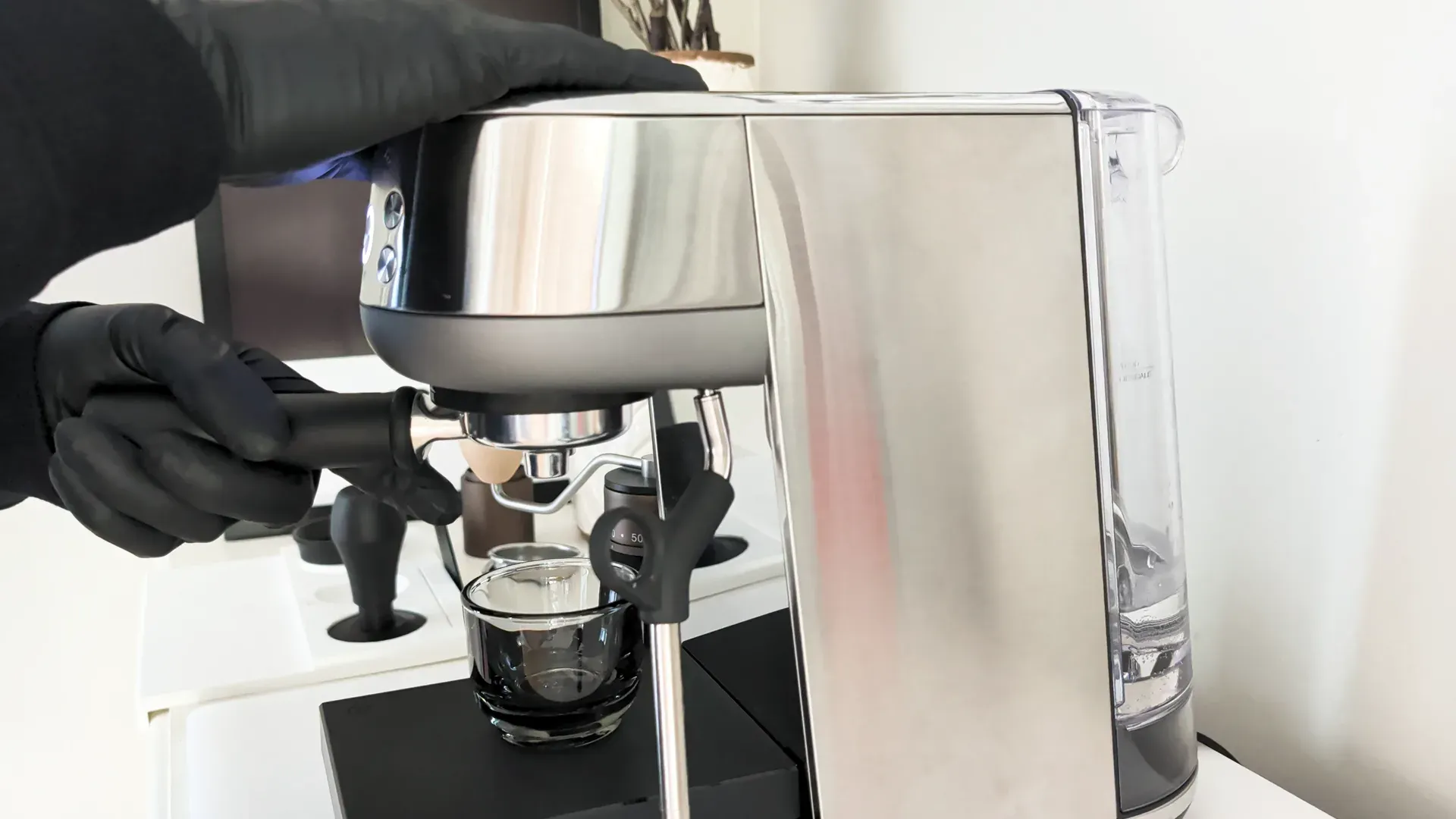
On the subject of plastic, it’s worth factoring in the price of another tamper and portafilter into the cost of buying the Bambino. The portafilter is light but serviceable and first-espresso machine owners may find that it does the job just fine, but the all-plastic tamper is unusable. If the Bambino is going to be your everyday machine, an upgraded tamper will go a long way to improving the experience of using it.
The gripes end there, and it’s worth calling out that they’re minor compared to the overall design which adds up to a machine that doesn’t require a lot of thought or effort to make good coffee.
Despite the small size, the Bambino’s water tank has a generous 47 oz capacity. It also houses a water filter, which not only helps subtly improve flavor of the coffee, but also increase the time needed between descaling cycles. Underneath the water tank is a cleverly-hidden multi-tool for maintaining and cleaning the steam-wand.
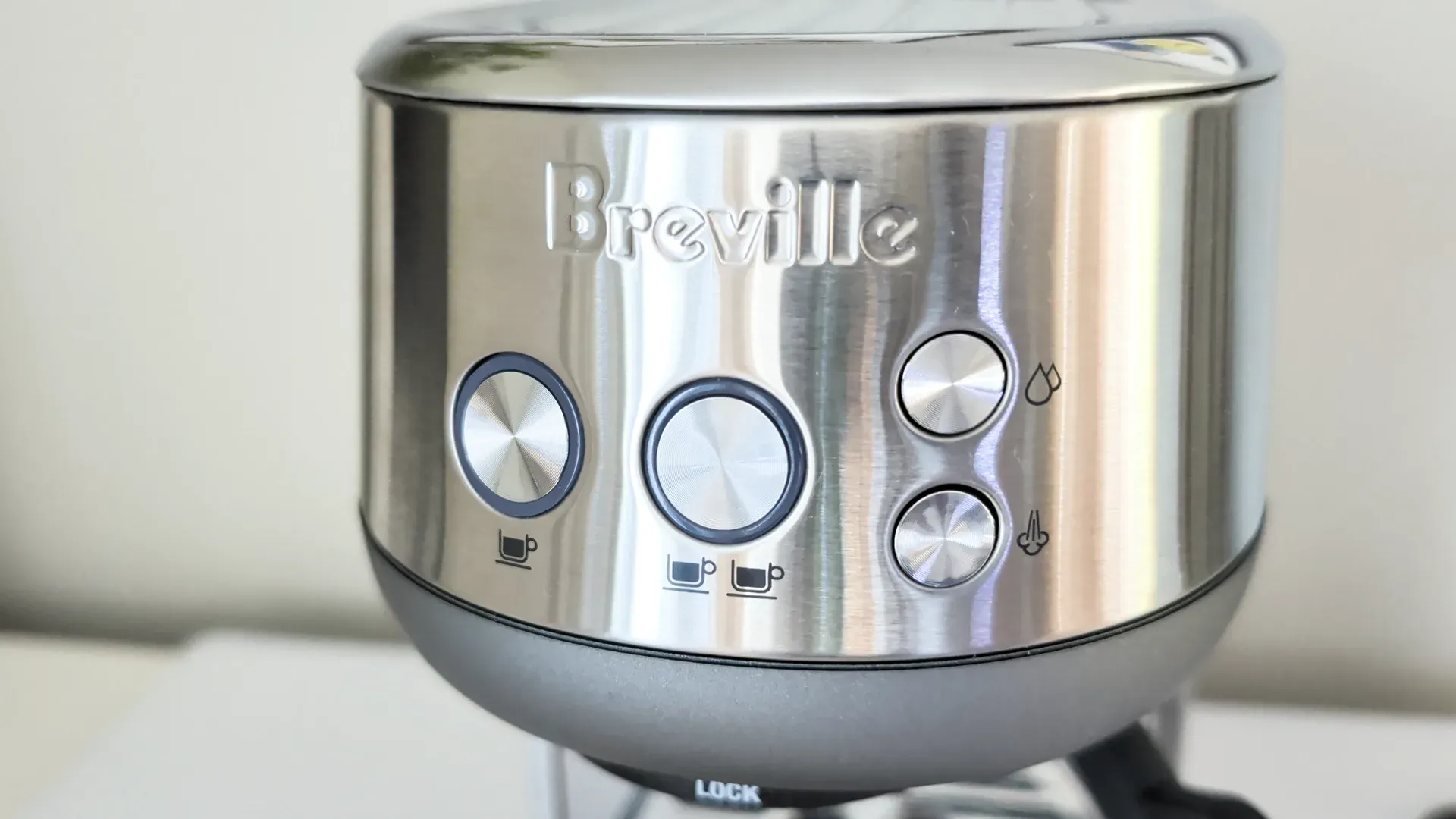
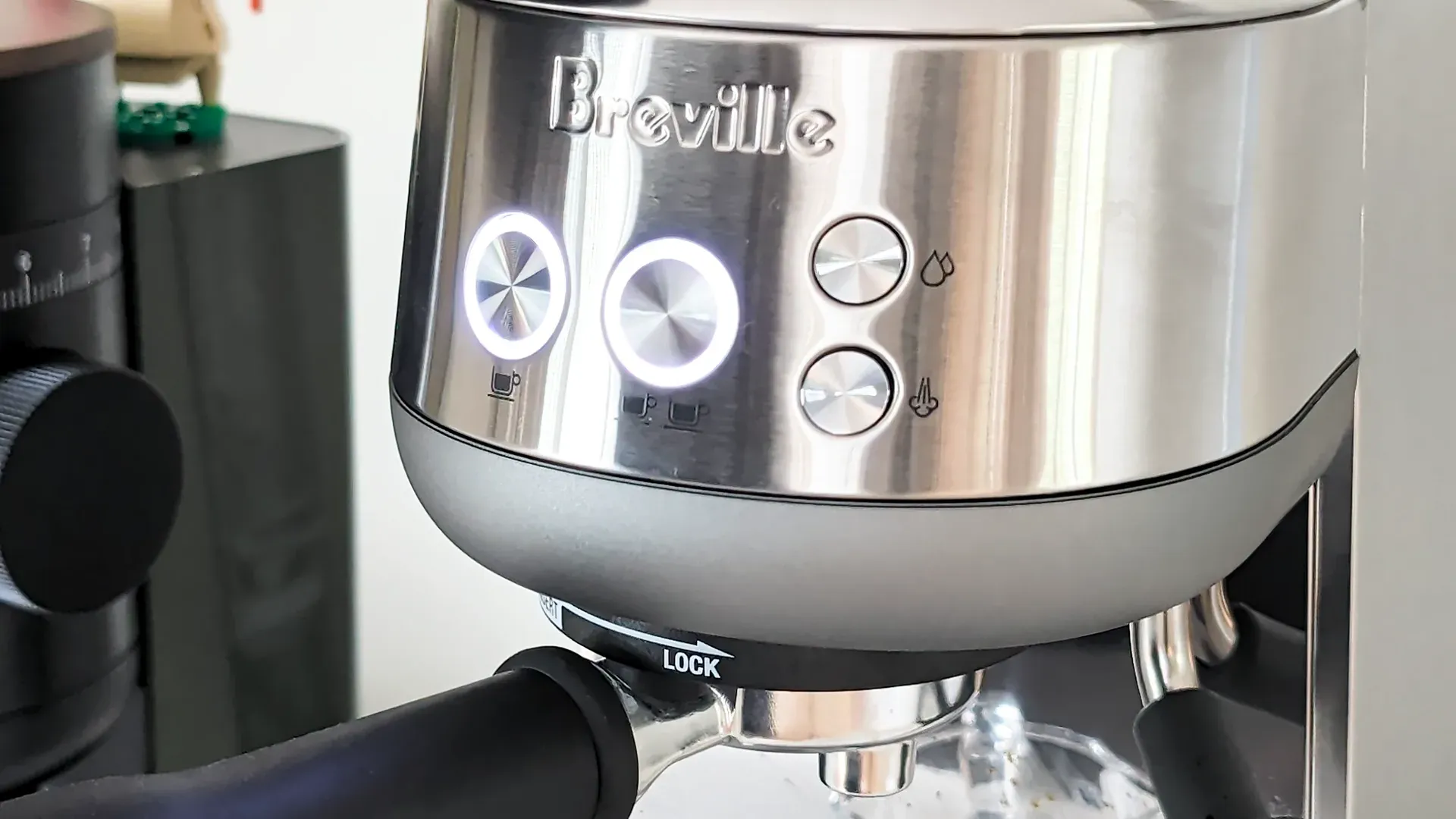
The single and double-shot buttons are easily programmable, and the hot water and steam buttons are equally straightforward. Once it’s set up, you’ll be able to quickly pull a shot and add silky milk or water in your sleep (which you very well may be if it’s your first coffee of the day).
Features
The Bambino offers a handful of special features that we want to devote a few more words to, but to list off some of what it brings to the table:
- 4 included baskets: 2 single-wall (single and double shot) and 2 double-wall (single and double shot)
- 54mm portafilter
- 16 oz milk jug
- 47 oz/1.4 l tank capacity
- 13.7" depth x 6.3" width x 12" height
- Multi-angle single-hole steam wand
Now, let’s take a closer look at some of the premium elements that help elevate the Bambino’s performance:
Pre-infusion system
Leaving cost to the side, one simple way to determine whether a machine falls into the premium or non-premium bucket is whether it offers pre-infusion.
The Bambino uses low-pressure pre-infusion for every shot. Pre-set extraction times will include 8-12 seconds of pre-infusion automatically. Power users also have the option to manually control infusion time by pressing and holding 1-shot or 2-shot button, and releasing it to end pre-infusion and start extraction.
Thermojet heating system
The Bambino contains Breville’s proprietary Thermojet heating system. Unlike common thermoblock systems, which involve heating more material to bring the machine up to extraction temperature, the Thermojet takes a more efficient path involving less material.
As for what this means in practice, the Bambino heats up really quickly (3 seconds to be exact) and uses less energy to do so, meaning you can turn on the machine and pull a shot almost immediately. And I feel like this isn’t talked about enough in the espresso world. Yes, a beast of a machine like the Rocket Appartamento offers incredible heat stability, but you’re waiting a good 10 minutes to warm up. That kind of workflow isn’t for everyone. So Breville’s ability to pull excellent shots from near-zero warm up times is seriously impressive.
Volumetric shot programming
The Bambino comes out of the box with a pre-programmed shot volume that targets 30 ml/60 ml of extraction from a single or double shot respectively. If you want more control over your shots, you can set your own programmed volume.
Let’s say you’ve bought some new beans and want to dial in. Just get your scale in place, hold the single/double shot button for 2 seconds until it flashes, press it again to start the extraction, and then press it again to end it.
The custom shot volume will be saved until you set a new volume or return the Bambino to its factory settings.
Performance
The Bambino is like a Toyota. Sure, you could get a Lexus. But under the hood, the engine is just as bulletproof and will get you exactly where you're going. It’ll run forever without demanding a luxury budget.
If you’ve ever stumbled into reddit’s /r/espresso, you’ll be walloped in the face with recommendations to get this machine and focus on a quality grinder. And they’re correct.
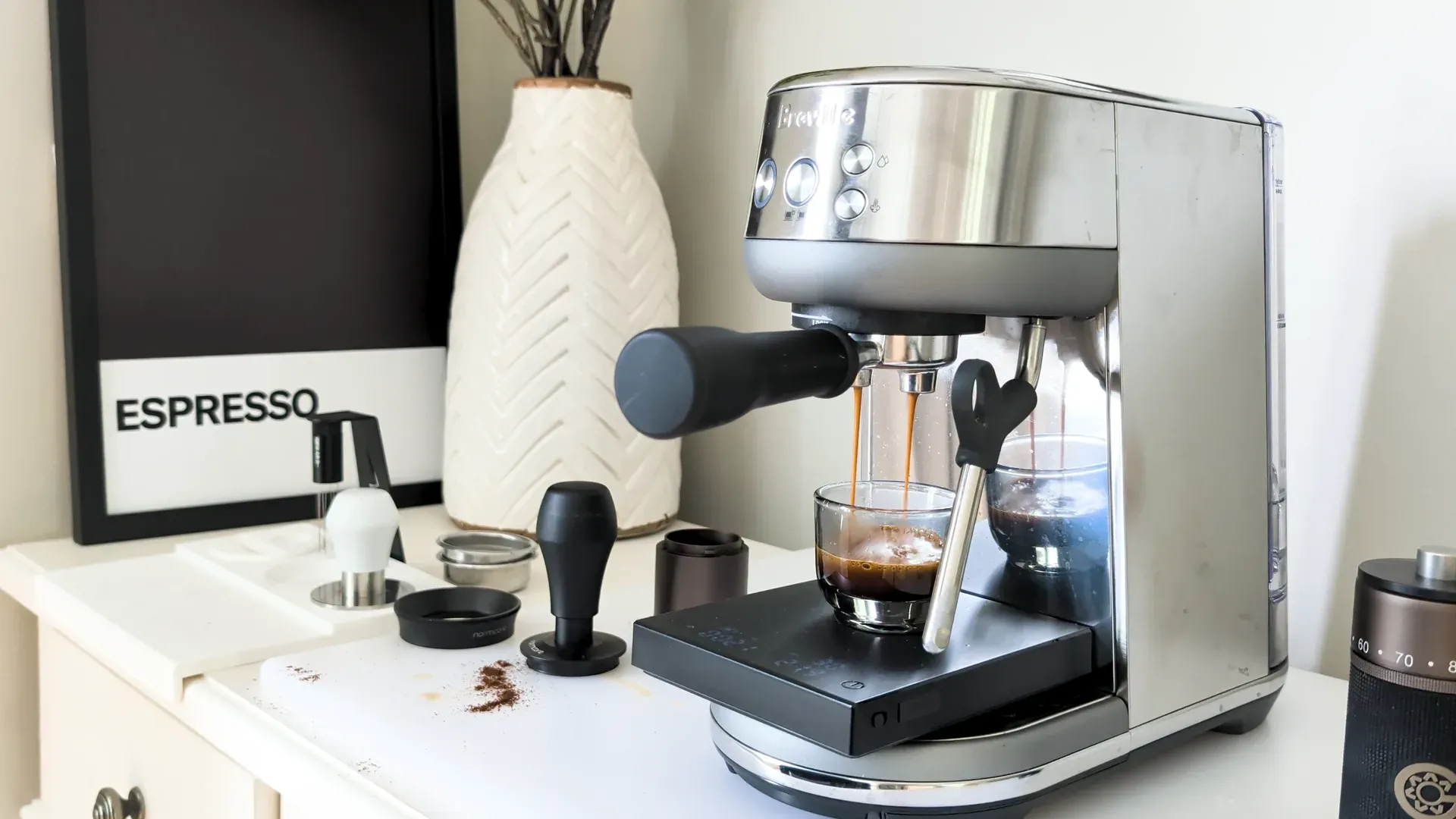
This is not just a machine for beginners. Sure, if you stick with the hobby, it’s natural to want to upgrade equipment eventually. I’m one of them. You start to understand what’s best for your workflow and individual preferences. But this machine can perform for advanced users because of how well it can brew a shot.
Brewing
When reviewing espresso machines, I like to use the included portafilters as much as possible. But this one is just awful. You can get a shot through, but better thermal mass from a heavy-duty portafilter will reduce under-extractions. This is a one-hundred percent mandatory Day 1 upgrade. Everything else can wait (well, except for grinders).
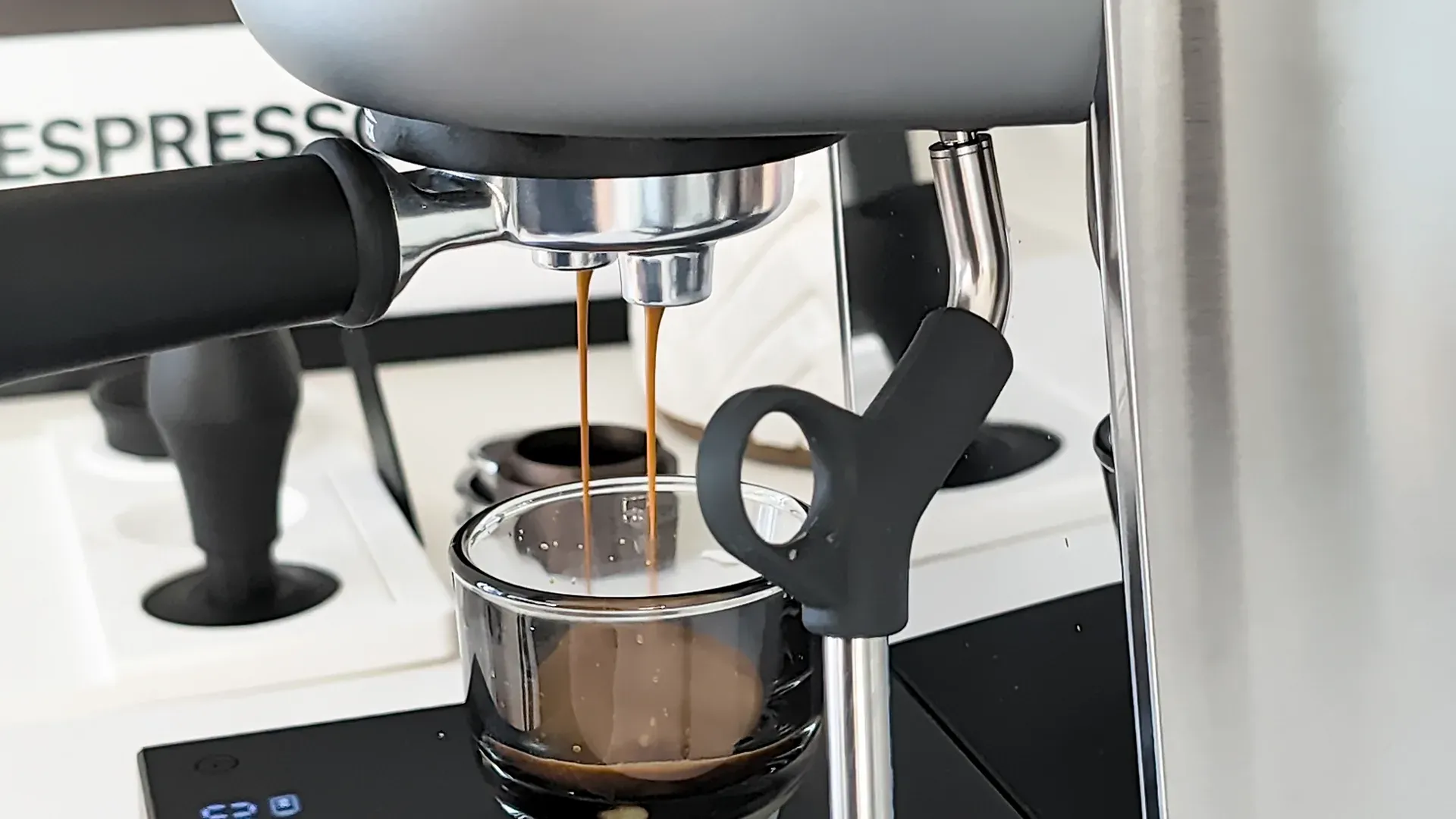
Don’t let the quality of the portafilter worry you about the machine itself. It’s a consistent workhorse.
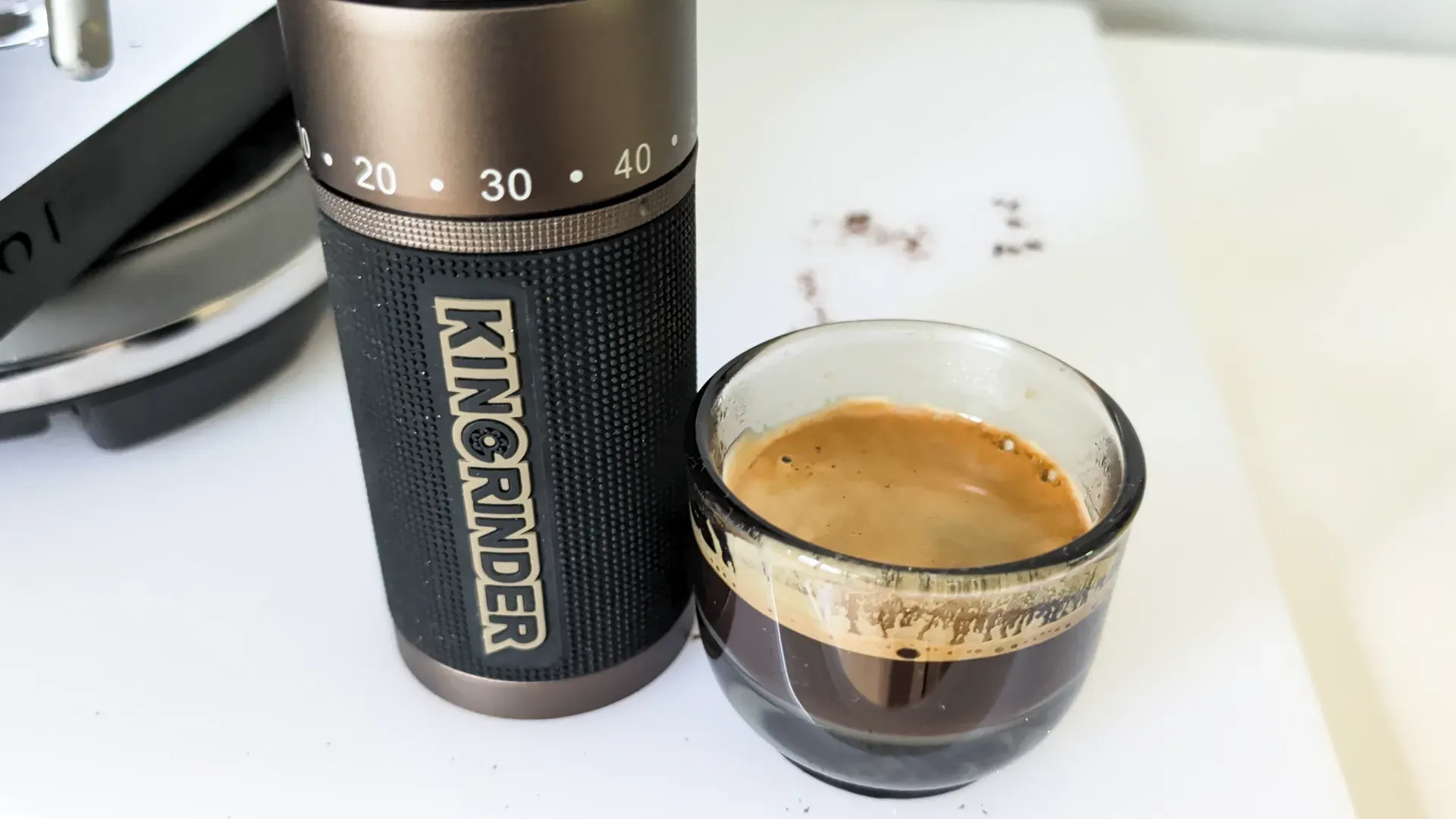
I’ve used the Bambino with a slew of different grinders, and you can spot the differences between them. I tend to use the KINGrinder K6 as my go-to manual grinder for espresso, but more recently I’ve been using the new Fellow Opus 2.
Frothing
The steam wand on the Bambino is forgiving, yet powerful. Fully capable of achieving beautifully silky milky. As with any machine, it’ll take you a few practice runs to find the texture you like. For this wand, introduce air quickly at the beginning (just the tip) and allow as much time as possible to aerate the milk (wand deeper in the milk).
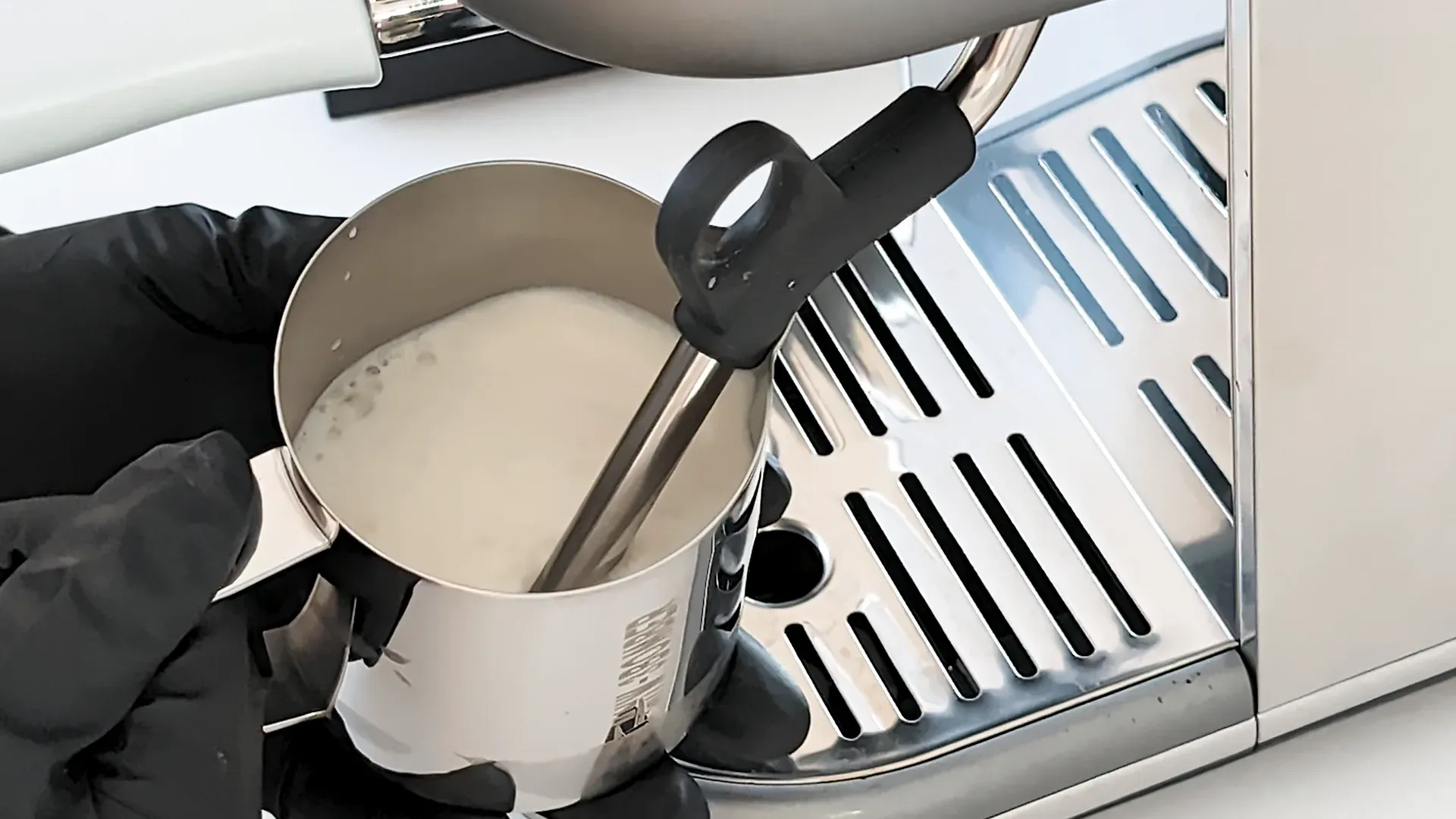
One thing to note, though, is that it continues to run for a brief couple seconds after pushing the off button. This differs from Breville’s newer steam wand that you’ll find on the higher end machines, which stops pretty much instantly.
Technical Specifications
| Brand | Breville |
|---|---|
| Model | Bambino |
| Brand | Breville |
| Model | Bambino |
| Footprint | 13.7"D x 6.3"W x 12" |
| Weight | 10.9 lbs |
| Wattage | 1560 Watts |
| Voltage | 120 Volts |
Pro Tips
- 1.Upgrade to a heavier portafilter and run a blank shot before brewing. The added thermal mass absorbs significant heat; heating the portafilter first prevents sour, under-extracted shots and ensures stable extraction temperatures.
Frequently Asked Questions
What separates the Breville Bambino from the Bambino Plus?+
The Breville Bambino Plus has extra milk-frothing features like designated foam and temperature control buttons, a 4-hole steam wand, and a built-in thermometer in the drip tray. The Bambino does away with these, settling for a 1-hole steam wand and basic hot water and steam buttons. Both produce well-frothed milk for home machines, but the Bambino takes a bit longer, and is a bit more manual for a slightly less premium result. If you’re an everyday latte or cappuccino drinker, the decision between the two mainly comes down whether you value the extra milk features at the additional ~$200 cost for the Bambino Plus.
Why is the Bambino so popular?+
There are cheaper espresso machines than the Breville Bambino, but its reputation as one of the best entry-level machines available hinges on its combination of a small footprint, fast heat-up time, and solid performance for an espresso machine in its price range.
What pieces should I consider for my Bambino setup?+
The portafilter and tamper that the Bambino ships with are not up to the quality standard of the rest of the machine. It’s worth investing in a new tamper at the very least. The Bambino also comes with dual-walled baskets designed for pre-ground beans, but as a rule of thumb, it’s worth investing in a grinder if you’re also going to drop a few hundred dollars on an espresso machine. Breville’s website occasionally features package deals with electric espresso grinders, but spending $100-$200 on a solid manual grinder (like Timemore’s C3 ESP Pro) is a great way to increase the quality of your espresso at a relatively low cost.