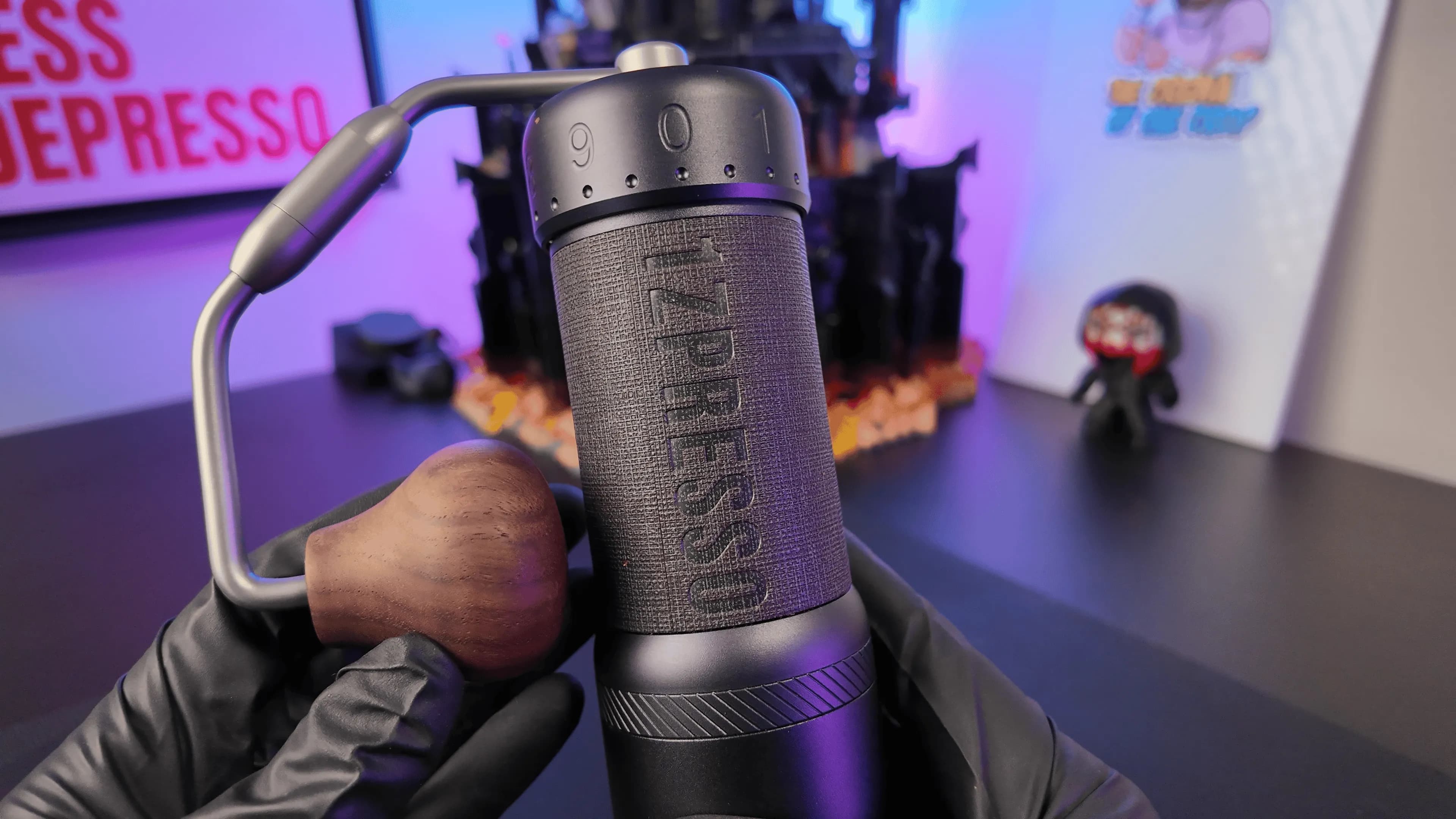
1Zpresso J-Ultra Review and Grind Chart
High-quality, high-precision, and high-performance. The J-Ultra lives up to its name and its stellar reputation.
Grind data is captured via DiFluid Omni NIR analysis. I plot the particle distribution across 16+ settings to identify the 'Optimal Zone' for each brew method. Actual results vary based on roast type and freshness, among others; however, it remains a starting point for dialing in.
This site is 100% ad-free and always will be. This particular review was conducted on a factory-new, calibrated unit, and was not sponsored. I purchased this unit for testing purposes. Purchases made through our links may earn a commission, supporting the testing and data acquisition.
J-Ultra Grind Size Chart
A Note on These Settings: The interactive chart below uses a combination of manufacturer and crowdsourced data from CoffeeOS to give you a rough "ballpark" starting point for dialing in. For the true technical breakdown, scroll down to my particle analysis, where I use a DiFluid Omni to measure actual micron distribution, fines percentage, and grind consistency of this unit.
Full Review and Benchmark Test
Introduction
Since its arrival on the scene in 2017, 1Zpresso (pronounced “easypresso”) has made a name for itself as the hand grinder manufacturer against which most other hand grinders are measured.
1Zpresso’s product lineup is primarily split across 4 series (K, J, X, and Q) with the pour-over-focused K series and espresso-focused J series each boasting an “ultra” version at the top end of their range.
At $199, the J-Ultra is edging into the premium end of hand grinders, and it’s easy to see its fingerprints in the design of less-expensive grinders, like the KINGrinder K series. Does the 1Zpresso live up to its sterling reputation? Let’s find out!
Features
- 48 mm heptagonal burrs
- 100 grind settings across 5 rotations for 500 total settings
- 8 micron adjustments per step
- Folding handle
- Carrying case including cleaning brush, bellows, and grip band
Unboxing
The quality of the J-Ultra’s packaging alone helps clarify how 1Zpresso has been able to garner such a vocal fanbase in less than a decade.
The main cardboard box it comes in slides off to produce a semi-rigid carrying case that wouldn’t look out of place in a spy movie.
Unzipping it reveals a bottom half split into two main compartments: one that stores the grinder and its handle, and another for the included rubber cleaning bellows, which itself comes wrapped in an elastic band that can be added to the grinder body for extra grip. The top half has a mesh shelf containing instructions, a cleaning brush, and a 1Zpresso sticker.
Compared to the simple plastic brush and thin carrying pouches that most hand grinders come with, the J-Ultra’s carrying case feels much more premium than anything I’ve seen at this price range (including the AeroPress Manual Grinder which currently sits at the exact same price).
The grinder itself shows solid build quality. The wooden knob has a great look and feel to it, and one of the first things you notice is how well the stainless-steel body fits in your hand.
It’s always exciting to open a new grinder, but I couldn’t help but feel a bit more excited than usual to get grinding with the J-Ultra.
Design
The J-Ultra justifies its hyperbolic name in the design arena. The quality of the materials and machining is high, and some clever choices make the experience of using the J-Ultra feel solid.
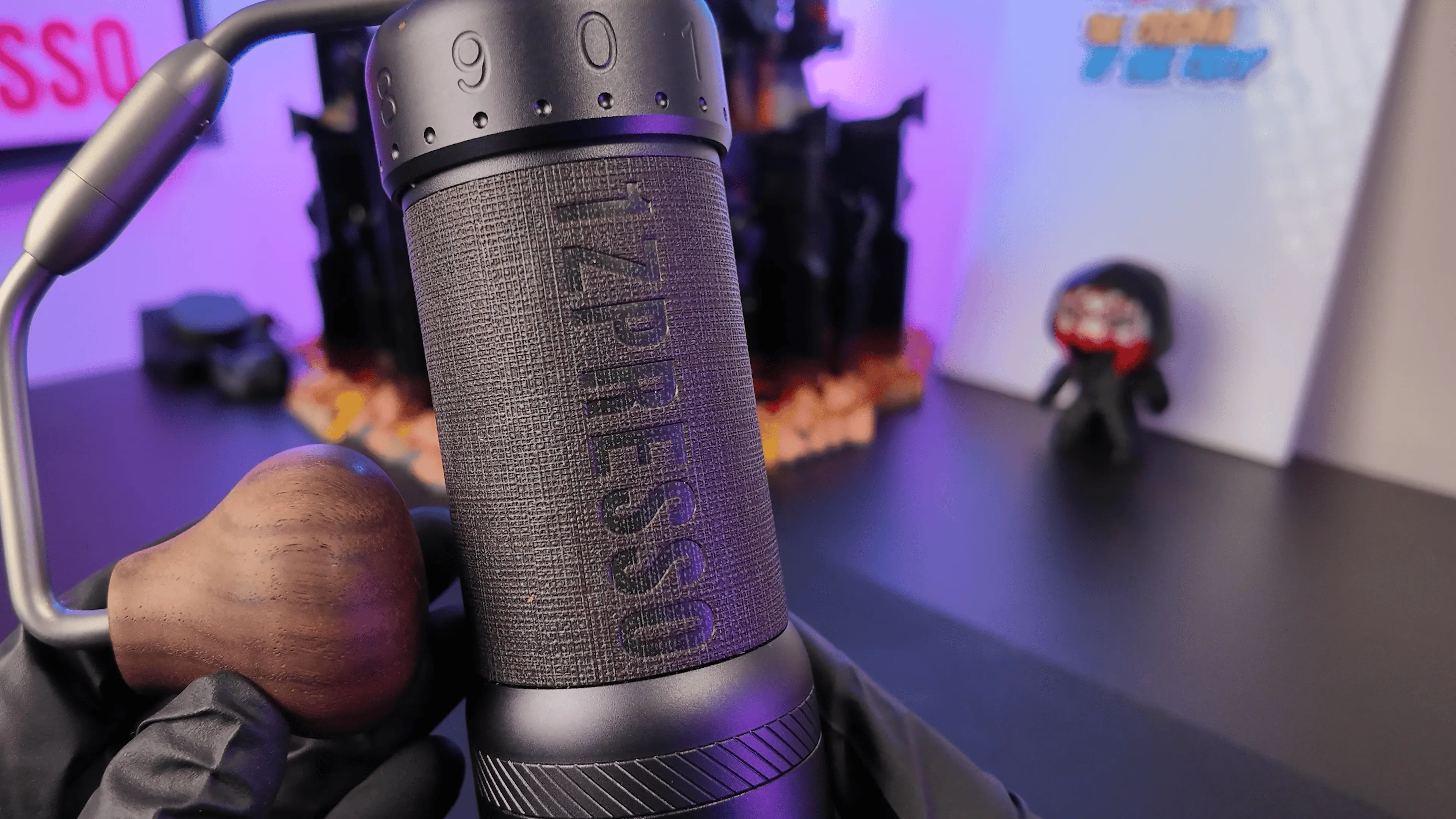
I’ve criticized other grinders with external grind adjustments in the past, as they made accidentally changing the grind setting mid-grind too easy. In the case of the J-Ultra, despite the adjustment being nestled up against the side of your index finger during grinding, a combination of the recessed grip and firm adjustment settings meant that this was never an issue during testing.
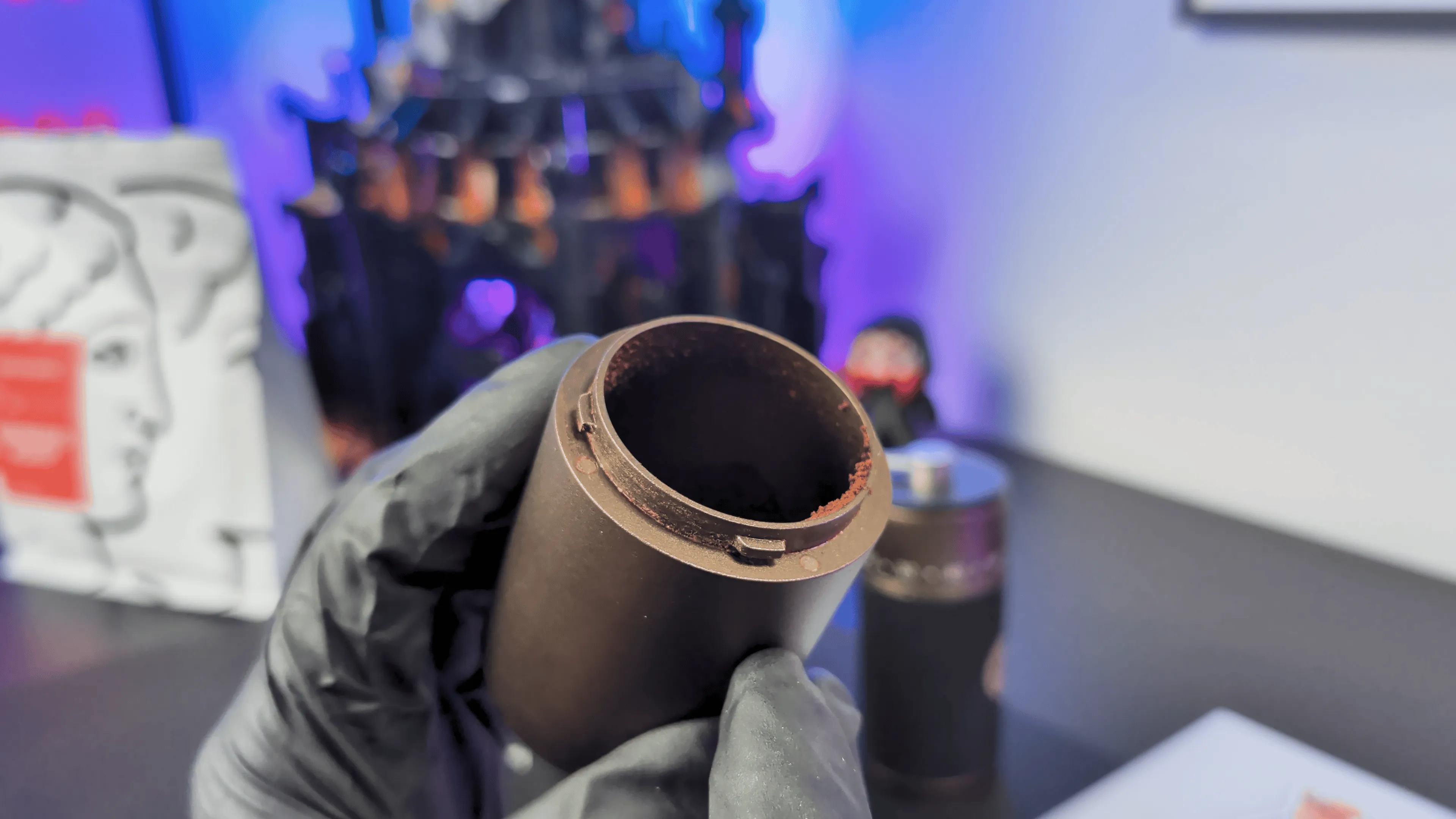
The same goes for the magnetically-attached catch cup. In the wrong hands, a magnetic cup can increase the risk of accidentally knocking the cup loose during grinding (not what you want first thing in the morning). But the recessed grip and 12 magnets holding the cup in place are strong enough to ease worry.
Foldable Handle
If I have one nit to pick with the J-Ultra’s design, it’s the relatively-wide footprint that the handle takes up in the folded position.
When it’s in grinding position, the handle feels good in the hand and makes the hard work of manually grinding espresso about as comfortable as it can be, but when it’s folded, it sticks out a bit more than you would like for a design feature that’s meant to increase portability.
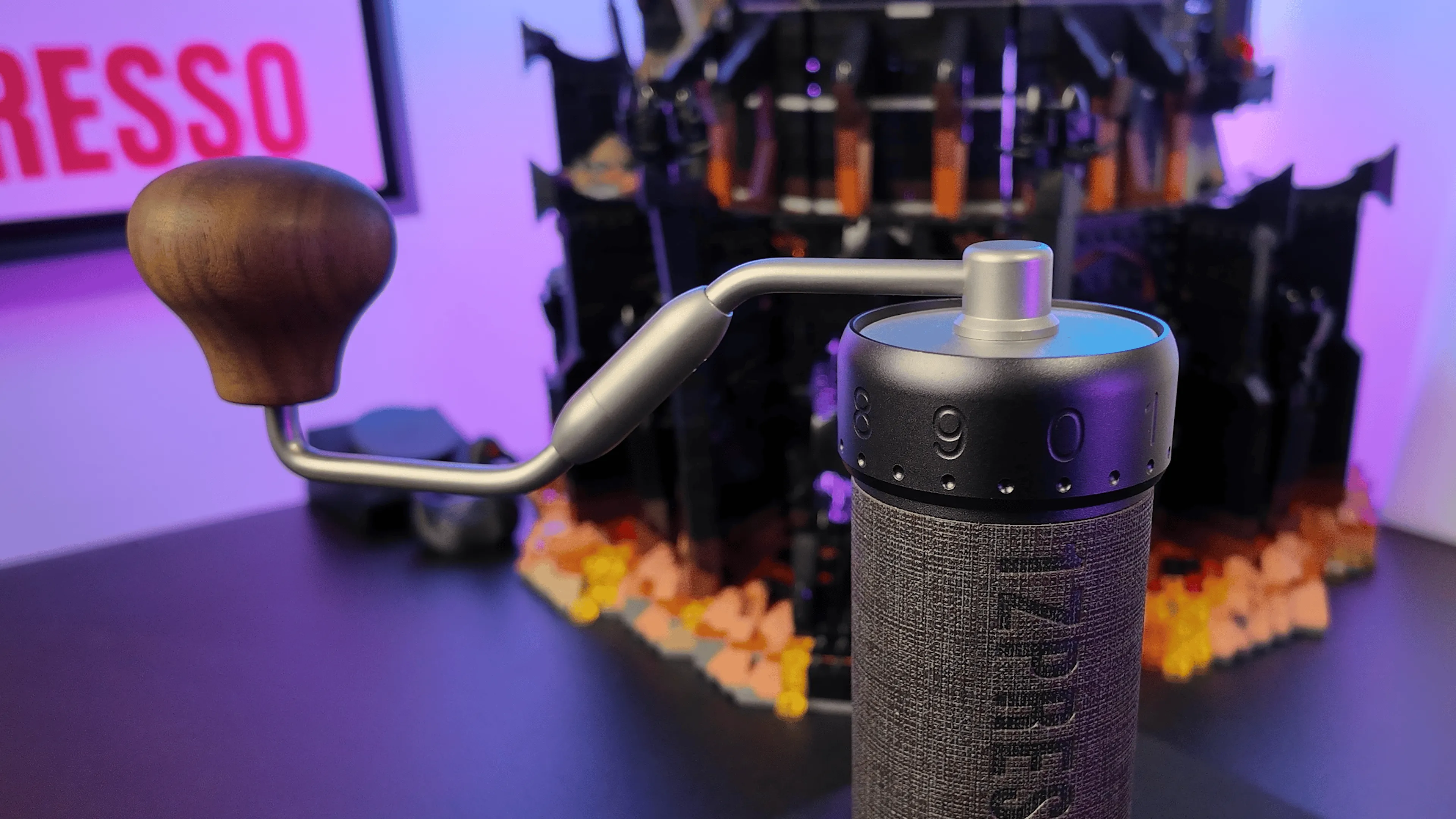
There is a backstory that helps explain the handle’s unique shape. German manufacturer BB Coffee Company (the makers of Commandante grinders) and 1Zpresso were involved in legal dispute over elements of the design of previous iterations of 1Zpresso’s lineup, resulting in some models like the J-Max being pulled from the shelves (If you look at an image of the J-Max next to a Commandante C40, you’ll be able to see why).
While other grinders I’ve reviewed, like the Timemore C3 ESP Pro and C5 ESP Pro, have offered more elegant solutions to making a foldable handle, with this context in mind it’s easy to see why 1Zpresso might be reluctant to model their handle off a competitor.
Burrs and Calibration
The J-Ultra uses a set of 48 mm heptagonal burrs with a so-called “advanced coating” which presumably is meant to improve performance and reduce retention. Sure enough, retention and precision are handled exceptionally well here, outside of a static issue every now and then (more on that below).
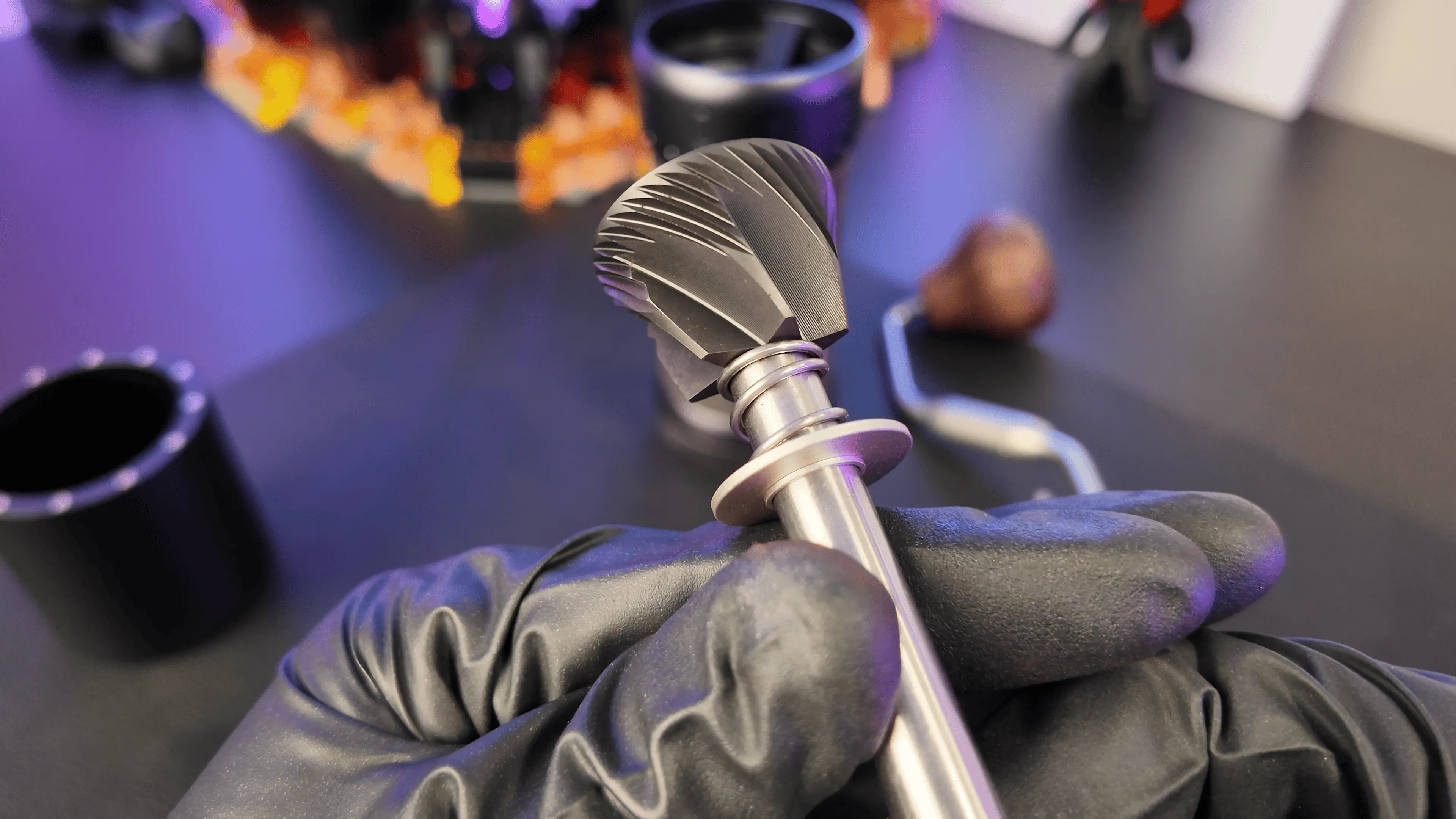
Calibrating the J-Ultra was as straightforward as turning the grind adjustment counterclockwise until it couldn’t move any further, and checking to make sure that the shaft nut is firm at setting 0 and doesn't make noise when turning the handle. If it goes well beyond zero, or makes noise, you'll want to fine-tune to adjustment using these instructions (scroll down to J Ultra). Essentially, you just fine-tune the tightness of the top nut.
From there, it’s a matter of dialing in between settings 1.0.0 and 1.7.0 (after the first full rotation).
There are 100 grind settings per rotation across 5 full rotations, and each setting changes by a minuscule 8 microns. Users who switch between brew methods regularly may find themselves at sea with 500 total settings, but dedicated espresso drinkers can bask in the luxurious number of settings available here.
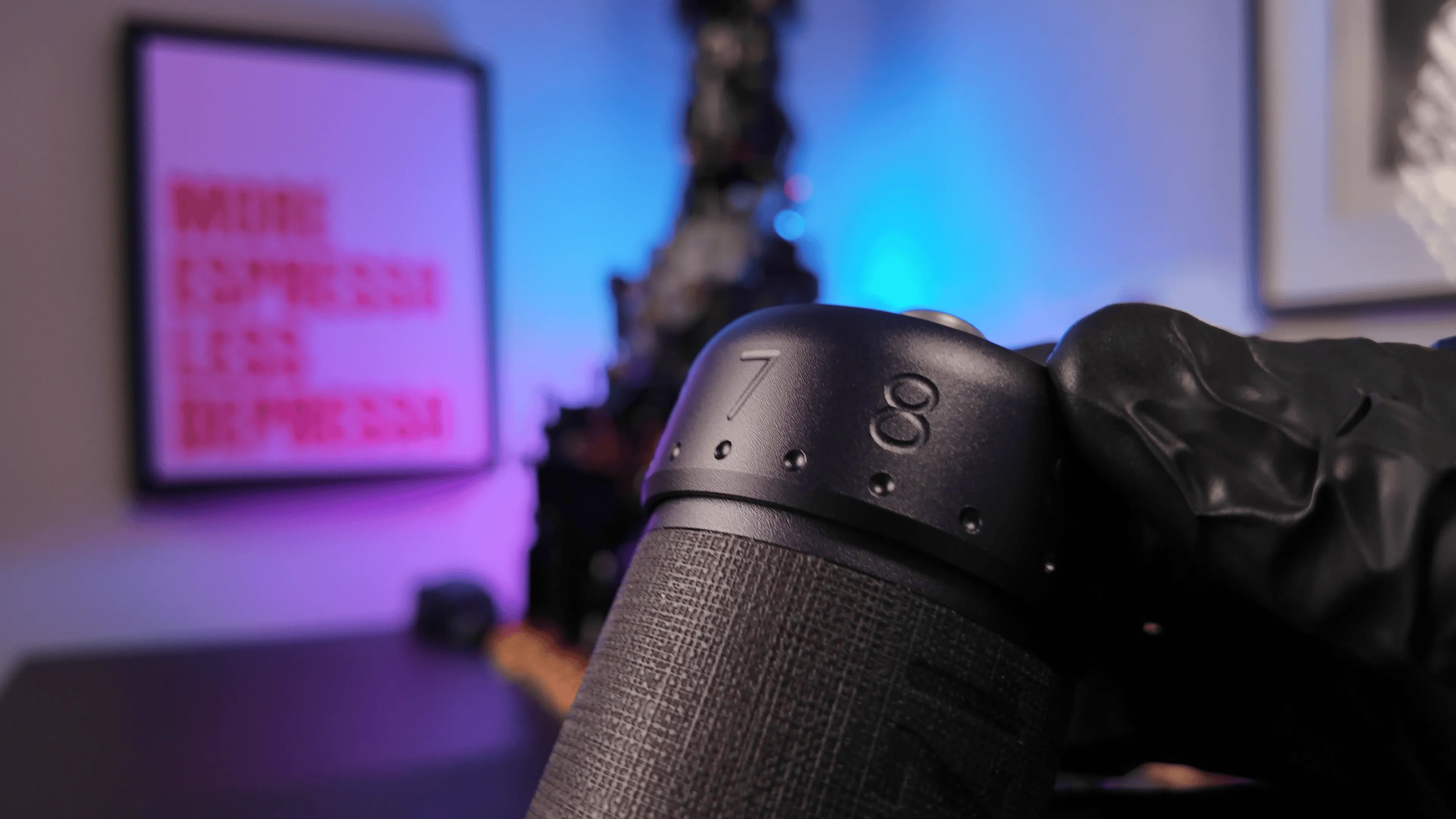
All of this comes together where it counts: in the cup, with the J-Ultra producing amazingly consistent particle distribution, and complex, flavorful shots of espresso.
Performance
Particle size distribution
Note: As always, I’m using my DiFluid Omni particle analyzer here to measure the particle output. This is not definitive data, but suggestive of consistency. In my initial test sample, I took a total of 45 data points; 5 tests at settings 1, 1.5, 2, 2.5, 3, 3.5, 4, 4.5, and 5. This upper setting range is very coarse, so I'll likely refine this data within more usable settings soon.
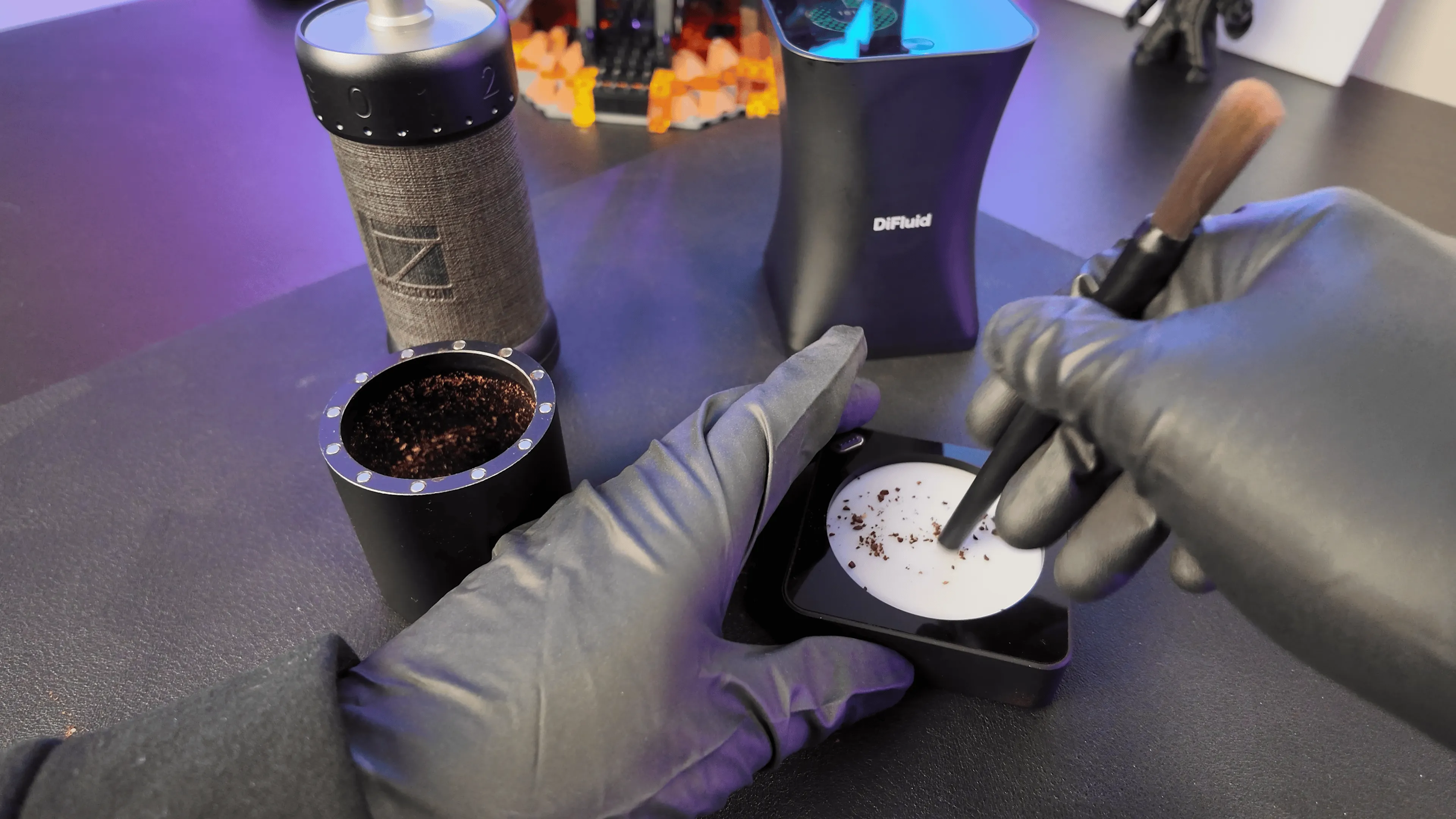
Looking at the charts below, we can see that the burr geometry is heavily optimized for the fine range, maintaining a very tight run-to-run consistency between settings 1.0 and 2.5. This gives you a highly predictable, stable canvas for making the microscopic tweaks needed to perfectly dial in. My personal setting after dialing in Coffee Bros Espresso Roast hovers between 1.3.5 and 1.4.0, depending on bean freshness.
You can also see a lot of instability above 3.0.0. Granted, this is designed for espresso. I noticed a similar effect when testing out the competing KINGrinder K6. And if you remember, the K6 had an unbelievable repeatability rating of 2.2% at the lower end of the espresso range (setting 30), before returning to the more standard 5% (setting 40).
The J Ultra, on the other hand, had a 5.2%, 4.9%, and 5.6% repeatability rating throughout espresso ranges. I really like how consistent that is. Not to mention the insane level of control that this unit provides. However, I did notice a bit of static.
Retention
When using an 18g dose, I'll typically see 0.1g under without using RDT, which is on par for expectations with manual grinders. Using RDT will get you to net zero and reduce some of the static. Personally, if I'm working with a consistent 0.1g retention, I skip the RDT. But every now and then, static will hold a clump of grinds in the bottom opening. All it takes is a solid tap on the counter to dislodge it, before taking the catch cup off. If you don't, you'll eventually encounter an unpleasant surprise mess.
Final Verdict
At the beginning of this review we asked if the J-Ultra was worth the price. At $199 it is still possible to spend about half that on a manual grinder and get great performance. You could even purchase an entry-level electric grinder. What sets the J-Ultra apart is the insane range and micron control. Is it worth paying double for that?
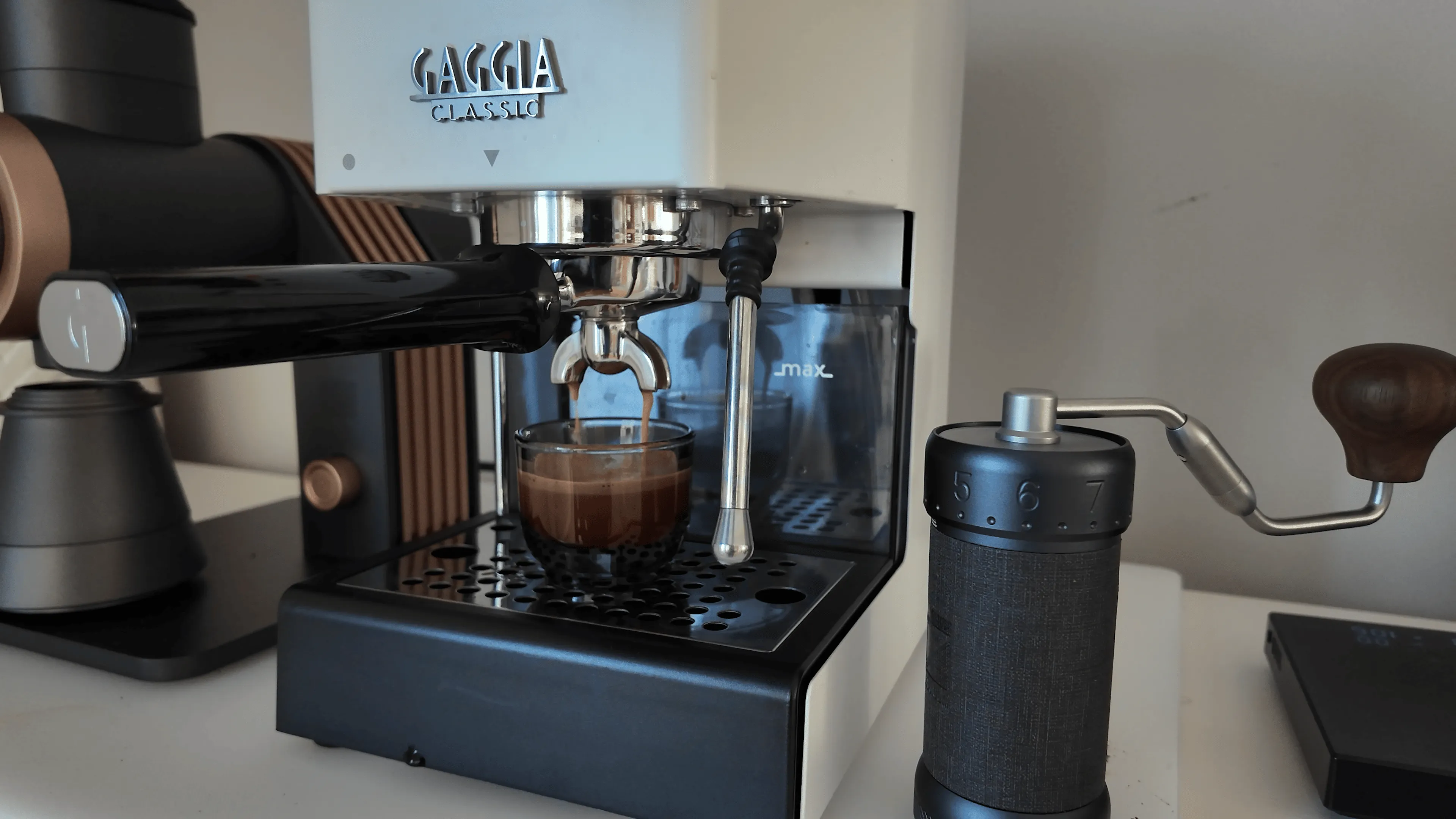
I think the easiest, obvious answer to that is: I can easily dial in an espresso shot with the KINGrinder K6. The extra level of control on the J Ultra is nice, but not a complete necessity. Don't get me wrong, I fully recommend the J Ultra. I like the feel, folding handle, and lid design more than the K6. But factoring in performance to value, you're getting more for your money from the K6. The question for you will come down to how much you want to spend.
Technical Specifications
| Brand | 1Zpresso |
|---|---|
| Model | J-Ultra |
| Adjustment | Stepped |
| Range | 0 - 1230 μm |
| Settings | 11 mapped |
| Weight | 1.48 lbs |
| Capacity | 35-40 g |
| Burr size | 48 mm |
| Time to Grind (18g) | 35 seconds |
Common Questions
- How does the 1ZPresso J-Ultra compare to the KINGrinder K Series?
- The KINGrinder K6 and K7 are about $50 and $100 less expensive than the 1ZPresso J-Ultra respectively. While they performed well, we found that a few small design changes made the K6 and K7 our runner-ups to the Timemore’s ESP Pro series at that price range. Those same design flaws are handled well by the J-Ultra, which offers more bang for your buck if you’re willing to drop a bit more money on a grinder.
- Should I buy a 1Zpresso J-Ultra or K-Ultra?
- The decision comes down to brew method. 1Zpresso’s J series is tailored to espresso, while the K series is tailored to pour-over. The J-Ultra offers 8 microns per step over 500 settings, while the K-Ultra offers 20 microns per step over 100. Both can handle a wide range of brew methods including espresso, but the sheer number of settings and precision that the J-Ultra provides make it most practical for espresso drinkers, while the K-Ultra is best for those for whom pour-over is the main brewing method.
- Why can’t I buy a J-Max?
- The J-Max was discontinued by 1Zpresso. It was followed up by the J-Ultra which offers an even finer level of precision per adjustment: 8 microns-per-step to the J-Max’s 8.8 microns-per-step.