Best Manual Coffee Grinders (2026)
I bought seven of the most talked-about hand grinders out of pocket, ran 425 optical particle scans through a DiFluid Omni, and ranked them from best to worst across Repeatability, Grind Uniformity, Sweet Spot, Fine Fraction, and daily-driver workflow.
Contents
I ran 425 optical particle analysis scans through my DiFluid Omni and did enough hand-grinding to question my life choices. Every one of these seven manual grinders was purchased out of pocket — no manufacturer freebies, no sponsorships, and no ads on this site — then lived with as a daily driver before a single beam of light hit the grounds.
On earlier benchmarks, I leaned heavily on Repeatability CV (how much a grinder's median grind size drifts from dose to dose at an untouched setting). Repeatability matters a ton when you're dialing in morning espresso, but it only tells half the story. A grinder can hit the exact same average particle size five mornings in a row while still dumping a messy mix of dusty fines and oversized coarse boulders into your cup.
So for this roundup, I expanded the lab data across four core metrics:
- Repeatability (CV% — lower is better): Dose-to-dose stability across 5 runs at the same setting, calculated with Bessel's correction.
- Grind Uniformity (SD ÷ D50 — lower is better): Single-cup bell-curve width relative to median grind size, catching stray fines and coarse boulders.
- Sweet Spot (±25% of target D50 — higher is better): The percentage of your coffee actually landing right around your target grind size.
- Fine Fraction (100–300 µm — lower means less grit): Measurable fine particles that slow filter drawdowns or build heavy body in espresso — alongside Pour-Over Boulders (>1,180 µm) that under-extract.
Once all four metrics sat side by side, three big surprises jumped off the screen: a $115 Timemore surged past nearly every sub-$200 rival to take clear second place overall, a $150 pour-over favorite looked far wider inside a single cup than its repeatability score suggested, and one $350 manual flagship beat every electric flat-burr grinder I have ever tested.
Overall Manual Grinder Ranking (Best to Worst)
Ranked across Repeatability CV, Grind Uniformity, Sweet Spot, Fine Fraction, coarse boulders, and daily-driver value.
| Rank | Grinder | Repeatability | Rating | Where to Buy |
|---|---|---|---|---|
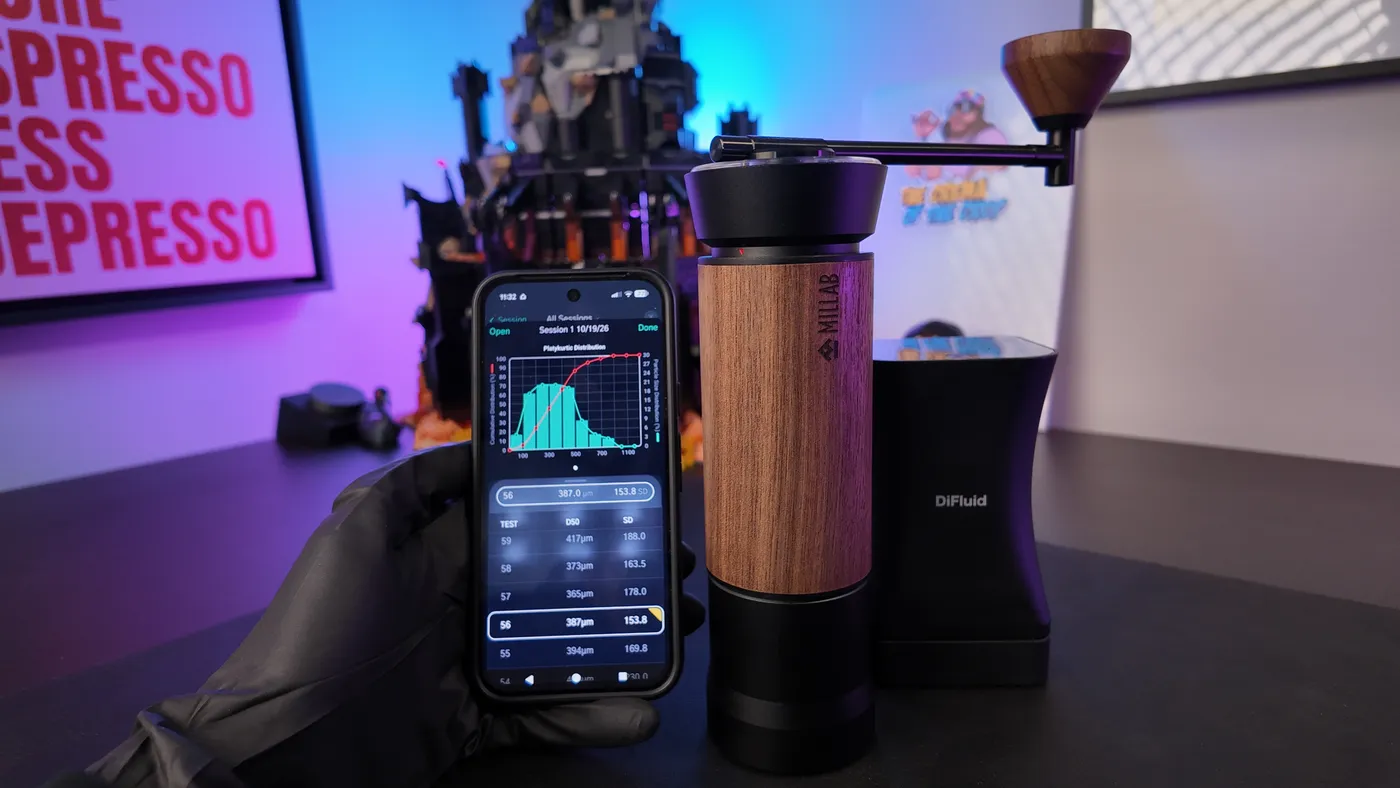
| #1 | 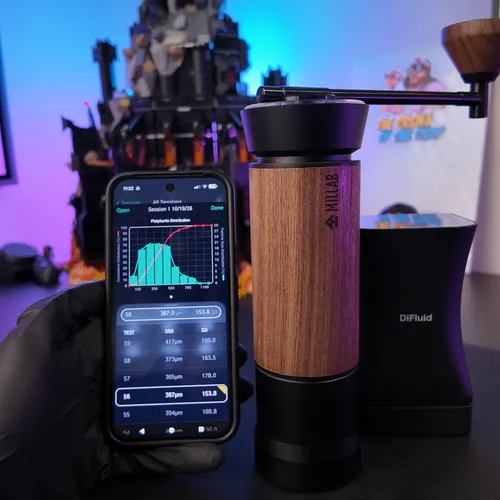 | 3.4% 50 runs · 44 mm burrs | 5.0/5 | 30% Off$399.00$280.00at Amazon |
| #2 | 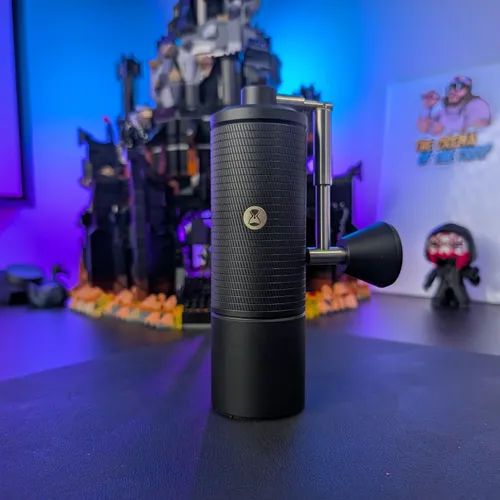 | 6.1% 70 runs · 42 mm burrs | 5.0/5 | 20% Off$115.00$92.00at Amazon |
| #3 | 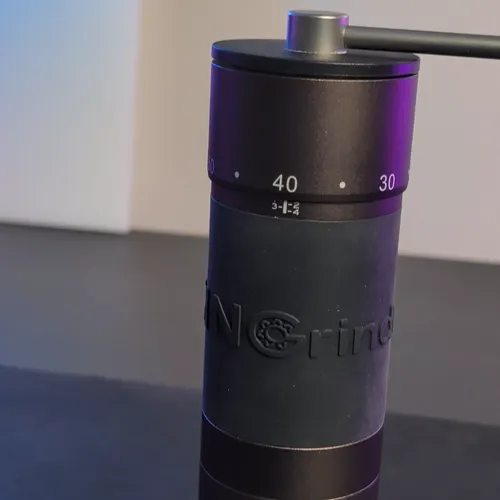 | 6.8% 55 runs · 48 mm burrs | 4.8/5 | 15% Off$109.00$92.65at Amazon |
| #4 | 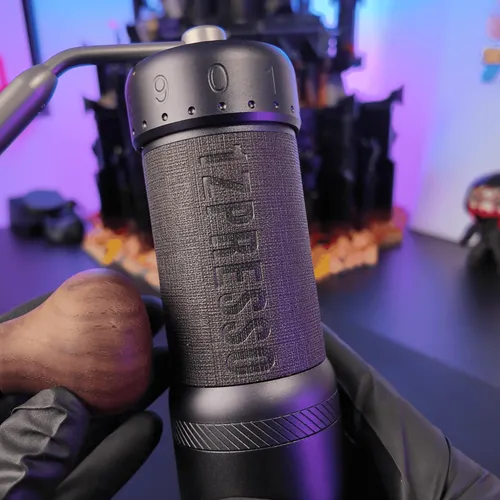 | 6.3% 45 runs · 48 mm burrs | 4.6/5 | 20% Off$199.00$159.20at Amazon |
| #5 | 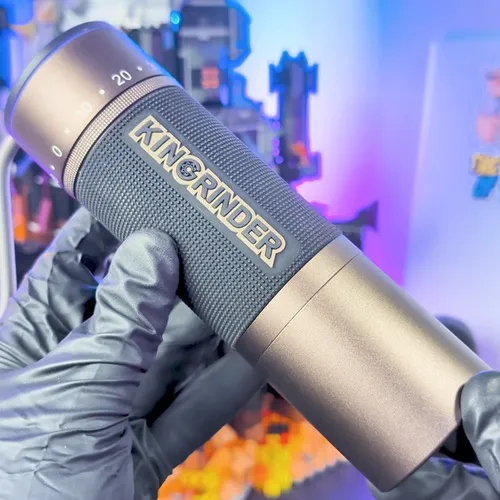 | 5.8% 40 runs · 53 mm burrs | 4.5/5 | 15% Off$149.00$126.65at Amazon |
| #6 | 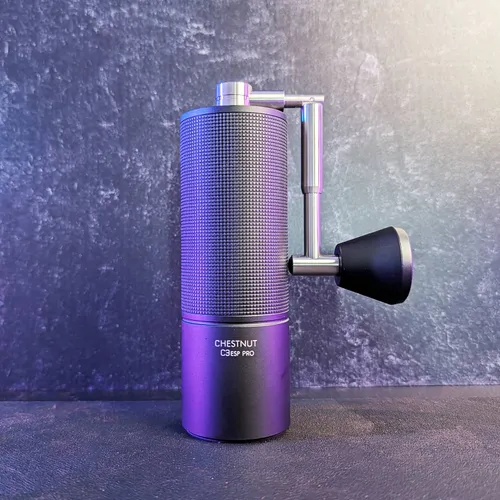 | 8.6% 75 runs · 38 mm burrs | 4.0/5 | |
| #7 | 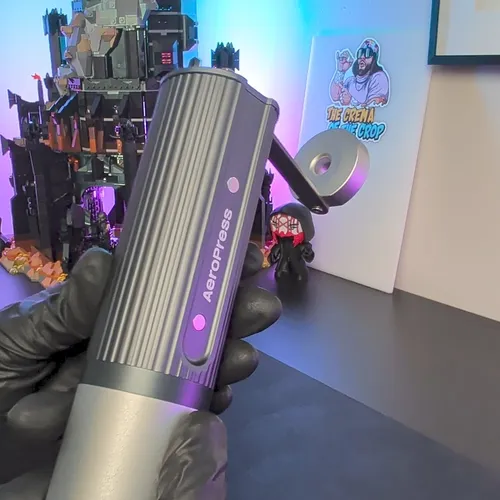 | 10.9% 90 runs · 38 mm burrs | 2.0/5 | — |
Why They Land in This Order
Adding single-cup Grind Uniformity, Sweet Spot, and Fine Fraction reshuffled the middle of the lineup in a big way compared to Repeatability alone. Here is the full lab snapshot behind the 1-to-7 order above (cells marked with an asterisk cover a partial slice of the espresso window because of each grinder's logged settings):
Rank | Grinder | Price | Repeatability CV (↓) | Uniformity Esp / PO (↓) | Sweet Spot Esp / PO (↑) | Fine Fraction Esp / PO (↓) | PO Boulders >1,180 µm (↓) |
|---|---|---|---|---|---|---|---|
#1 | $350 | 3.4% | 45.0%* / 40.5% | 41.0%* / 45.9% | 23.8%* / 9.0% | 7.3% | |
#2 | $115 | 6.1% | 46.4% / 44.1% | 42.2% / 41.9% | 25.2% / 10.3% | 10.8% | |
#3 | $109 | 6.8% | 41.6% / 48.9% | 44.8% / 39.6% | 24.1% / 8.9% | 12.8% | |
#4 | $199 | 6.3% | 48.0%* / 48.5% | 38.9%* / 35.8% | 23.7%* / 12.7% | 14.1% | |
#5 | $150 | 5.8% | 50.5%* / 50.6% | 40.7%* / 37.0% | 22.2%\* / 10.1% | 15.5% | |
#6 | $99 | 8.6% | 48.7% / 49.8% | 39.7% / 38.8% | 27.4% / 9.7% | 15.8% | |
#7 | $199 | 10.9% | 49.3%* / 49.8% | — / 37.0% | — / 10.8% | 15.8% |
- Millab M01 ($350) — Undisputed #1 on pure cup quality. It sweeps the board: #1 Repeatability (3.4% CV), #1 pour-over Grind Uniformity (40.5%), #1 pour-over Sweet Spot (45.9%), tied #1 cleanest pour-over Fine Fraction (9.0%), and 7.3% coarse boulders — roughly half what most of the other grinders produce. The only real knocks are its $350 price tag, 2.4-pound heft, and straight handle ergonomics.
- Timemore C5 ESP Pro ($115) — Biggest winner of the new uniformity data. Looking at repeatability alone (6.1% CV), the C5 looked like a tidy mid-pack upgrade over the C3. Once single-cup distribution entered the picture, it ran away with a clear #2 in pour-over Grind Uniformity (44.1%), #2 in pour-over Sweet Spot (41.9%), #2 in espresso Sweet Spot (42.2%), and #2 lowest boulders (10.8%) — beating every other sub-$200 mill at a third of the M01's price. Its only trade-off is the slower internal adjustment dial.
- KINGrinder K6 ($109) — Best espresso numbers per dollar, held back by coarse volatility. The K6 posts the tightest espresso Grind Uniformity (41.6%), the highest espresso Sweet Spot (44.8%), and ties the Millab M01 for the cleanest pour-over Fine Fraction (8.9%), all with a fast external dial for $109. It lands #3 behind the C5 ESP Pro because its coarse-range uniformity curve bounces around wildly past 600 microns (48.9% average across our 5-run dataset, with rogue boulder and chaff scans that need more samples to smooth out) and its oversized top collar is easy to bump mid-grind.
- 1Zpresso J-Ultra ($199) — Elite traditional espresso specialist, mediocre all-rounder. On paper, the J-Ultra sits wider on Grind Uniformity (48.0–48.5%), lands at the bottom of Sweet Spot in both brew ranges (38.9%* espresso / 35.8% pour-over), and throws the most pour-over grit (12.7% Fine Fraction). In the cup, however, that wider fine tail — combined with 8-micron micro-steps, a 12-magnet catch cup, and the best ergonomics here — is exactly why it pulls thick, syrupy traditional espresso. It ranks #4 overall because at $199 it is a dedicated espresso specialist, not a clean pour-over performer.
- KINGrinder K7 ($150) — Great repeatability and workflow, surprising single-cup reality check. This was the sharpest plot twist in the new data. The K7 takes #2 in overall Repeatability (5.8% CV), posts the lowest measurable espresso Fine Fraction (22.2%\), and achieves net-zero retention completely dry. Yet inside a single cup, it records the widest Grind Uniformity in the test (50.5–50.6%*), a low 37.0% pour-over Sweet Spot, and 15.5% pour-over boulders — meaning the cheaper $115 C5 ESP Pro actually cuts a much tighter filter grind.
- Timemore C3 ESP Pro ($99) — Outclassed by its own $16-pricier sibling. There is nothing fundamentally wrong with the C3 ESP Pro: it is compact, well-built, and costs under $100. Still, at 8.6% CV, 27.4% espresso Fine Fraction (highest in the test), and 15.8% pour-over boulders, stretching just $10 to $16 more for the K6 or C5 ESP Pro buys a massive step up in both stability and cup clarity.
- AeroPress Manual Grinder ($199) — Clear last place. Worst Repeatability by a wide margin (10.9% CV — over three times looser than the Millab M01), bottom-tier uniformity and boulders (15.8%), highest retention (0.3g), and a frustrating backwards dial and flimsy handle — all at the same $199 price tag as a 1Zpresso J-Ultra.
Scroll down to explore the interactive Repeatability, Grind Uniformity, Sweet Spot, and Fine Fraction charts yourself (you can toggle the Benchmark Table between Pour Over and Espresso sorting), followed by a detailed mini-review, video, and bench photo gallery for each grinder.
Manual Grinder Comparison
All seven manual coffee grinders tested on the 9 Bar Benchmark DiFluid Omni — comparing shot-to-shot Repeatability CV, Between-Run SD, Grind Uniformity, Sweet Spot, Fine Fraction, and pour-over boulders.
- Timemore C5 ESP Pro
- 1Zpresso J-Ultra
- Kingrinder K7
- Timemore M01 (Millab)
- Kingrinder K6
- Timemore C3 ESP Pro
- AeroPress Manual Grinder
Overall Repeatability CV
Averaged across repeat-run settings in the active range. Lower is more consistent.
Overall averages are dynamically clipped to a shared grind range (D50 ≤ 1150µm) so every grinder is judged on the same particle sizes — a fair, apples-to-apples comparison. For the complete, unclipped performance data, read the full reviews: Timemore C5 ESP Pro, 1Zpresso J-Ultra, Kingrinder K7, Timemore M01 (Millab), Kingrinder K6, Timemore C3 ESP Pro, AeroPress Manual Grinder.
Repeatability CV by Setting
Each grind setting measured more than once. One chart per grinder — grinders use different setting scales, so each has its own axis.
Timemore C5 ESP Pro
1Zpresso J-Ultra
Kingrinder K7
Timemore M01 (Millab)
Kingrinder K6
Timemore C3 ESP Pro
AeroPress Manual Grinder
Grind Uniformity vs Grind Size
Measures single-dose bell-curve width relative to median particle size (Standard Deviation ÷ D50). Lower % is better — meaning fewer dusty fines AND fewer coarse boulders.
How to Read This Data (And What Optical Sensors Can & Can't See)
01 · X-Axis: Real Micron Ruler (D50)
Click numbers don't match across brands (“Setting 5” on one grinder isn't “Setting 5” on another). Plotting actual measured median size (D50 in µm) puts every grinder on the same physical ruler across Espresso (350–500µm) and Pour Over (600–850µm).
02 · Y-Axis: Grind Uniformity (Lower = Better)
Divides each dose’s particle standard deviation by its median size (SD ÷ D50). Unlike looking at Fine Fraction alone, Grind Uniformity catches width on BOTH tails—penalizing a grinder whether it throws fine dust or chunky >1,180µm boulders.
03 · Optical Floor & Repeatability
Captured on a DiFluid Omni 2D optical analyzer (5+ scans/setting). Optical trays start at 100µm, so sub-100µm static espresso dust (which builds syrupy body) isn't counted separately, and ±1–2% shifts are normal across bean batches. Grind Uniformity, Sweet Spot, and Fine Fraction measure a single dose—check Repeatability for dose-to-dose consistency.
Table math: Benchmark table values integrate the area under each grinder's curve across Espresso (350–500µm) and Pour Over (600–850µm). Cells marked Partial mean the grinder's logged settings only overlapped part of that band—switch to Curve View for apples-to-apples comparisons at an exact D50.
Best Hand Grinders Reviewed (Espresso & Pour-Over)
Best Overall Manual Grinder: Millab M01
Affiliate link · Ad-free & self-funded lab tests
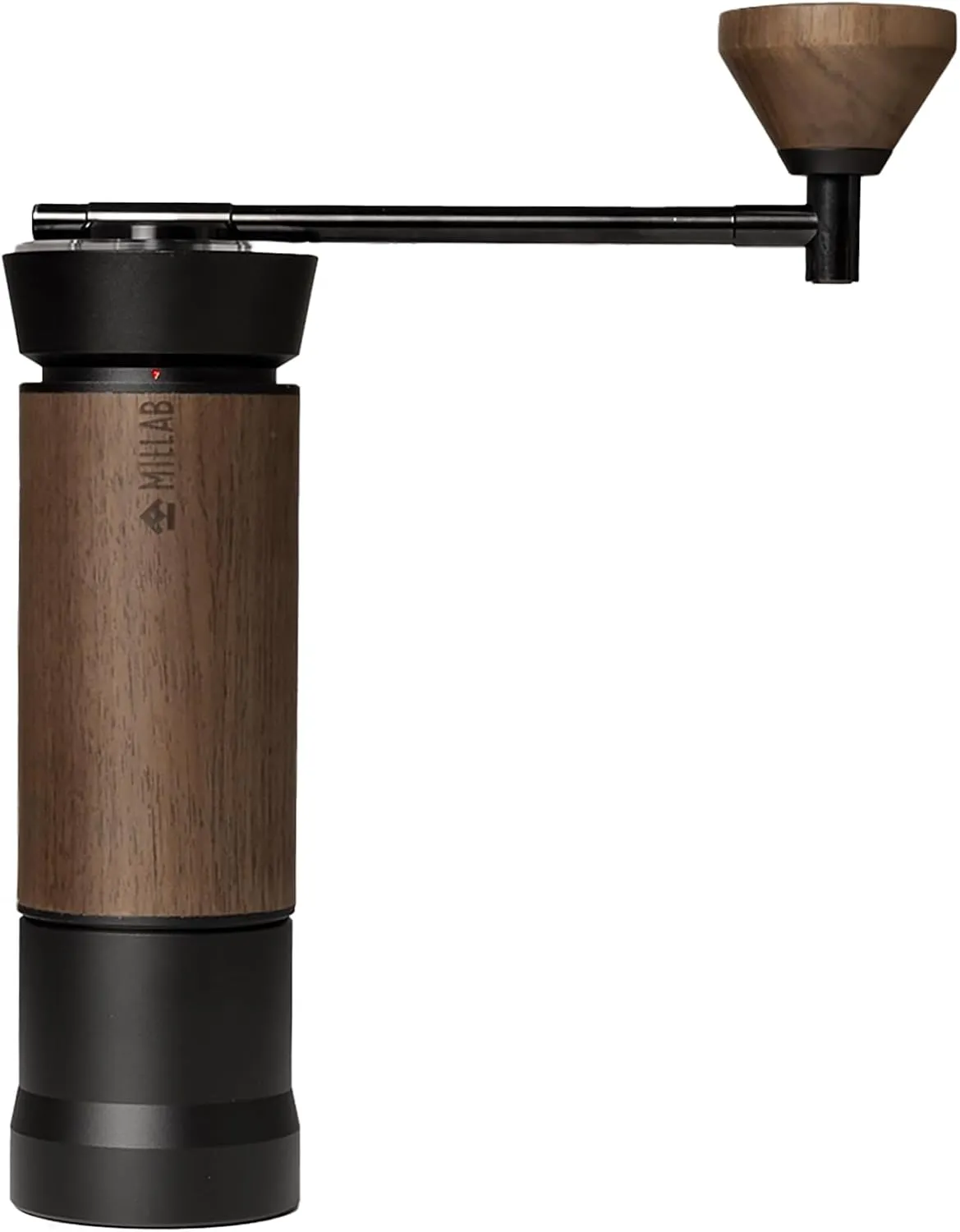
If budget is off the table and you want the best cup quality a hand grinder can deliver on my bench, stop scrolling here. Millab is Timemore's boutique luxury division — essentially the COS to Timemore's H&M — and the $350 Millab M01 is the rare luxury coffee toy where the lab numbers actually back up the unboxing theater.
Pulling it out of its minimalist eggshell box feels like opening an expensive bottle of scotch (though I still maintain Timemore could have skipped the included commemorative coin and knocked $5 off the price). Aside from the transparent hopper lid, the entire grinder is machined aluminum alloy, stainless steel, and real walnut or striated aluminum. At 2.4 pounds, it is a countertop centerpiece, not a backpacking companion. The external dial sits well above your grip with satisfying P7-bearing clicks at 12.5 microns per step (100 settings total), the proprietary locking catch cup stays rock-solid while grinding, and tool-free disassembly via the bottom lock knob preserves your zero point automatically.
The magic lives inside its absurd 44mm "pineapple" burrs, which stand 30mm tall — 50% taller than standard Timemore S2C burrs — stacking two pre-breaker stages and two fine-cutting stages on top of each other. In the DiFluid Omni across 50 scans, the M01 delivered a staggering 3.4% overall Repeatability CV — beating not only the 6.4% manual average, but every electric grinder I have tested so far, including the 64mm flat-burr Gevi VelPro 400 (4.0% CV). At Setting 5 it logged an absurd 0.8% CV, and even out past 1,000 microns at Setting 10 it held 2.2%.
The new single-cup uniformity charts widen its lead even further. In pour-over (600–850 µm), the purple M01 line hugs the bottom of the Grind Uniformity chart at 40.5%, packs 45.9% of your dose into the Sweet Spot, stays tied for cleanest on Fine Fraction (9.0%), and cuts oversized coarse boulders down to 7.3% — roughly half what most of the other grinders here produce. Retention is 0.1g dry and net zero with a quick mist of RDT (just give the catch cup a light tap on the counter to knock stray grounds out of the locking channels).
The daily-driver nitpicks: It is heavy, it costs $350, and its completely straight handle feels less ergonomic during heavy espresso grinding than the angled handles on a 1Zpresso. Still, if you want electric-flat-burr clarity and modern flavor separation in a manual mill, nothing else on my bench comes close.
Best Overall Value Under $150: Timemore C5 ESP Pro
Affiliate link · Ad-free & self-funded lab tests
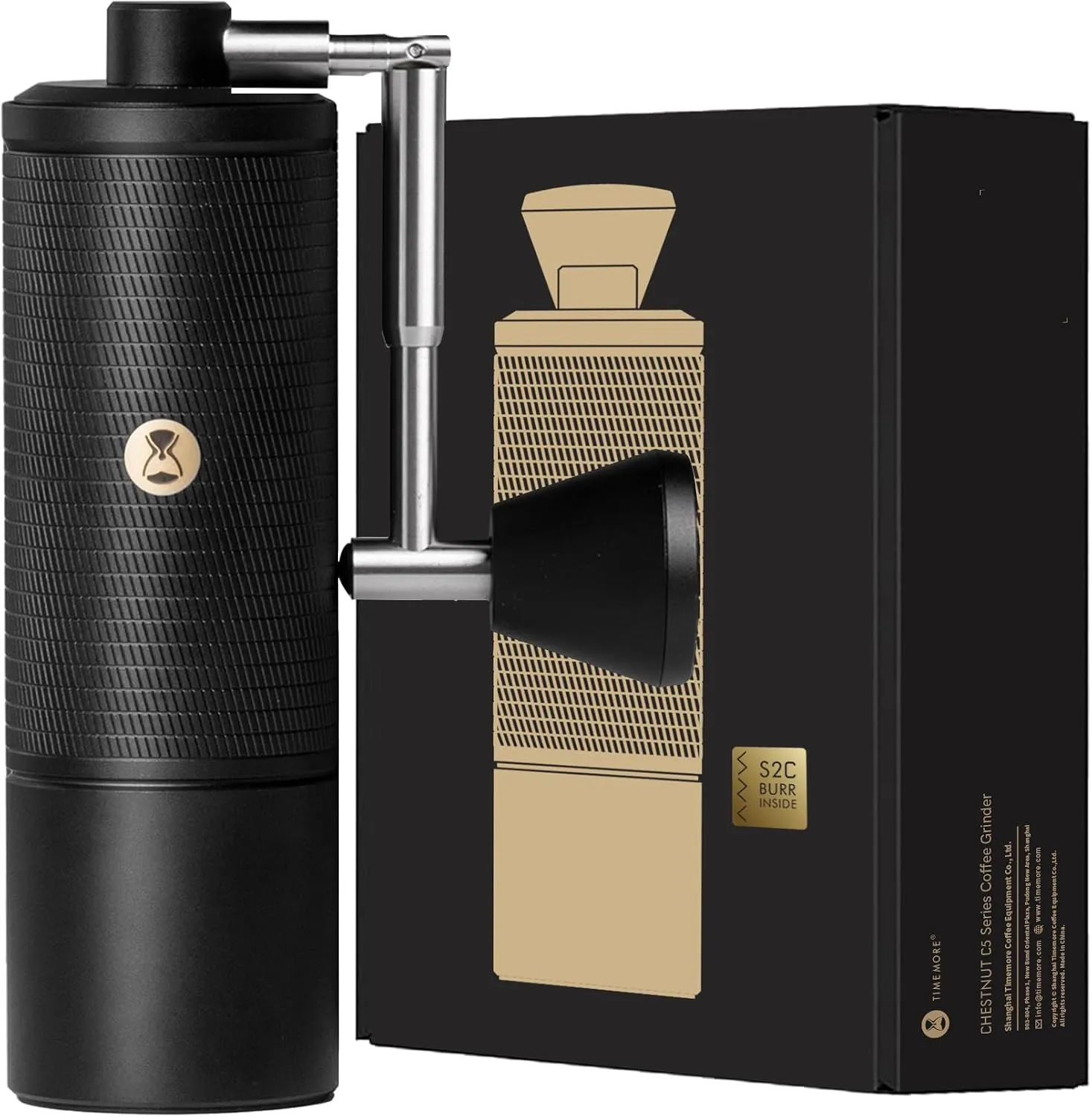
The Timemore C5 ESP Pro is the sleeper champion of this entire dataset — and the biggest beneficiary of adding Grind Uniformity and Sweet Spot analysis.
For just $115 ($16 more than the C3 ESP Pro), Timemore kept the same slim 2-inch diameter while stretching the all-aluminum chassis an inch taller (6.77 inches, 1.4 pounds) and stripping out every trace of plastic — even the top lid and handle knob are solid metal, unlike the plastic lids on the KINGrinder K6 and K7. They upgraded the diagonal knurling for noticeably better palm grip, flared the top into an "XL funnel" that actually helps prevent bean spills, kept the brilliant snap-flat folding handle (now with a tiny rubber bumper so metal never clacks against metal), and dropped in larger 42mm S2C-042-III burrs paired with 150 settings at 15 microns per click (3 rotations × 50 clicks).
Across 70 DiFluid Omni runs, overall Repeatability dropped to 6.1% CV — edging out the $199 J-Ultra (6.3%) and crushing the C3 ESP Pro (8.6%). Down in espresso at 0.6.0 (30 clicks out), Between-Run SD measured just 14.9 µm, literally half the C3's 30.9 µm scatter. Even more surprising: once we plotted single-cup uniformity, the C5 ESP Pro locked down clear second place behind the $350 Millab M01 across pour-over Grind Uniformity (44.1%), pour-over Sweet Spot (41.9%), espresso Sweet Spot (42.2%), and pour-over boulders (10.8%). Retention sits around 0.1g dry and hits 0.0g with RDT.
Who should buy it (and the one catch): The silicone base literally reads "enjoy slow living" — expect 46 to 60 seconds to grind an 18g espresso dose, though the larger burrs feel noticeably smoother than the C3's. More importantly, the adjustment dial is internal beneath the burrs. If you switch back and forth between espresso and pour-over every single day, unscrewing the cup to count clicks gets tedious fast compared to an external ring. (There is also a minor flat spot in micron progression between 1.4.0 and 1.6.0.) If you mostly stay dialed into one brew method — or want a compact, zero-plastic travel tank that delivers second-best uniformity in the lineup for a third of the Millab's price — the C5 ESP Pro is my #1 value pick.
Best Budget Espresso & Daily Switcher: KINGrinder K6
Affiliate link · Ad-free & self-funded lab tests
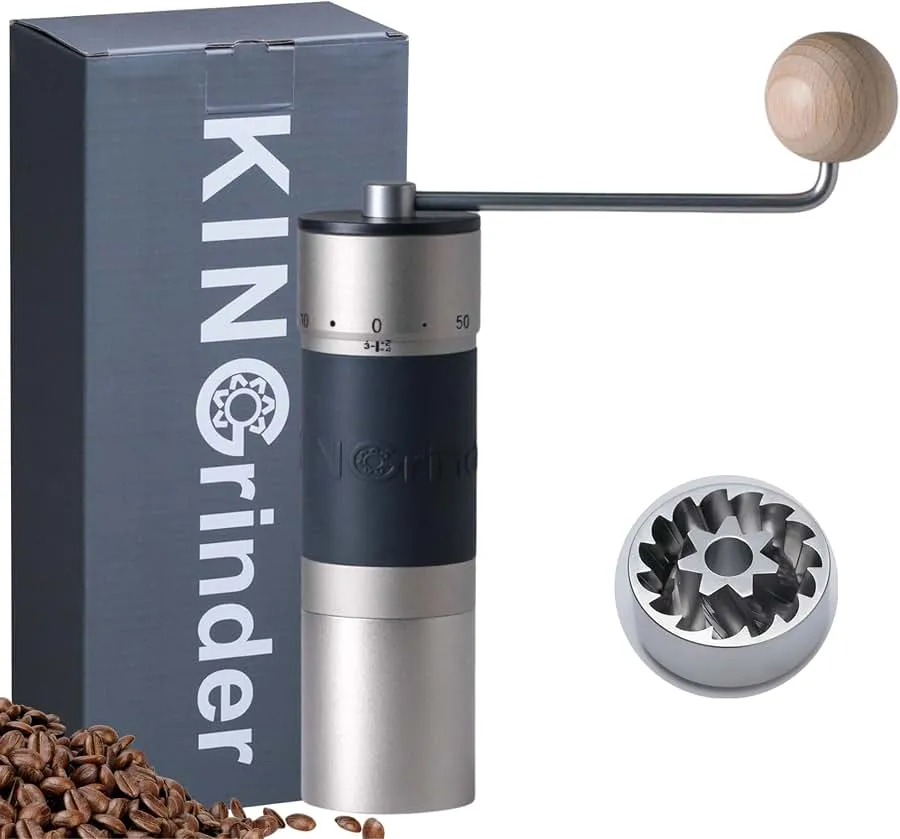
If you brew espresso first or bounce between espresso and filter every morning and refuse to unscrew a catch cup to change settings, the $109 KINGrinder K6 remains the benchmark for raw espresso burr performance per dollar.
Inside its plain foam packaging (a good sign at $109 — every dollar went into machining rather than marketing), you get a solid brushed-aluminum chassis, a real wooden handle knob, a rock-solid threaded aluminum catch cup, 48mm heptagonal stainless burrs, and 240 total settings at 16 microns per click (4 rotations × 60 clicks) controlled from an external top collar.
In the lab across 55 scans, the K6 looks almost absurd in espresso territory. At 30 clicks it hit an astonishing 2.2% Repeatability CV, and when you clip the comparison chart strictly to the espresso range, it jumps ahead of both the $150 K7 and $199 J-Ultra. Better yet, it posts #1 Espresso Grind Uniformity (41.6%) and #1 Espresso Sweet Spot (44.8%), while tying the Millab M01 for the cleanest pour-over Fine Fraction (8.9%). Retention is typically 0.0g to 0.1g with RDT and three quick love taps on the counter.
The two real-world caveats: First, that oversized external adjustment collar sits right above the rubber grip, and it is frustratingly easy to brush it with your index finger while grinding espresso or popping off the plastic lid, accidentally bumping your dialed-in setting. (Some owners never run into this; I bumped it regularly.) Teardown also requires wrestling a fiddly little internal metal circlip. Second, while its espresso curve is laser-tight, its orange Grind Uniformity line spikes sharply past 600 microns and bounces around across coarse settings (48.9% pour-over average). With only 5 runs per setting, a couple of rogue boulder and chaff scans make its coarse curve look pretty volatile here, so I will need more samples to smooth that noise out before trusting it as a pure filter specialist. For $109 espresso and fast daily switching, though, it is still tough to beat.
Best Traditional Syrupy Espresso Specialist: 1Zpresso J-Ultra
Affiliate link · Ad-free & self-funded lab tests
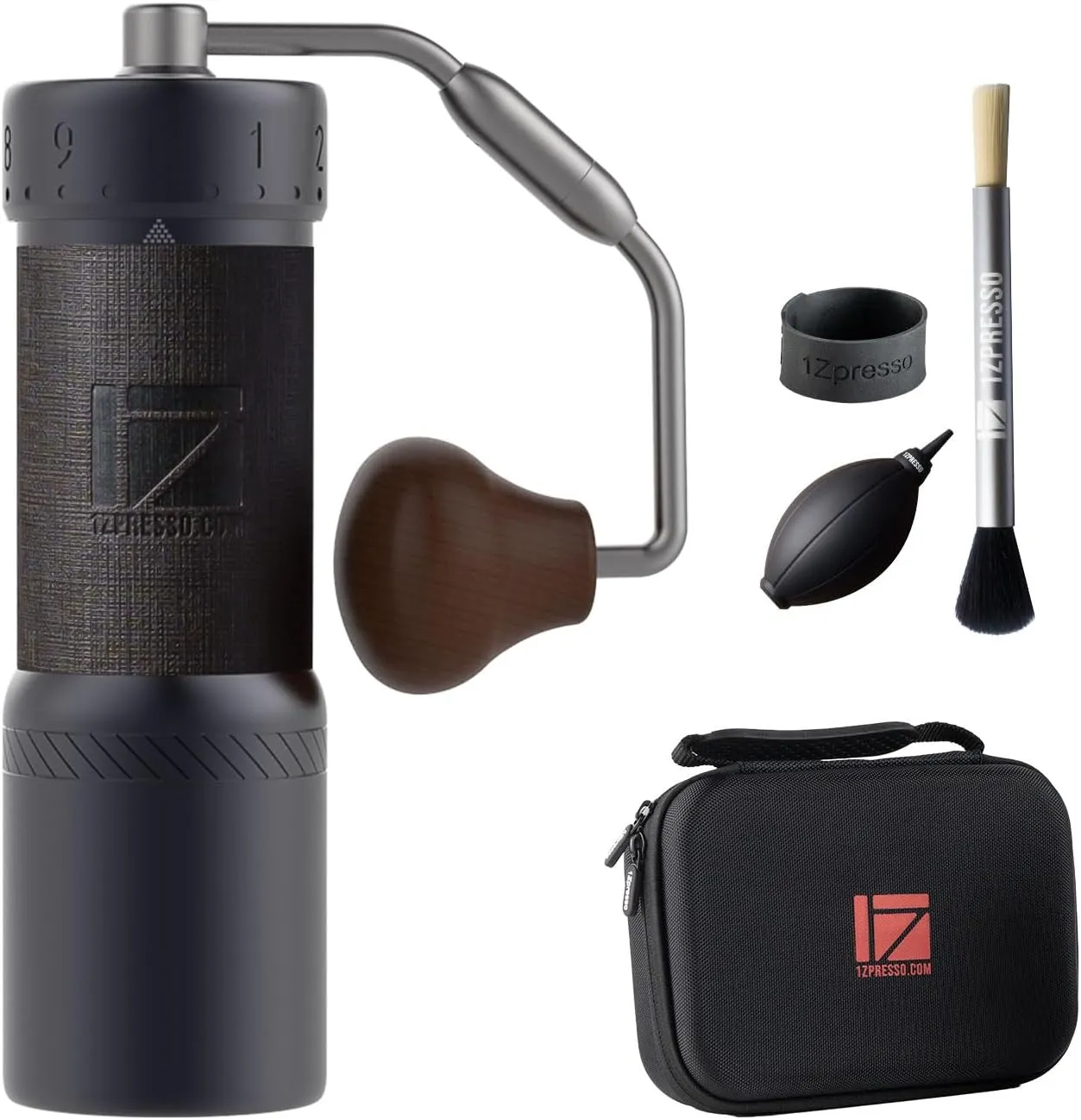
On raw ergonomics and tactile joy, the $199 1Zpresso J-Ultra is still the best-feeling hand grinder I have used. It arrives in a semi-rigid carrying case straight out of a spy movie, pairs a real wooden knob with a dust-resistant textured metal grip (none of the lint-magnet silicone sleeves you see on cheaper mills), snaps its catch cup home with 12 strong recessed magnets, and tears through an 18g espresso dose in roughly 35 seconds — the fastest grind time in this lineup.
Its headline party trick is the external top dial: 500 individual clicks (5 rotations × 100 clicks) moving its 48mm coated heptagonal burrs by an insane 8 microns per click. For context, a single human hair is about 70 microns wide, so you are literally splitting fractions of a hair to fine-tune shot times. Across 45 DiFluid runs, it held steady right around 5% Repeatability CV across the entire espresso band (settings 1.0 through 2.5, with 6.3% overall CV) and hits net-zero retention with RDT (just give it one firm counter tap before pulling the magnetic cup so static doesn't leave a small clump in the chute).
Why it ranks #4 overall instead of #1: Look at the Grind Uniformity, Sweet Spot, and Fine Fraction tabs. The J-Ultra runs noticeably wider (48.0%* espresso / 48.5% pour-over), posts the lowest Sweet Spot in both brew ranges (38.9%* espresso / 35.8% pour-over), and throws the most pour-over grit (12.7% Fine Fraction). Keep the optical caveat in mind: 2D optical sensors like the DiFluid Omni stop at a 100-micron floor and miss microscopic static dust, so numbers always have to be paired with taste in the cup. In traditional medium-to-dark espresso, that wider fine tail is a big reason the J-Ultra pulls such a thick, chocolatey, syrupy shot. Just don't buy it expecting crisp, high-clarity pour-over — and note that its folding handle sticks out wider than Timemore's and takes a slight twist to lock upright.
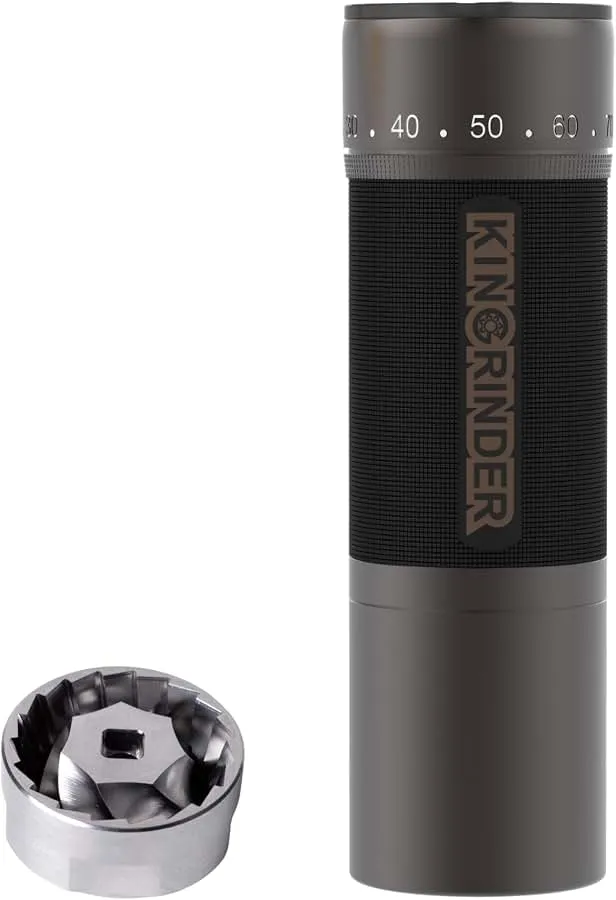
Best External-Dial Filter Workflow: KINGrinder K7
Affiliate link · Ad-free & self-funded lab tests
Priced at $150 — a full $100 below the 1Zpresso ZP6 it visually targets — the KINGrinder K7 is the most nuanced grinder in this whole test once you compare Repeatability against Grind Uniformity.
KINGrinder clearly listened to K6 owners when redesigning the internals. They killed the annoying metal circlip completely, replacing it with a dead-simple tool-free teardown (turn the zero-point nut coarse, push the burr out, align the internal dot on reassembly) and stuffing in massive 53mm stainless burrs with cutting teeth clustered toward the bottom like a filter specialist. Despite the pour-over focus, its 100 stepped settings at 15 microns per click still dialed in my medium Coffee Bros espresso roast cleanly between 38 and 39 clicks — pulling a lighter-bodied, modern shot rather than a syrupy classic. Best of all, it delivered net-zero retention completely dry straight out of the box without RDT, and logged #2 overall Repeatability (5.8% CV) across 40 runs, tightening all the way down to 2.9% CV at 100 clicks while posting the lowest measurable espresso Fine Fraction (22.2%*) of the group.
The two trade-offs that pushed it to #5: First, externally, KINGrinder's dual-ring setup (upper dial plus lower zero-point nut) didn't completely cure the K6's accidental-bump habit, and the new quarter-turn magnetic catch cup occasionally wiggles slightly under your pinky mid-grind (it never fell off, though it will briefly test your blood pressure). Second — and more importantly — the new single-cup uniformity charts revealed a clear gap between dose-to-dose stability and inside-the-cup tightness. Despite great repeatability and low fines, the K7 recorded the widest Grind Uniformity (50.5%* espresso / 50.6% pour-over), a modest 37.0% pour-over Sweet Spot, and 15.5% pour-over boulders. If you specifically want an external dial, effortless cleaning, zero dry retention, and rock-steady repeatability for filter plus occasional modern espresso, the K7 still shines as a workflow piece — just know that the $115 C5 ESP Pro actually cuts a tighter pour-over particle distribution.
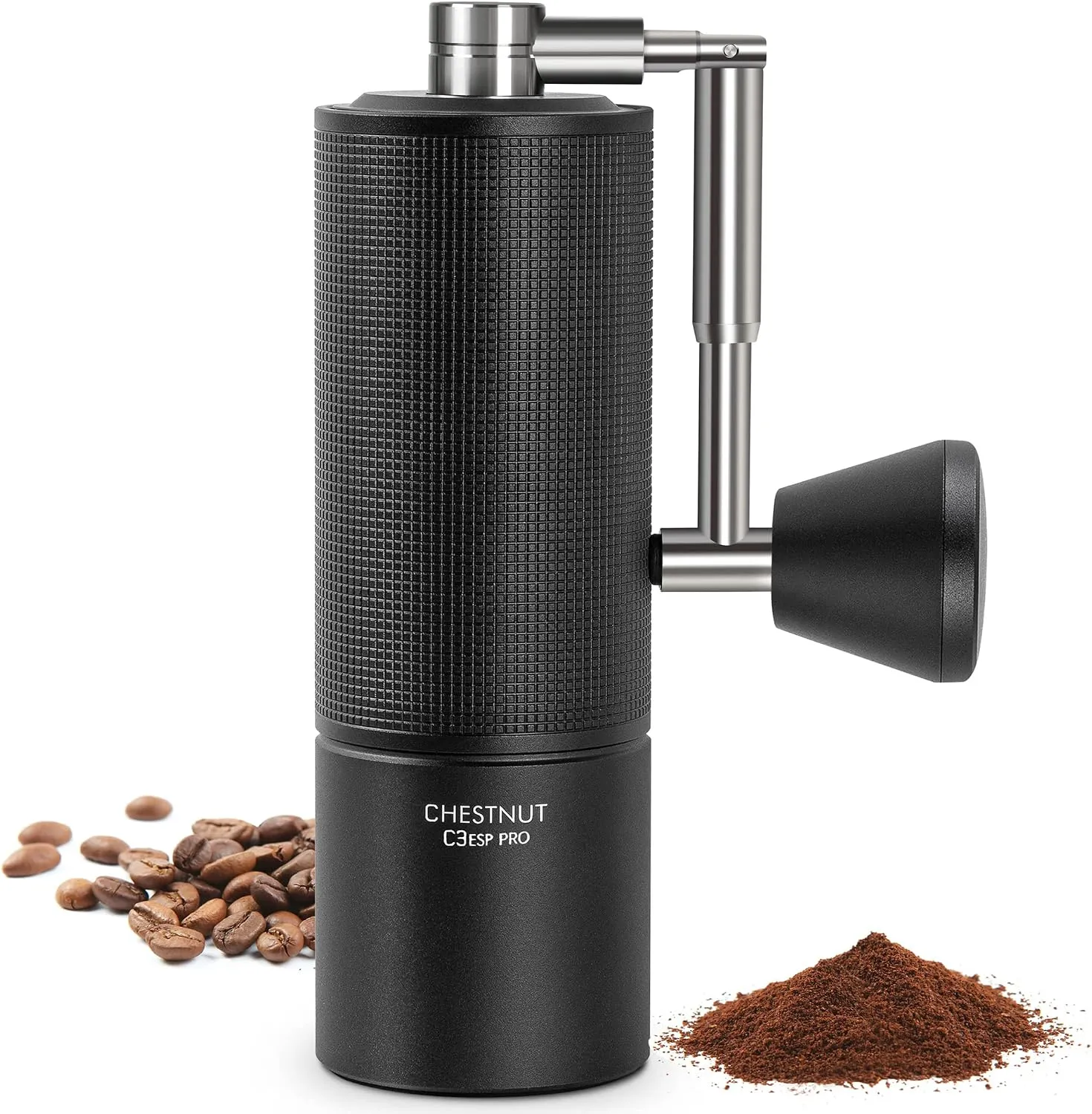
Best Strictly Under $100: Timemore C3 ESP Pro
Affiliate link · Ad-free & self-funded lab tests
The $99 Timemore C3 ESP Pro still holds a soft spot in my travel bag. It packs an all-aluminum body with grippy diamond knurling, a rock-solid threaded catch cup, Timemore's sleek snap-flat folding handle, a physically locked internal dial that is impossible to bump mid-grind, and 38mm S2C burrs stepped at 23.3 microns per click (90 clicks across 3 rotations — a massive upgrade over the non-ESP C3's coarse 80-micron jumps). Retention is practically negligible at 0.1g with RDT and three counter taps.
Across 75 DiFluid scans, the C3 ESP Pro held respectable espresso-range repeatability (4.1% to 7.6% CV between 0.6 and 1.0 rotations) before falling off steeply past two rotations (8.6% overall CV). In the new uniformity view, it sits near the back of the pack with 48.7% espresso / 49.8% pour-over Grind Uniformity, the highest espresso Fine Fraction (27.4%), and 15.8% pour-over boulders, while taking 60 to 70 seconds to chew through an 18g espresso dose. (Also: watch the orientation of the flat metal washer during reassembly, or your grind dial won't behave.)
Bottom line: If $100 is an immovable hard ceiling — or you catch the C3 ESP Pro on a deep clearance sale — it is still a dependable, travel-ready entry point. For everyone else, spending $10 more for the KINGrinder K6 or $16 more for the Timemore C5 ESP Pro is a complete no-brainer.
Ultralight AeroPress-Only Travel: AeroPress Manual Grinder
At $199 — the exact same price as a 1Zpresso J-Ultra, and nearly double a KINGrinder K6 or Timemore C5 ESP Pro — the AeroPress Manual Grinder is the clearest skip on my test bench.
On paper, the pitch is clever: a slim 1.9-inch, 1.2-pound cylinder engineered to nest neatly inside the hollow plunger of an AeroPress brewer, equipped with 38mm titanium-coated burrs and 60 click settings. In daily use, nearly every ergonomic choice got on my nerves:
- Flimsy multi-piece handle: Detaches at multiple joints, clings loosely to the side with weak magnets, and uses a tiny circular knob that feels awful in your palm twenty seconds into a grind. AeroPress includes a power-drill hex adapter to bypass hand-cranking — except using a drill immediately voids your warranty (and who wants construction noises on their kitchen counter at 6 AM?).
- Backwards, uncalibrated dial: My retail unit zeroed out at setting 3 instead of 0, the numbered ring counts down from 12 to 1, and once you dial past three full rotations for coarse filter brewing, the adjustment spindle protrudes past the bottom so the grinder cannot even stand upright on the counter.
- Bean bridging and messy retention: An internal metal strut splits the hopper down the middle so beans constantly hang up on one side. Retention averaged 0.3g — worst in the test — and tapping the base with the handle to free stuck grounds immediately scratched the finish.
The lab numbers sealed it. Across 90 DiFluid runs, it recorded 10.9% overall Repeatability CV (dead last, worse than both the $99 C3 and $109 K6), a jarring unpredictable jump in grind size between rotations 2.5 and 3.0, 49.8% pour-over Grind Uniformity, 37.0% Sweet Spot, and 15.8% boulders. Literally the only person who should buy this is an ultralight AeroPress-only backpacker for whom nesting inside the plunger is non-negotiable. Everyone else should pocket the $84 savings and throw a Timemore C5 ESP Pro in their bag instead.
How I Tested These Manual Grinders
Every grinder in this guide was purchased at retail with my own money and used daily before formal particle analysis. On the test bench, each unit was purged between settings and measured across 5 runs per dial setting on a DiFluid Omni optical particle analyzer (40 to 90 total runs per grinder, 425 scans total), using auto-dispersion in espresso ranges (<600 µm) and manual tray separation at coarse settings so boulders aren't pushed to the edges.
Two honest scientific caveats belong right next to every chart on this page:
- Five runs per setting is directional, not final gospel: Even with Bessel's correction (n − 1) guarding against small-sample bias, a couple of rogue chaff or boulder scans can tug a curve around (as we saw on the KINGrinder K6 past 600 µm). Expanding sample depth over time will paint an even smoother picture.
- Optical sensors have a 100-micron floor: The DiFluid Omni measures particles down to 100 µm, meaning microscopic static espresso dust below 100 µm isn't counted separately in Fine Fraction (100–300 µm) — and at ultra-fine choke settings, fines can clump together and read slightly coarser than they really are. Always pair lab curves with taste in the cup.
Want to see how these hand mills stack up against electric conicals and 64mm flat burrs? Check out our full Best Coffee Grinders leaderboard.
Common Questions
Should I buy the Timemore C5 ESP Pro or the KINGrinder K6?
Both sit right around $110 and beat grinders twice their price, so let your daily workflow decide. Pick the KINGrinder K6 ($109) if you prioritize espresso (it leads espresso Grind Uniformity at 41.6% and Sweet Spot at 44.8%) or switch between espresso and pour-over daily and want a fast external ring. Pick the Timemore C5 ESP Pro ($115) if you mostly stick to one brew method, want a smaller all-metal zero-plastic travel body with a locked internal dial, or care more about clean pour-over uniformity (44.1% vs. 48.9%).
Is the $350 Millab M01 actually worth triple the price of a C5 ESP Pro or K6?
Strictly on value per dollar, no — the C5 ESP Pro and K6 get you roughly 85% to 90% of the daily cup experience for a third of the cash. Where the Millab M01 earns its keep is obsessive endgame consistency: 3.4% Repeatability CV, 45.9% pour-over Sweet Spot, and just 7.3% coarse boulders, wrapped in machined metal and walnut that rivals $500 electric flat-burr grinders on the bench.
Why does the 1Zpresso J-Ultra score lower in pour-over uniformity if everyone loves it for espresso?
Because uniform, low-fines grinds aren't always the flavor profile you want for traditional espresso. The 1Zpresso J-Ultra produces a wider particle distribution and the highest measurable Fine Fraction on pour-over (12.7%), which muddies up filter clarity — but in a 9-bar shot with medium or dark roasts, that extra fine tail creates rich, syrupy texture and forgiving puck resistance, paired with 8-micron micro-steps that make dialing in effortless.
Why did the KINGrinder K7 rank behind the cheaper Timemore C5 ESP Pro overall?
On dose-to-dose Repeatability (5.8% CV), dry retention (0.0g without RDT), and external-dial convenience, the KINGrinder K7 is legitimately impressive. However, single-cup Grind Uniformity measures how tight the particles are inside one dose — and the K7 ran noticeably wider (50.6% pour-over uniformity, 37.0% Sweet Spot, 15.5% boulders) than the $115 Timemore C5 ESP Pro (44.1% uniformity, 41.9% Sweet Spot, 10.8% boulders).